
advertisement
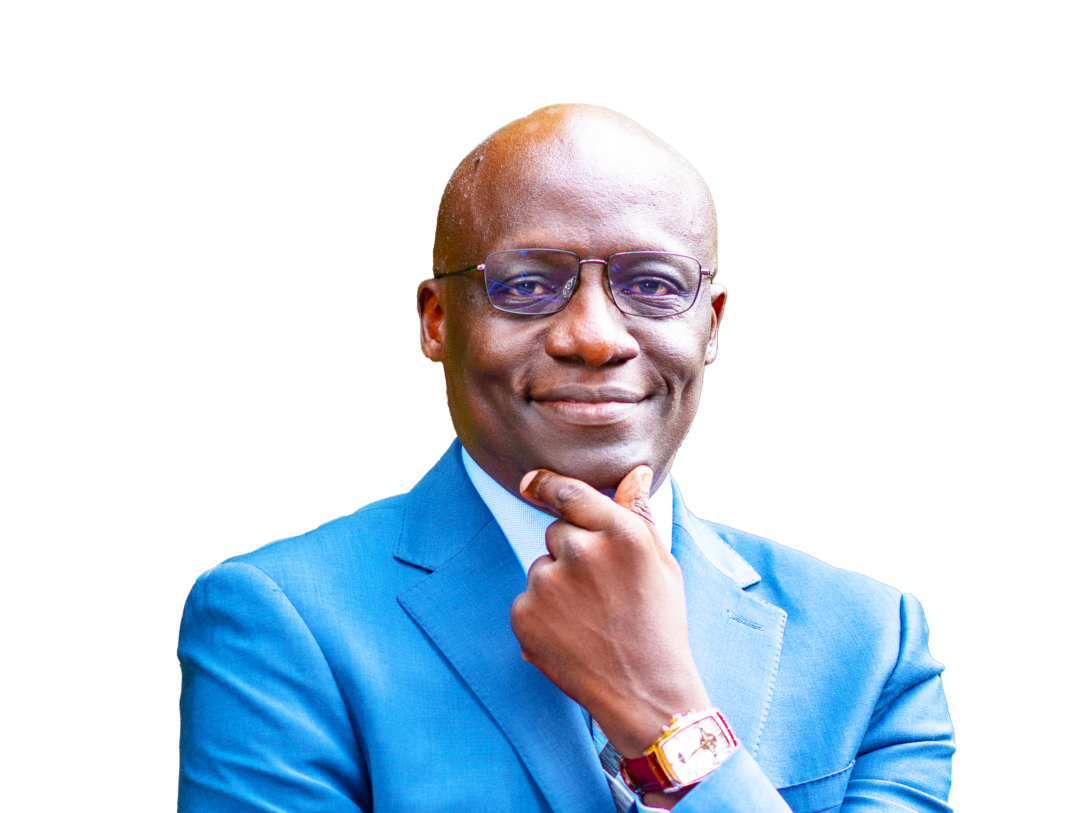
A Conversation With Kenya’s First Technology Diplomat


I sit to write this after rewatching Ex-Machina, a decade-old film about artificial intelligence. Ex machina literally translates to “out of the machine” in Latin. It refers to a plot device in storytelling where a seemingly unsolvable problem is resolved by a sudden, unexpected intervention, typically by a powerful figure or unexpected event. An intervention that largely feels artificial or forced, like a deus (god) being lowered onto the stage by a machine in ancient Greek theater.
Like practically any other artificial intelligence sci-fi movie, the AI ultimately wins. But that does not seem to be the conclusion of my interview with Philip Thigo. While optimistic about AI, he also categorically thinks it is, in fact, much misunderstood.
Navigating the complex intersection of technology, policy, and international relations, Thigo’s insights reveal a vision where innovation packs a double whammy. It drives economic growth and pushes society’s progress all while making sure no one is left behind. His candid reflections underscore the crux of collaboration and inclusivity in the era of AI.
advertisement
What is this designation or job that has never existed before in Kenya entail until it was created just for you. What does it actually mean, being a Special Envoy for Technology?
(Laughs). It’s not the ‘Special’ piece in so much as it is about the ‘Envoy’ piece. A lot of countries started thinking, as far back as 2017, about how they could engage tech companies because they started becoming bigger than countries. Some have GDPs that are greater than certain countries combined. It is the genesis of tech diplomacy. Once you introduce that, you need somebody to manage it, which is where I come in. Other jurisdictions have called it something else. Denmark has the Tech Ambassador; the US has an Ambassador-at-Large. For Kenya, we wanted to do it differently. We have to have two kinds of diplomacy. One is how we integrate technology and engage tech companies and entrepreneurs, while at the same time, engage externally with technology that is driven by countries. This is when a Special Envoy starts to make sense.
Now that makes perfect sense.
advertisement
(Laughs). Ours is a first, and I’m hoping other African countries will follow suit.
It figures then that the next thing anyone would like to know is basic, and it is this – what is your typical day like?
I’ve hardly started. But how I would imagine is that it is very much around the ecosystem wanting to be understood. I’ve been having a lot of conversations. I’m talking to data centres trying to understand them; talking to specific companies like Oracle and Microsoft – G42 and how they’re looking at the region and why they want to be here to what we can do better to local innovators. It’s about engaging them and documenting my thoughts as I listen and figure out how to include relevant parties on the margins. I’m making sure no one is left out and that they’re understanding the direction the country is taking. No one is left out of the conversation.
advertisement
How do you think your experience in global digital leadership will lead Kenya’s digital transformation agenda especially when it comes to promoting transparency and accountability?
Those are values that you cannot disconnect from technology we are in the era of diminished trust. 70 per cent of the world is an autocracy. Aside from that, how do you ensure citizens are active participants, and, how do you ensure governments are listening to citizens using technology? When citizens are on X, they have discussed, judged, and ruled against the government. The citizens demand openness, have access to knowledge and you can’t lie to them. This citizenry are empowered. There is a certain type of service they expect. At some point, the government needs to deliver. And if not, then they need to be engaged with the citizens.
How do you make yourself a bridge and maintain contact with the needs of both the government and the citizens?
As an envoy, you become someone who helps articulate a lot of these issues. An envoy is a messenger, and the messenger anywhere can’t be shot, so I can be very candid. That’s what I’ve been doing. I’m apolitical. I cannot be political. We operate on the domain of ones and zeros so I can confidently tell you if it’s there or it’s not. We see capacity as a technology capacity. Technology is everywhere and it affects everything including how we interface with the community. It is not just about capacity in tech. It’s also about the leadership. They don’t have to be tech savvy, but they have to be able to budget, to engage, to resource and how to staff. The leaders, and I am surprised when I walk into offices and find this – are not trained and are not in that space.
What is the process of advising the President like? Do you do Power Point presentations? Give reports? Is it an informal conversation? How, exactly, does this play out?
I haven’t gotten there yet! But the President has a council of advisors so there’s definitely a format. I can only tell you what I’ve done now and in most cases. I’m engaged in the ICT sector reforms and there are things you cannot write on paper. I’ve been doing a lot of PPTs especially when it comes to working with the sector I’m in because not everybody talks technical so it’s just easy to be visual.
This goes back to being the bridge.
Yes. Translation is key.
Is that usually difficult, translating the tech to non-techies?
It is especially when you consider people don’t like to show they don’t know. And then there are people who feel you’re dumbing it down too much. Others get offended. Some are happy if they know the common jargon that is used. I find the technical people very interesting because they find it beneficial. At the technical level, they’re the ones who will engage the private sector.
Have you always had this fine balance of the technical and non-technical and the ability to weave your way in, out and across?
Yes. It is unfortunately a skill I had to learn the hard way. See, technology has an expectation. Because of this technology called determinism mindset, people have a certain expectation and assume technology can do. For instance, it’s easy to say, for example, that I can build tech for document management. All you’ll need to do is insert a document and it will appear on the other side. But technically, you really have to go into the specifics, and you have to speak both so that the technical people do not overpromise and then underdeliver. That’s always been my issue. Right now, we think AI will do everything, and then underdeliver. Technology is not a magical bullet. It is not.
Let’s go back to your appointments. You were gloriously appointed at the UN’s High Level Advisory Board on AI. What are the specifics of this position? How does it merge with your other new role as Envoy?
If you ask me, it’s an advantage. What we define with the Secretary General is global policy on AI. I bring my experience as a Kenyan and one of six Africans. And the UN role helps Kenya, with AI strategy. Then there’s the interesting part of what I’m leveraging off the AI body which is 39 experts. I’ve been able to bring our very specific realities into the role. People then begin to understand that if you are defining these global norms, how does it work locally? I’ve been blessed enough to use both to do that. Remember part of the UN Advisory Body, is coming up with a report. Along with the Secretary General, I can understand what we need and being able to take that report into a very real negotiation space supporting other African countries because we negotiate as a group while working very closely with colleagues in New York.
I saw this on your Twitter feed. How do you come up with an AI agenda, or are you waiting for the West to come up with one? And to build on that. Once they do, do we try to make it a square peg in a round hole kind of thing?
We have started in on this process with the Ministry. This is the one time I am really excited we don’t have one because AI has changed. Those who did before 2022 are not recalibrating their agendas. What we have decided is to focus on principles. That AI governance has to be multilevel, multilayered, multistakeholder and inclusive. When you think about it, no matter what anyone tells you, AI governance is about safety (to conform around ethics and norms and does no harm), security (how do you ensure the language models are safe when you consider cybersecurity? If they are tampered with, they have an impact on all humanity) and inclusivity (AI is concentrated in a few companies and countries yet the impact is global). The last part of your question is about building public trust. You realise I am not talking about regulations. I am against.
You are? Why?
What are we regulating? It’s a quick fix. I’m all about governance with guardrails. That way even if it changes and moves, it’s still manageable. Regulation creates a hard lock. Tomorrow, when AI outgrows that law, then what? You go to parliament to pass regulations that will take them six months?
I guess that takes care of the question of balancing innovation and regulation.
Balance is a forced economy. Companies will tell you they actually want to regulate. Once you regulate them, it forces them to innovate. That’s the secret. Give them hoops to jump through. I realised this at some point.
So, what kind of support do you need especially when creating partnerships.
It’s always a mindset issue. It is imperative to understand this ecosystem belongs to everybody. Corporates can sometimes pull in different directions. It is multistakeholder. Aside from that, how do we grow a robust and resilient ecosystem? It doesn’t make sense for one company to be very happy that they are the best in fibre or connectivity or cloud or data centres. You just become one in an ivory tower. Collaborate. That doesn’t mean you don’t make a profit. It means we are deliberately building our own specific companies but remain conscious we are operating in an environment that requires us to be at a certain level. That’s the thing I’ve been struggling with. Getting people into that mindset. That’s why you had Silicon Valley. It wasn’t Google. Or Microsoft. They created an ecosystem that churned out talent, they had the housing, they had the companies, the investors, and the venture capitalists (VCs). They created an environment that spurred innovation. One that birthed the products of Silicon Valley. That’s what happened. It wasn’t one company trying to be ‘the guy.’ When two stars shine next to each other, it doesn’t mean one dims the others’ light.
It’s mine and mine only.
When I look at constellations, they are more beautiful than lone stars.
All the things we’ve discussed so far require digital literacy. How do we get there, especially with the younger ones?
I look at it in terms of creating an ecosystem. I never taught my son how to use a smartphone but some things that he shows me… I’d use that capability and the creation of content. I was looking at data and observed that people are accessing the internet, but what are they using it for? They go to the TikTok’s, but that’s because that content resonates. We are not doing much by way of developing edutainment content, for instance. That’s how the youth consume content. TikTok need to rethink their platform. They have some sort of responsibility.
Even though they are a wildly successful, very independent platform?
Yes. They have a consumer base. And that base has a level of responsibility. And I told them this. It could also be a market opportunity. If you think about the challenges they’re having, one is that they want to be a leading platform but they’re running into a lot of content moderation issues. Which could be because they are not hiring enough content moderators. But also, because language changes very quickly, and how do you moderate if you’re not playing in the space the moderators are? You need to understand context and nuance better. Then you’ll make money. Honestly, I’d be very happy to work with them.
Let’s switch gears again. You’re still the Executive Director at Thunderbird, right? And it is here that you’re working on the Furth Industrial Revolution (4IR) and food systems. Can you tell me more about that?
It’s about trying to understand that we live in a world of multiple accelerating and interconnected crises. Climate change is the cause. Where this impact is felt, is food. How do we ensure we build resilient food systems and leverage technology? The big issue around that is that everybody looks at the food input; the source; the land; the agriculture. But food is a system – farm to fork. How to get food to the market is an issue. So, either we don’t get food to the market and we lose, or we don’t have storage and we lose. By the time food ends up on the plate, it’s only 30 per cent of the food that made it. The other part of innovative food systems is ensuring we reduce the cost of your plate because of inefficiencies in the middle, and, of course, to increase the farmer income. We want to equalise this equation that doesn’t make sense.
How do all of these things play with each other?
They are all interconnected. If you think about technology and 4IR, it is the context we are in right now. That’s Thunderbird for you. And you can almost understand the era we are in now from the academic. The UN is a global space for policy. Unfortunately, it is the only space for now that is multilateral and inclusive. We are not in G7 or G12, making the UN super important especially when we are talking about inclusivity. Technology now determines, and is, basically, the future of power. We really must be bullish around 4IR because in others we either were the labour, or the material. We need to be equal participants because I don’t know about the coming revolution If we don’t participate in this one. The way emerging technology is going, there won’t even be an opportunity to catch up. If you look at the engine and the driver of emerging technologies, one is the demographic and a highly mobile population.
Looking back at what you wanted to be growing up, is this it? Are you one of those people who wanted to become a doctor or a lawyer?
(Laughs). Architect was my direction.
Isn’t what you do kind of architectural?
Oh no. I design. I’m comfortable where I am. I find that this is more my calling.
You’re not surprised by the trajectory your life has taken?
No. I kind of figured it out in high school.
You will be attending a summit in the US this May. Could you fill me in on what it is about? What should be our key takeaway?
From my perspective – and remember this is really a President’s summit – it is about strengthening bilateral ties. One of the issues with the latter is, of course, technology. You cannot not talk about technology when you’re with the US. Potentially, I have had an unfair advantage over engaging with the US over the last one year, especially around AI so there are things we’ve done since last year. In October 2023, we worked before the UN General Assembly and the Biden-Harris landmark Executive Order on the Safe, Secure, and Trustworthy Development and Use of Artificial Intelligence. We engaged US companies around those commitments. I think about how to domesticate these. In the US, big companies like IBM and Microsoft are domiciled here. How do we ensure those commitments translate into the Kenyan ecosystem.
Because of the nature of technology, and how pervasive it has become, I see the risks. So, how do we collaborate or cooperate at a global level while mitigating the risks whether it is AI or cybersecurity. The terrain has changed. It only works through cooperation. The nature of conflict or war is that it’s always external, so you need partners.
How do you measure success as an envoy?
It would be: am I talking to the right people? Everybody needs to be included and seated at the table. Is our ecosystem more vibrant? Are we more effective – which needs to translate into impact on people’s lives. It’s not an ICT ministry thing. Other ministries are important such as the ministries of agriculture, education, and health. Everybody just sees technology, but it is only that ICT is part of my core focus. But how have we demystified technology? Also, technology is not digital. Finally, have we been able to harness it in a way that drives economic growth but also improve people’s lives?
I always thought if it was driving economic growth and success, it automatically translated into improving people’s lives.
No. You would be shocked. Not necessarily. You can have jobless growth. We need to measure how technology has done both.
Anything you would like to add that I did not ask?
A couple of things are in my head now as I mould this task that I have been given by the President and one is how to build resiliency. That has me scratching my head. The second is how do we build effectively within a very constrained physical space and not put the next generation in debt so that technology actually improves lives and does not create a burden on the population? That for me is sleepless nights. I obsess with this.
Finally, how do we begin to engage other countries in the continent? We talk about being a hub, but we are still within a continent. We have serious capabilities, even though we are concentrated in Nairobi city and a few other spaces. The real technology diplomacy is being able to take what we have, what we’ve built, what we’ve tested out there into other countries. I’m not seeing a lot of that yet. The same way we have M-Pesa but even then, that is still here. The day we will be the Metas and the Googles, and you see when the country moves, they move with us, then that will be interesting. All you need is one or two. It is expected of us, by other African countries.
And how can I do to help you fulfill your duties aside from putting this out there?
I’m thinking of a network fellowship. How do we get seasoned CIOs to do on the job mentoring and coaching? How does a 55-year-old manager meet a 24-year-old? And when we talk about AI, Hollywood has done such a good job in just creating this picture in our heads about how AI will go rogue and launch nuclear warheads. This is the conversation I walk into yet there’s more good to it.
This article was first published in the May 2024 East Africa edition of CIO Africa Magazine.