
advertisement
Mamadou Toure: Africa Must Move From Consuming Technology To Creating It


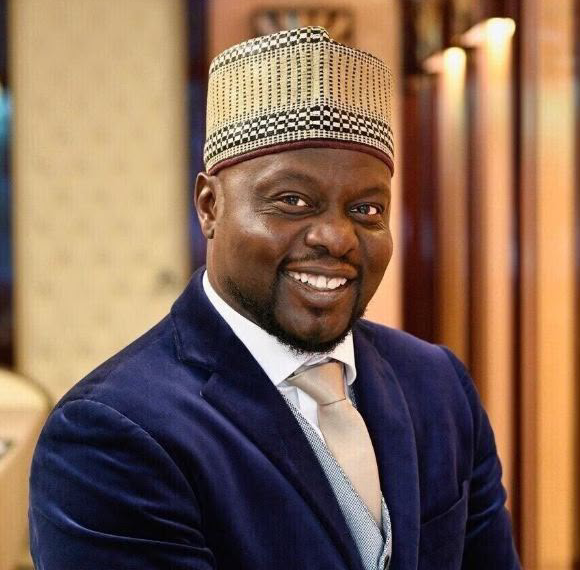
Africa’s digital future will depend on more than adopting emerging technologies. It will require the continent to build its own infrastructure, develop homegrown solutions and retain greater value from its digital economy.
For Mamadou Kwidjim Toure, Founder and CEO of Ubuntu Group, this shift calls for a different kind of leadership: one that connects technology with policy, capital with opportunity, and innovation with economic inclusion.
Drawing on more than two decades of experience across finance, development finance, technology and entrepreneurship, Toure argues that Africa must move beyond being a consumer of imported technologies. It must participate in creating the artificial intelligence systems, digital infrastructure and financial platforms that will shape the global economy.
advertisement
In this interview with CIO Africa, he discusses the potential of blockchain and real-world asset tokenisation to broaden wealth ownership, the role of AI in Africa’s next economic leap, the importance of digital sovereignty, and why investing in human capital remains the continent’s most important bet for 2035.
What has your journey taught you about the leadership Africa needs today?
My journey across finance, development finance, technology, and entrepreneurship has taught me that Africa does not suffer from a lack of talent or opportunity. What we often lack is leadership that can connect vision with execution. The leadership Africa needs today must be bold enough to think globally, grounded enough to understand local realities, and disciplined enough to build institutions that outlast individuals.
advertisement
Most importantly, African leaders must be bridge-builders. We need leaders who can connect government and private sector, technology and policy, capital and opportunity. The future belongs to those who can work across boundaries rather than within silos.
How does Ubuntu influence the way you build organisations, lead teams and make strategic decisions?
Ubuntu is often summarized as “I am because we are,” but for me it is a practical leadership philosophy. It reminds us that sustainable success is never achieved alone.
advertisement
In building organisations, Ubuntu means creating systems where people feel ownership rather than merely employment. In leadership, it means listening deeply, empowering others, and ensuring that growth is shared. In strategy, it means evaluating decisions not only on financial returns but also on their impact on communities and future generations.
Technology should serve humanity. Ubuntu ensures we never forget that.
What is the biggest leadership mistake African businesses and governments make when approaching technology?
The biggest mistake is treating technology as a procurement exercise rather than a transformation journey.
Too many organisations focus on buying software, platforms, or infrastructure without rethinking processes, culture, skills, and incentives. Technology cannot compensate for weak institutions or poor governance.
Success comes when leaders start with the problem they want to solve and then apply technology as an enabler. The real transformation is organizational and human, not technological.
Where has technology genuinely delivered economic inclusion, and where has it fallen short?
Mobile money is one of Africa’s greatest examples of technology creating inclusion. Millions gained access to financial services without needing traditional bank accounts. Farmers, small businesses, and families could transact, save, and manage money with unprecedented ease.
However, technology has fallen short where digital inclusion was confused with economic empowerment. Access alone does not create prosperity. If people can access financial services but still lack capital, education, markets, or productive opportunities, inclusion remains incomplete.
Technology works best when combined with broader economic opportunities.
What technology could drive Africa’s next major economic leap?
I believe the convergence of artificial intelligence, digital identity, digital payments, and decentralized infrastructure will create Africa’s next leap.
AI can unlock productivity across agriculture, healthcare, education, and government services. Digital identity can bring millions into the formal economy. Blockchain can reduce friction in trade and ownership. Combined, these technologies can create trust at scale.
Africa has already shown its ability to leapfrog. The next leap will be less about communication and more about productivity, knowledge, and ownership.
What did you see in blockchain and tokenisation that conventional financial systems could not deliver?
Traditional financial systems are highly effective for those already inside them. Their greatest limitation is accessibility.
What attracted me to blockchain was its ability to reduce barriers to participation. It allows value to move more openly, transparently, and efficiently across borders. Tokenisation offers the possibility of fractional ownership, greater liquidity, and broader participation in wealth creation.
For the first time, technology offers a credible pathway to democratize access to assets that have historically been available only to institutions and wealthy investors.
What does tokenisation of real-world assets mean for ordinary Africans?
For many Africans, it could mean moving from being consumers of wealth to owners of wealth.
Imagine a young professional in Dakar, Lagos, Nairobi, or Johannesburg being able to invest a small amount into infrastructure projects, commercial real estate, renewable energy assets, or agricultural ventures that were previously inaccessible.
Tokenisation lowers entry barriers, increases transparency, and enables participation at a scale never before possible. If implemented responsibly, it could significantly expand financial inclusion and wealth creation.
What do you believe blockchain will ultimately change?
The lasting impact of blockchain will not be speculation. It will be trust.
Blockchain creates verifiable records that reduce dependency on intermediaries. Over time, I believe it will fundamentally improve how we establish identity, prove ownership, execute contracts, move assets, and coordinate economic activity.
Its greatest contribution may be that it lowers the cost of trust across societies and markets.
What is the biggest misconception about blockchain and its potential in Africa?
The biggest misconception is that blockchain is primarily about cryptocurrency.
Cryptocurrency is simply one application. The broader opportunity lies in ownership systems, digital identity, supply chain transparency, land registries, cross-border trade, and financial infrastructure.
Africa should focus less on speculation and more on solving structural problems through trusted digital systems.
Is Africa at risk of becoming a consumer rather than a producer of AI?
Yes, that risk is real.
If Africa only imports AI systems while others own the algorithms, infrastructure, data, and intellectual property, we may recreate historical patterns of dependency in a digital form.
The challenge is not simply adopting AI. It is participating in its creation. That requires investing in talent, research, computing infrastructure, and African-owned technology companies.
The nations that create AI will shape the future. The nations that merely consume it will adapt to someone else’s future.
What would genuine African digital sovereignty look like?
Digital sovereignty means Africa having meaningful control over its digital future.
That includes locally governed data infrastructure, regional cloud capabilities, sovereign digital identity systems, cybersecurity capacity, and world-class computing resources. It also means African participation in setting global technology standards rather than merely complying with them.
Digital sovereignty is not about isolation. It is about agency.
Who should own and control Africa’s data?
The first principle is that individuals should retain rights over their personal data.
Beyond that, Africa’s strategic data assets should generate value that benefits African economies. Today, enormous value is extracted from African data while much of the economic benefit accrues elsewhere.
The objective should not be restricting data flows but ensuring fair participation in the value created from them. Data should become a catalyst for local innovation, research, and economic development.
What are the biggest barriers preventing African technology companies from scaling globally?
Three challenges stand out.
First, fragmented regulations and markets make scaling across the continent more difficult than scaling across many other regions.
Second, there is insufficient growth-stage capital available to support companies after their early success.
Third, infrastructure gaps still increase operating costs.
Fortunately, initiatives such as the African Continental Free Trade Area offer a path toward greater market integration. If we create a truly connected African market, we will unlock extraordinary opportunities for innovation and scale.
What role should African investors and institutional capital play?
African pension funds, sovereign wealth funds, development finance institutions, and private investors must become active builders of the innovation economy.
For too long, promising African technology companies have relied heavily on foreign capital. External investment is valuable, but long-term resilience requires stronger domestic participation.
When African capital backs African innovation, value creation and value retention remain more closely aligned with the continent’s long-term interests.
Looking towards 2035, what is the one major bet Africa must make today?
If I had to choose one bet, it would be investing in human capital at a scale never seen before.
Technologies will change. Platforms will evolve. Markets will rise and fall. But a generation of highly educated, technologically skilled, entrepreneurial Africans will remain the continent’s greatest strategic asset.
By 2035, the winners will not simply be those with access to technology. They will be those capable of creating it, governing it, and using it to solve meaningful problems.
Africa’s greatest opportunity is not to catch up with the future. It is to help define it.