
advertisement
11 Days Without Jensen Huang

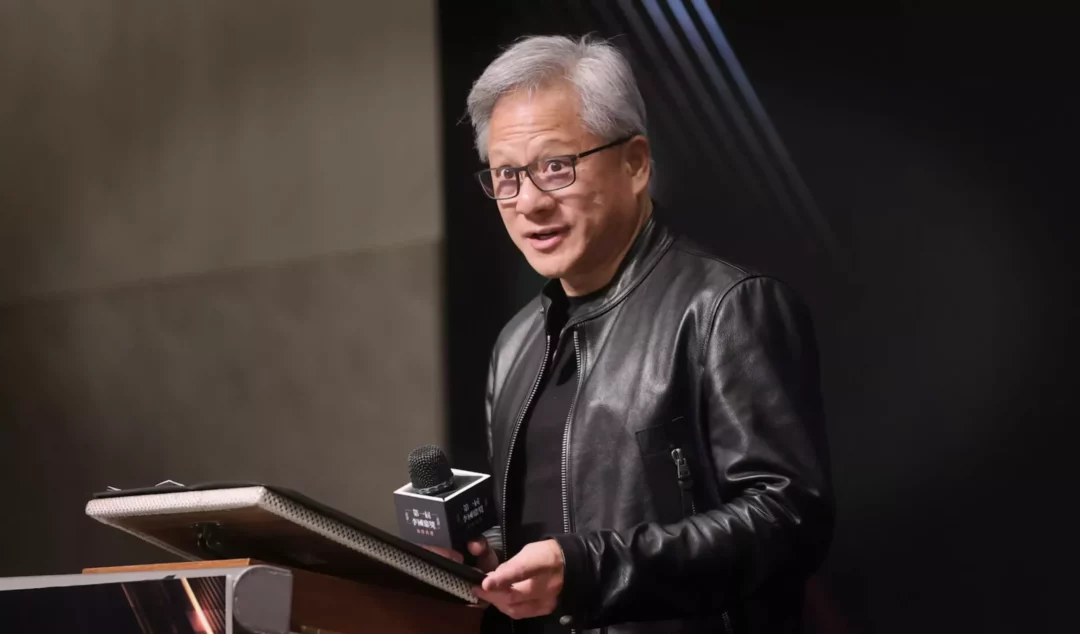
On 17 November, Nvidia reported the biggest quarter in its history. The man who built that quarter had resigned five days earlier. The woman who presented it was doing two jobs at once, interim CEO and CFO. Six days later, the board brought Jensen Huang back, and the market added close to a trillion dollars in a morning.
Revenue of $115.8 billion for the quarter ended 25 October, up 103 per cent on the year. Data centre revenue of $107.6 billion, up 110 per cent. Diluted earnings of $2.70 a share. And guidance for the current quarter of $130 billion – meaning Nvidia expects revenue of about $130 billion next quarter -give or take three per cent, with no data centre compute revenue from China assumed at all.
Colette Kress, who was interim CEO, Executive VP and CFO simultaneously, said, “NVIDIA is an exceptional technology leader, powered by the relentless innovation of our people.”
advertisement
The results also confirmed that Nvidia’s new Vera Rubin chips, which began shipping in the quarter, were on schedule.
Then on Monday, the board reinstated former CEO Jensen Huang, and the stock opened up about 32 per cent at $165.61, adding roughly $40 a share in a single move. Close to a trillion dollars of market value arrived in minutes. The Nasdaq rose 6.77 per cent, the S&P 500 4.78 per cent and the Dow 2.71 per cent — an entire market repriced on one appointment.
What Actually Happened
The New York Times reported on 29 October on a close relationship between Huang and a woman, which Nvidia initially said was unremarkable. On 8 November Huang publicly acknowledged the relationship. Shares fell about 5 per cent and the board opened an independent investigation. Further reporting followed concerning a second relationship involving an Nvidia executive who reported to him.
advertisement
On 12 November, Huang resigned as President, CEO and board member, effective immediately. The 8-K filing that day gave no reason. Kress was named interim CEO while retaining the CFO role, and Harvey C. Jones was appointed the company’s first-ever chair of the board — a separation of chair and CEO that had never existed at Nvidia before.
The element that moved this out of the personal column was what came next. Reporting raised the possibility that Huang had been the target of a foreign intelligence effort. The board formed a committee of solely independent directors to investigate, and that committee retained its own outside counsel. On Monday, the board voted unanimously to bring him back.
He Returned To A Different Job
The share price reaction suggests a restoration. The company’s own announcement describes something more constrained. This is the part most of the coverage has skipped. The independent investigation into the reported foreign intelligence targeting has not been closed. The board said it will proceed to conclusion, and that Huang fully supports it and is cooperating. The board has also formed a National Security and Export Control Committee, again composed solely of independent directors, to oversee trade compliance and national security risk, and is engaging counsel experienced in national security matters.
Nvidia is searching for a new chief compliance officer. A role that will report to the nominating and corporate governance committee of the board rather than into management. Jones remains chair. The separation of the two top roles stays.
“The Board believes Mr. Huang is the right person to lead NVIDIA,” Jones said, adding that the reinstatement serves stockholders, employees, partners and customers. Huang said he accepted the responsibility with humility and a renewed commitment, thanking the board, Jones, Kress, staff and his family.
A CEO who returns to a company with a separate chair, an active investigation into his own circumstances, a new board committee on national security, and a compliance officer reporting to directors rather than to him has not returned to the job he left.
Worth The Double Take
One line in Monday’s announcement deserves more attention than it has had. The board said it received input from senior levels of the US government, and that it is confident Huang’s reinstatement poses no national security risk.
Read that as a governance fact rather than a political one. The board of a listed American company consulted the government before deciding who should run it, saying so publicly. Whatever the merits in this particular case — and the circumstances are plainly unusual — it establishes that the leadership of the world’s most strategically significant semiconductor company is a matter in which Washington has a voice, and that the company is comfortable saying so in a press release.
The Q4 guidance makes the same point from the other direction. Nvidia is projecting $130 billion in revenue while assuming it sells no data centre compute into China at all. That should not be interpreted as a market forecast but as an export control regime expressed as an accounting assumption.
Why This Is An African Infrastructure Story
It would be easy to file all of this under American corporate drama. It is not, for anyone on this continent making plans that depend on compute.
Cassava Technologies has committed up to $720 million to deploy 12,000 Nvidia GPUs across South Africa, Kenya, Nigeria, Morocco and Egypt. Egypt’s first sovereign AI factory, built with Vodafone Business and Cassava, is pointed at 200 megawatts. Almost every African AI strategy published this year — national or corporate — runs on hardware from one supplier. That supplier has now demonstrated two things inside a fortnight. Its leadership is subject, at least in part, to review by a foreign government. And its market value can move by something approaching a trillion dollars on a single personnel decision.
Neither of those is a reason to buy from someone else. There is largely no one else. But they belong on a risk register, and in most African organisations they are not on one. Boards ask about supplier financial stability, delivery schedules and support terms. Few ask what happens to a multi-year infrastructure commitment if the supplier’s leadership changes abruptly, or if an export control decision taken in Washington reclassifies the product they have ordered.
The eleven days answer the first question reassuringly. The business ran. The company held together. It reported cleanly, kept its forecast and confirmed its new chips were on track, all without a permanent CEO. Nvidia is considerably more than one man, and its own results proved it while he was away. The second question has not been answered at all.
What To Watch
Three things over the coming months.
- Whether the independent committee’s investigation reaches a public conclusion, and what it says about the foreign intelligence reporting that prompted it.
- Whether the National Security and Export Control Committee and the new chief compliance officer survive as permanent features of Nvidia’s governance or quietly lapse once attention moves on.
- Whether any African buyer of Nvidia infrastructure asks, in its next procurement, what contractual protection it holds against an export control change it has no say in.
The market has decided what Huang is worth. The question African buyers should be asking is what happens to their orders when Washington changes the rules.