
advertisement
Telkom Eyes 300 Buildings for Edge Data Centre Expansion

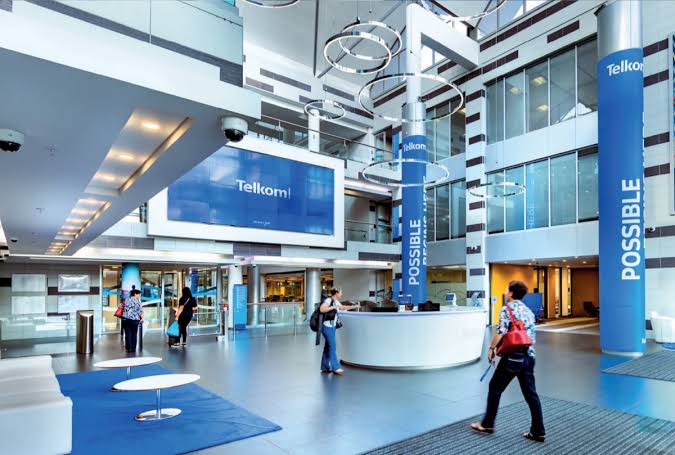
Telkom South Africa is exploring the conversion of about 300 underutilised fixed-line exchange buildings into edge data centre facilities, potentially providing additional capacity without the cost and time required to construct new sites.
Richard Cazalet, Telkom’s strategy and transformation executive, said during a panel discussion on edge data centres that many of the buildings already have essential infrastructure, including power, fibre connectivity, cooling and security. With demand from an anchor customer, some could accommodate modular edge facilities within 12 to 16 weeks.
Openserve, Telkom’s infrastructure subsidiary, has approximately 1,500 buildings across South Africa, of which around 300 meet the requirements for potential data centre use. The buildings were originally constructed to support fixed-line telecommunications services, but many are now underutilised as demand for traditional copper-based services declines.
advertisement
Their existing locations could also give them an advantage in edge computing. Telephone exchanges were historically distributed close to residential and business users to reduce the distance signals travelled across copper networks. Edge facilities follow a similar principle, placing computing, processing and storage closer to users to reduce latency.
Sunil Piyarlall, Openserve’s executive for network architecture and modelling, previously identified power, fibre and cooling as three foundations already available at many of the sites. Repurposing the buildings could therefore reduce the capital required to establish smaller edge facilities.
Openserve has tested the approach at its cable landing station in Yzerfontein, on South Africa’s west coast. Piyarlall described the facility as successful, with capacity sold to local and international customers.
advertisement
However, the buildings are not immediately suitable for every type of computing workload. Their original electrical and cooling systems were designed for telecommunications switching equipment, not the high-density power demands of modern AI infrastructure. The proposed approach is therefore more suited to modular edge deployments than large GPU clusters used for intensive AI training.
Hlumelo Fungile of PAIX said demand for edge infrastructure is increasingly being driven by AI inference, where models process queries and generate responses. This requires computing resources to be closer to users, particularly in sectors such as retail and enterprise services where delays can affect customer experience.
Ashley Sanichar, Oracle’s country lead for South Africa, cautioned that edge computing would not replace hyperscale cloud services for most businesses. Smaller and medium-sized enterprises are likely to continue relying on cloud platforms for cost and convenience, while edge infrastructure will serve specialised applications such as mining, where equipment inspections and safety-related analytics may require near-real-time processing.
advertisement
The opportunity comes against a backdrop of limited data centre capacity across Africa. A July report by Fortren & Company estimated that the continent had more than 500 megawatts of operational capacity, with another 890 megawatts in the pipeline. South Africa accounts for more than 60 per cent of existing capacity.
A separate 2026 economic report by the Africa Data Centres Association and Rising Advisory put active capacity at 360 megawatts, with 238 megawatts under construction. Although the reports use different definitions and reporting periods, both point to a substantial infrastructure gap.
Dr Ayotunde Coker, chief executive of Open Access Data Centres, said large data centre developments would remain important for supporting more demanding workloads. He identified Johannesburg, Lagos, Nairobi and Mombasa, Cairo and Morocco as potential hubs, with access to reliable power and subsea connectivity influencing where investment is concentrated.
Open Access Data Centres has expanded its regional footprint through the acquisition of seven former NTT facilities in South Africa, taking its capacity beyond 25 megawatts across South Africa, Nigeria and the Democratic Republic of Congo.
For enterprises considering edge infrastructure, the immediate challenge may be less about finding buildings than establishing sufficient demand to justify investment. Cazalet said Telkom’s proposed conversions would depend on customers committing to use the facilities, while Sanichar noted that hyperscalers also require anchor tenants before launching new regions.
Repurposing existing exchanges could lower the threshold for investment by allowing smaller deployments to be developed incrementally. But power upgrades, cooling requirements, specialised engineering skills and commercially viable customer commitments will determine how many of the buildings can ultimately become operational edge facilities.