
advertisement
WA Regulators Call For Cooperation To Protect Submarine Cables

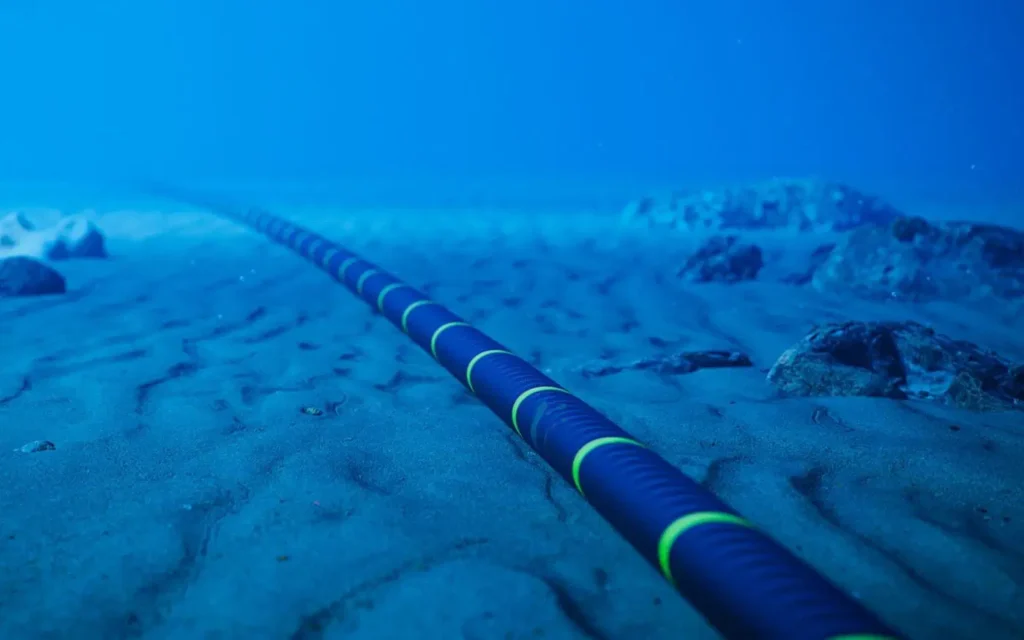
The West Africa Telecommunications Regulators Assembly (WATRA) has called for stronger regional collaboration to protect submarine cable infrastructure, warning that recent outages have demonstrated the need for coordinated action to strengthen the resilience of the region’s digital connectivity.
In a statement issued this week, WATRA urged governments, regulators and industry stakeholders across West Africa to work together on the protection, maintenance and restoration of submarine cable systems that carry the vast majority of the region’s international internet traffic.
The appeal follows the publication of reports by the International Advisory Body on Submarine Cable Resilience, a global initiative established by the International Telecommunication Union (ITU) and the International Cable Protection Committee (ICPC) to improve the resilience of critical submarine communications infrastructure.
advertisement
WATRA Executive Secretary Aliyu Yusuf Aboki, who serves as a member of the advisory body, said the widespread submarine cable outages experienced in March 2024 highlighted the vulnerability of West Africa’s digital infrastructure and reinforced the importance of regional cooperation.
Submarine cables are the backbone of global digital communications, carrying more than 99 percent of international data traffic. They support a wide range of essential services, including internet connectivity, financial transactions, cloud computing, government services and emergency communications.
The significance of this infrastructure became evident in March 2024 when damage to multiple submarine cables disrupted internet services across several West African countries, including Côte d’Ivoire, Ghana, Nigeria and Liberia, affecting businesses, public services and millions of internet users.
advertisement
The newly released reports from the International Advisory Body on Submarine Cable Resilience were developed by three specialist working groups involving approximately 175 experts from around the world.
The reports identify several of the major risks facing submarine cable infrastructure, including accidental damage caused by fishing activities, ship anchors, natural hazards and increasing congestion in areas where multiple cables are located. They also highlight the need for improved coordination to reduce repair times, strengthen maintenance practices and improve network redundancy.
According to the advisory body, translating these recommendations into practical action will be critical to improving the resilience of global communications infrastructure.
advertisement
For West Africa, WATRA believes this will require closer regional cooperation on issues such as cable protection measures, maintenance planning, emergency response and the development of more resilient international connectivity routes.
The region already has a direct role in shaping the global resilience agenda. Nigeria’s Minister of Communications, Innovation and Digital Economy, Dr. Bosun Tijani, co-chairs the International Advisory Body on Submarine Cable Resilience alongside Professor Sandra Maximiano, Chair of Portugal’s communications regulator, ANACOM.
The advisory body’s inaugural summit was held in Abuja in February 2025, while its second meeting took place earlier this year in Porto, Portugal, bringing together government representatives, regulators, industry leaders and technical experts to advance international cooperation on submarine cable resilience.
The latest call from WATRA also reflects broader efforts across West Africa to strengthen the resilience of digital infrastructure. In recent months, several countries have increased attention on protecting both submarine and terrestrial telecommunications networks as governments seek to reduce disruptions to critical communications services.
While WATRA’s statement sets out the need for a coordinated regional approach, the next phase will depend on how governments and regulators translate the advisory body’s recommendations into practical measures, including stronger cable protection frameworks, improved repair coordination and investments in network redundancy to minimise the impact of future outages.