
advertisement
Absa Launches SA’s First Mobile Smart ID Branch

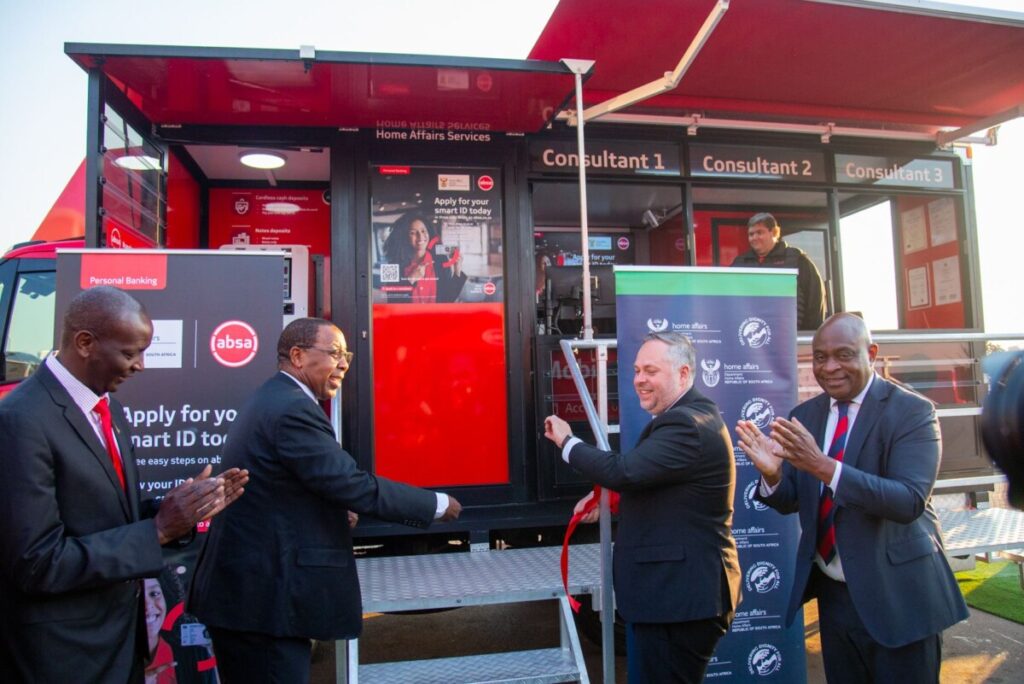
Absa and South Africa’s Department of Home Affairs have launched the country’s first bank-based mobile Smart ID branch, expanding access to digital identity services by taking Home Affairs services directly into underserved communities.
Unveiled at the Mall of Tembisa on Wednesday, the mobile unit enables citizens to apply for Smart ID cards, complete biometric enrolment and collect their identity documents without visiting a Home Affairs office. Built on an Iveco truck, the branch is designed to travel to remote, peri-urban and historically underserved areas, offering the same paperless, digitally integrated application process available in participating bank branches.
The launch also marks Absa’s entry into the Department of Home Affairs’ Digital Partnership, making it the programme’s fourth banking partner after Capitec, FNB and Standard Bank.
advertisement
Speaking during the launch, Minister of Home Affairs Dr Leon Schreiber said the initiative represents another milestone in expanding access to government services through partnerships with the private sector.
Since the Digital Partnership programme became operational in March 2026, Smart ID service points have grown from 214 to 541 locations, with the department targeting approximately 750 participating bank branches by the end of the year. Schreiber described the expansion as the fastest increase in access to Home Affairs services since the advent of democracy.
Absa has already rolled out Smart ID services in more than a dozen branches, including locations in Johannesburg, Pretoria and Cape Town, and plans to expand the service to around 60 branches by the end of 2026. The bank’s mobile units will complement the approximately 210 mobile Home Affairs units already operating nationwide.
advertisement
Unlike previous arrangements that required Home Affairs personnel to be stationed permanently inside bank branches, the revamped Digital Partnership allows banks to manage day-to-day branch operations through secure digital integration with government systems. The model leverages banks’ existing biometric infrastructure, secure facilities and nationwide branch networks to extend the reach of identity services while reducing operational costs.
Kenny Fihla, Absa Group Chief Executive, said the partnership reflects the critical role trusted institutions can play in expanding access to essential public services.
“Identity is fundamental to economic participation,” Fihla said, adding that the partnership enables government services to reach more citizens without compromising security.
advertisement
The programme forms part of South Africa’s broader effort to replace the country’s green barcoded identity book with the more secure Smart ID card, reducing fraud while improving access to government and financial services.
The mobile rollout also highlights a growing trend across Africa, where governments are adopting different approaches to expanding digital identity.
While countries such as Nigeria have strengthened state-led identity management through a centralised national identity authority, and Kenya has focused on delivering services through integrated digital government platforms, South Africa has chosen to extend its identity system by leveraging the physical infrastructure and customer reach of commercial banks.
Among the keynote speakers at the launch was Sitoyo Lopokoiyit, Absa Group Chief Executive for Personal and Private Banking. Formerly the Chief Executive of M-PESA Africa, Lopokoiyit said the collaboration demonstrates how partnerships between government and the private sector can improve financial inclusion by making essential public services more accessible.
As the Digital Partnership expands, attention will now turn to whether the programme reaches its target of approximately 750 participating bank branches by year-end and how quickly the mobile units can extend Smart ID services to communities beyond South Africa’s major urban centres.