
advertisement
The Growing Role Of AI In Children’s Learning


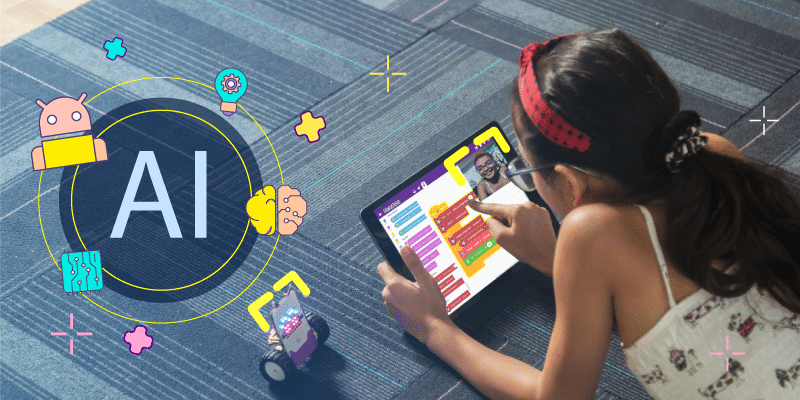
Artificial intelligence is increasingly becoming part of how children learn, research and complete school assignments, creating a new challenge for parents and educators: teaching children not only how to use AI, but also how to question its output.
According to observations by cybersecurity company Kaspersky, children’s interest in AI tools continues to grow as the technology becomes more accessible and increasingly integrated into everyday learning. AI assistants can now be used to explain difficult concepts, generate ideas for essays, check written work, solve homework problems and help prepare presentations. This growing use is likely to make AI as routine in children’s education as search engines, online dictionaries and educational videos. However, unlike traditional educational resources, AI systems can produce information that appears authoritative while being inaccurate.
That makes AI literacy an increasingly important part of digital literacy. The challenge is particularly significant when children use AI to complete assignments rather than support their learning. A chatbot can generate an essay or provide a solution to a mathematics problem within seconds, potentially allowing a student to complete an assignment without understanding the subject. While this may offer a short-term convenience, it can undermine the purpose of the exercise, particularly where the assignment is designed to develop writing, research, reasoning or problem-solving skills.
advertisement
A more useful approach is to treat AI as a learning assistant rather than a replacement for the student’s own work. Children can use AI to explain unfamiliar concepts, suggest possible arguments, provide examples, identify weaknesses in a draft or generate practice questions. They can then use what they learn to complete the work themselves. This also creates an opportunity to develop a more critical approach to AI. Rather than simply accepting an answer, children can compare AI-generated information with textbooks, class notes and trusted educational sources.
The need for that scrutiny is partly because AI systems do not determine whether information is true before presenting it. Language models generate responses by predicting likely sequences of words based on their training data. As a result, an answer can be well-written and confident while still containing factual errors. These errors, commonly described as AI “hallucinations”, can include invented sources, inaccurate facts or references to studies and events that do not exist.
For children, this creates a different kind of information challenge from the one posed by conventional internet search. Digital literacy can no longer stop at finding information. Students increasingly need to determine whether information generated by an AI system is credible, relevant and supported by evidence.
advertisement
One practical way of developing this habit is to encourage children to ask five questions before accepting an AI-generated response.
The first is who or what the source is. If an AI assistant refers to a book, study, quotation or historical event, the child should check whether the source exists and whether it is credible.
The second is whether the response actually answers the question being asked. An AI system can produce a polished answer while misunderstanding an assignment or failing to follow specific instructions from a teacher.
advertisement
The third is whether the child can explain the answer independently. If a student cannot reproduce the reasoning or explain the information in their own words, the response may have become a substitute for learning rather than a learning aid.
The fourth is whether the information can be verified elsewhere. Important claims should be checked against textbooks, class notes, official educational resources or multiple reliable sources.
Finally, children should know when to ask an adult. Questions involving health, safety or sensitive subjects may require guidance beyond what an AI system can provide. These checks are particularly important because children may approach AI with the same level of trust they would give a teacher, search engine or other familiar educational resource. There is also a privacy dimension to the growing use of AI by children. Conversations with chatbots can feel private, potentially encouraging children to disclose information about themselves, their families or their schools without considering how that information may be handled.
Parents should therefore establish clear boundaries around the information children share with AI services. Personal details such as full names, home addresses, telephone numbers, school information, passwords, identity documents, financial information and other confidential data should not be entered into AI tools. Children should also understand that the information of other people, including photographs, messages and documents, should not be uploaded without permission.
The wider cybersecurity environment adds another layer to the challenge. Critical thinking can help children identify misleading AI-generated information, but it needs to be accompanied by basic security practices. Accounts should use strong, unique passwords and two-factor authentication where available. Applications should be obtained from official sources and kept updated, while children and parents should regularly review privacy settings and understand what information is visible online.
The objective is not to discourage children from using AI. Instead, the growing presence of AI in education makes it increasingly important for children to develop the skills to use it deliberately and critically. Parents can play a role by reviewing AI-generated homework responses with their children, checking sources and discussing which parts are useful, inaccurate or require further research. This shifts the conversation from whether children should use AI to how they should use it responsibly.
“AI can be a valuable learning tool when children use it to explore a topic, test their understanding or improve a draft of an essay, rather than simply replace their own work. The key skill is learning not to accept every answer at face value. An AI-generated response may sound confident and well-structured while still containing invented information, false references or incorrect reasoning. Parents can help by encouraging children to check important information against textbooks and trusted sources, explain the answer in their own words and ask for help whenever something seems unclear. These habits will help children benefit from AI while developing the critical thinking skills they need throughout their school career,” comments Andrey Sidenko, Cyber Literacy Projects Lead at Kaspersky.
As AI becomes more deeply embedded in education, the ability to use the technology may ultimately become less important than knowing when not to trust it. For a generation growing up alongside AI, learning to question an answer could become as important as learning how to find one.