
advertisement
Kenya’s Telcos Ordered To Send El Niño Alerts To Everyone


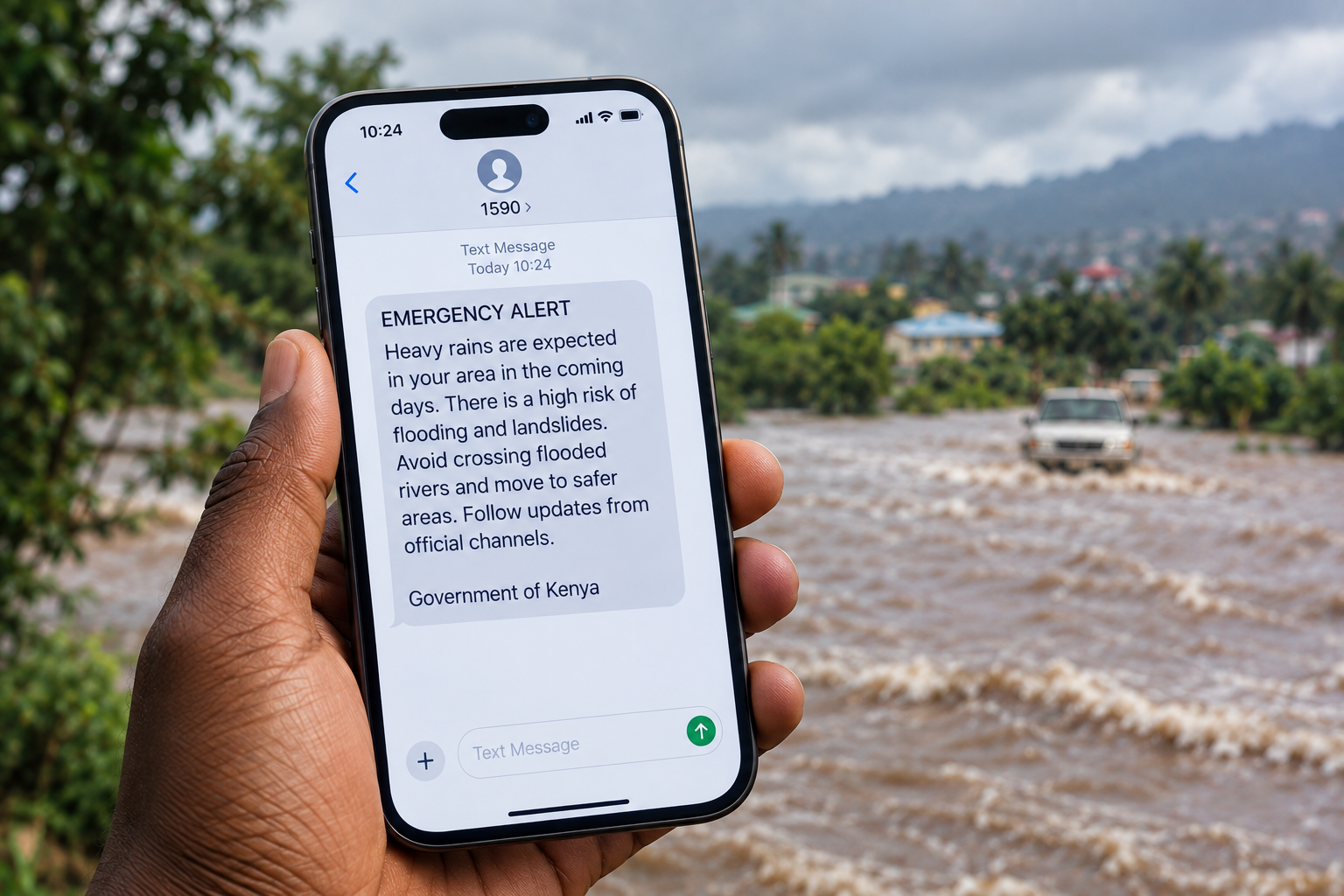
Communications Authority of Kenya has ordered Safaricom, Airtel Kenya, Telkom Kenya and Jamii Telecommunications to deliver government emergency texts to every subscriber, even those who opted out of marketing messages. The rule covers only official alerts, not ordinary bulk SMS.
The letter dated October 1, 2026, and was addressed to the chief executives of the four operators. The Authority said operators were “hereby directed to exempt Government-authorized emergency bulk SMS communications” from those requirements. In practice, operators must deliver these messages to all active subscribers, including those with Do Not Disturb settings or earlier opt-outs from promotional messages.
The directive covered test runs that were scheduled for October 2, 2026, as well as early warning messages, disaster preparedness advisories, simulation notifications and El Niño-related emergency alerts. Under the order, messages are to go out through designated government platforms, such as short code 1590, giving the public one recognised channel for public safety communications. Operators have also been told to prioritise delivery of these messages and to provide technical support for the test run of the National Early Warning System, as well as for any real emergency response.
advertisement
The El Niño warnings behind the order have been building since June. On June 2, the World Meteorological Organization (WMO) put the likelihood of an El Niño event during June to August at 80 per cent. Kenya Met’s own public statement followed on June 10, saying forecasts pointed to a high likelihood of El Niño occurring and persisting through the end of the year. A day later, on June 11, National Oceanic and Atmospheric Administration, (NOAA) confirmed that El Niño conditions were present in the tropical Pacific and said they were “expected to strengthen in the coming months.”
For Kenya, the concern is the short rains. Kenya Met’s head of public weather services, Hannah Kimani, put the chance of a very strong 2026 El Niño at 81 per cent, and the chance of it lasting into early 2027 at 97 per cent. The department’s outlook dated August 26 forecast above-average rainfall across much of the country for October to December. On September 21 it followed with a public advisory warning of floods, landslides, damage to buildings and the displacement of families. On October 5, Kenya Met said the season had officially begun, with rain already recorded in 24 counties. The earlier outlook language was consistent with that, “Above average rainfall is expected over most parts in October and November,” said Stanley Kinyua, Kenya Met’s Narok County director.
The warnings have been public for months, but a warning only counts if it reaches the people in its path. Kenya’s consent rules for SMS exist to protect subscribers from marketing, and a flood alert can’t be allowed to fail because of a setting meant for adverts. One outlet noted that on Safaricom the block sits in the *456# menu, under Stop, then Marketing Messages. That is a setting millions of Kenyans have likely used, so without this directive the people who opted out of marketing would also have been cut off from public safety alerts.