
advertisement
ChatGpt Enterprise Lands On AWS Marketplace As Claude Fable 5.2 Goes Multi-Cloud

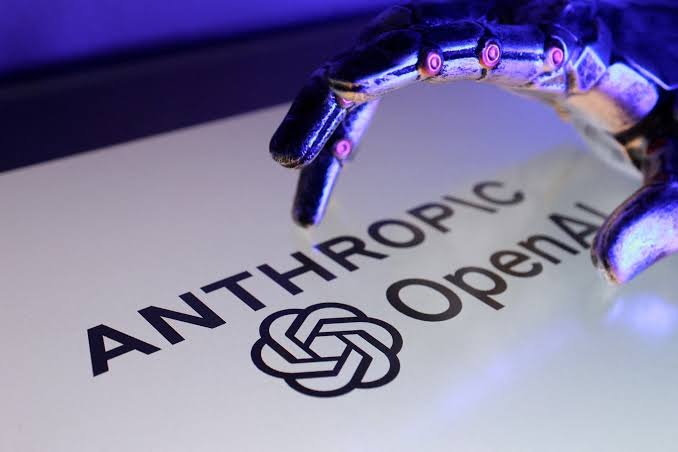
For most of the past three years, buying enterprise AI meant opening a new supplier account. That brought new contracts, security questionnaires, invoices and another vendor for procurement teams to manage.
This week, two of the biggest AI providers moved further into infrastructure that large IT departments already pay for: the hyperscaler bill.
On November 9, OpenAI listed ChatGPT Enterprise on AWS Marketplace, allowing eligible spending to count towards existing customer commitments with Amazon. The same day, Anthropic released Claude Fable 5.2 across Amazon Web Services (AWS), Google Cloud and Microsoft Azure, with list prices 20 per cent lower than its predecessor.
advertisement
The model upgrade may attract the headlines. For CIOs, however, the more consequential development is procurement. Enterprise AI spending is increasingly flowing through existing cloud budgets, potentially changing how technology leaders negotiate with providers.
OpenAI brings ChatGPT Enterprise to the AWS bill
The AWS Marketplace listing bundles ChatGPT Enterprise with ChatGPT Work, the Codex coding agent and Dots, OpenAI’s always-on task agents.
advertisement
Sector-specific editions for healthcare and financial services are also available to eligible customers.
OpenAI sells and supports the product, while AWS handles billing. According to PPC Land’s review of the listing, customers receive the same models and features available through direct purchases, with releases arriving at the same time.
The main attraction is the ability to draw down existing cloud commitments.
advertisement
Eligible spending can count towards an AWS Enterprise Discount Program (EDP) or Private Pricing Agreement (PPA) commitment, subject to the terms of each customer’s agreement with AWS. The amount that qualifies will therefore depend on individual contracts.
OpenAI has not published a standard price for the Marketplace offering. Buyers must request a private offer, after which OpenAI or AWS account teams confirm eligibility. Neither company has disclosed the full eligibility criteria or AWS’s fees.
Matt Yanchyshyn, AWS vice-president for Marketplace and Partner Services, said: “Enterprises want to put AI to work across their teams without adding new layers of procurement.”
The arrangement builds on a relationship that has expanded throughout the year. OpenAI models and Codex arrived on Amazon Bedrock in limited preview in April before becoming generally available in June.
That followed an April amendment to OpenAI’s agreement with Microsoft, allowing the company to serve its products on other cloud platforms. Azure remains its primary cloud partner.
Anthropic cuts prices and expands cloud availability
Claude Fable 5.2 launched across AWS, Google Cloud and Microsoft Azure at $8 per million input tokens and $40 per million output tokens.
The previous Fable 5.1 model was listed at $10 and $50, respectively, making the new model 20 per cent cheaper at standard list prices. The comparison does not account for additional discounts negotiated by enterprise customers.
| Model | Input ($ per million tokens) | Output ($ per million tokens) |
| Claude Fable 5.1 | $10 | $50 |
| Claude Fable 5.2 standard | $8 | $40 |
| Claude Fable 5.2 fast mode | $16 | $80 |
Anthropic makes several additional performance claims. It says Fable 5.2 is up to 30 per cent faster than Fable 5.1, while fast mode increases token generation speeds by up to 2.5 times.
The company has also published results across several benchmarks, including a score of 49.1 per cent on the FrontierCode 2.0 coding test.
These performance figures come from Anthropic and have not yet been independently reproduced.
The release also includes Mythos 5.2, a version that retains cybersecurity and biological capabilities restricted in Fable. Access is limited to organisations vetted through Anthropic’s verification programmes. Claude Enterprise customers can also access Mythos through Claude Security.
Anthropic already has a substantial presence on cloud marketplaces. PPC Land reports that marketplace sales accounted for approximately 44 per cent of the company’s revenue in the nine months to September 30, 2026.
Claude Enterprise is also available through AWS Marketplace, where eligible purchases can count towards existing AWS commitments. OpenAI is therefore entering a procurement channel that its main rival already uses.
What it means for CIOs
The first implication is for cloud budgets.
A CIO with an AWS commitment that is not being fully utilised now has another potential way to spend it, purchasing enterprise AI services from OpenAI or Anthropic.
This could turn otherwise unused cloud commitments into AI subscriptions and model usage. However, the extent of the benefit depends on the terms of individual agreements.
Both companies qualify their offers by referring customers back to their AWS agreements. Before signing a private offer, procurement and finance teams will need to establish exactly which purchases qualify and how much spending can be deducted from existing commitments.
The second implication is negotiating leverage.
With competing AI providers selling through the same marketplace and offering private deals, enterprises can potentially obtain competing quotes through a single procurement channel.
The absence of public pricing for ChatGPT Enterprise makes this particularly important. The private-offer process becomes the point at which buyers negotiate pricing, eligible spending and contractual terms.
The third consideration is data residency.
Buying AI services through AWS does not necessarily mean that customer data remains within AWS infrastructure or the customer’s own AWS environment.
The AWS Marketplace listing for ChatGPT Enterprise states that purchasing through the platform does not guarantee that all customer data stays on AWS infrastructure or within the customer’s AWS environment, according to an analysis of the listing and OpenAI’s data residency guidance.
The same analysis identifies three regions for OpenAI inference residency: Europe, the United States and the United Arab Emirates. No African region is listed.
That distinction matters to enterprises operating in markets with active data protection regulators, including Kenya, Nigeria and South Africa.
An organisation may purchase an AI service through the same AWS account it uses to run workloads in the Cape Town region, while model inference takes place in another jurisdiction.
Legal, compliance and security teams must therefore examine where data is processed, how it is retained and which jurisdictions govern its handling. The simpler procurement process does not remove those obligations.
Africa’s push for local AI infrastructure
The developments come as debate over Africa’s AI infrastructure requirements intensifies.
On November 10, David Gowu of TICON Africa called for the continent to build its own AI capacity. On the same day, Vodacom’s Egyptian subsidiary was confirmed as a co-investor in a project its partners describe as Egypt’s first sovereign AI data centre.
These investments reflect growing interest in local AI infrastructure, data sovereignty and reducing dependence on computing capacity hosted outside the continent.
However, the frontier models being sold through global cloud marketplaces are still largely dependent on infrastructure and processing locations outside Africa.
For CIOs, the challenge is increasingly twofold: securing access to the most capable AI models while ensuring that procurement arrangements, data residency and regulatory obligations align with their organisations’ requirements.