
advertisement
Ghana Pushes For Global ITU Subsea Cable Rules

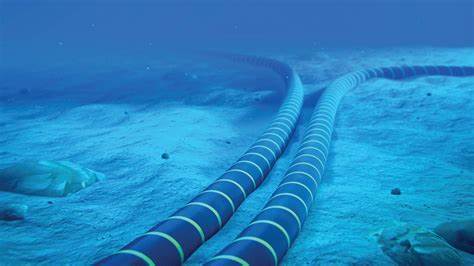
Ghana’s Minister for Communication, Digital Technology and Innovations, Samuel Nartey George, urged the International Telecommunication Union (ITU) this week in Doha to establish enforceable global network resilience standards, turning lessons from a catastrophic March 2024 subsea cable blackout into a four-point action plan on the sidelines of the ITU Plenipotentiary Conference (PP-26).
Addressing a high-level thematic discussion during the November 9–27 conference, George argued that simply connecting a country to multiple undersea cables is no longer enough to guarantee digital survival when regional chokepoints fail simultaneously. “Redundancy on paper is not resilience in practice,” George told delegates. “In a digital world, connectivity is not a convenience, it’s a lifeline.”
His warning is rooted in a crisis that brought West Africa’s digital economy to a standstill more than two years ago. On 14 March 2024, Ghana relied on four international subsea cables, ACE, MainOne, SAT-3, and WACS. By the end of that day, all four were knocked offline following what the Internet Society described as a suspected underwater rock slide off the coast of Côte d’Ivoire.
advertisement
According to Ghana’s National Communications Authority (NCA), the simultaneous failures severely disrupted business, mobile, and fixed data services across the country. Ghana was one of 13 nations affected, with cable operators’ repair timelines stretching from early April for SAT-3 to mid-May for MainOne. Ghana had followed the industry textbook by diversifying across multiple cables, yet every route went dark at once.
A four-point global blueprint
To prevent a repeat of the 2024 blackout, George asked the ITU to adopt a formal Programme of Action on Resilience backed by clear responsibilities, strict timelines, and measurable performance indicators during disruptions. His proposal rests on four pillars:
advertisement
- Protection and regulation: George called for frameworks that encourage infrastructure sharing, diverse network routes, faster right-of-way approvals and quick repairs. Operators, he said, should be held to measurable obligations for restoring service, and resilience should reach rural communities, not just cities.
- Resilient technology:He pointed to AI for predictive maintenance and threat detection, digital twins to test network performance, satellite links as backup, and solar power to keep sites running through electricity outages. He said these must come with strong cybersecurity, data protection and investment in local technical skills.
- Cross-border cooperation: He called for countries to share risk information, coordinate subsea cable repairs, clear repair vessels faster, and increase financing so developing countries can diversify their international routes.
- Global delivery: George pledged Ghana’s direct institutional support to help the ITU operationalise and deliver the resilience programme worldwide.
Ghana arrived at PP-26 with substantial credibility, holding Tier 1 status in the ITU Global Cybersecurity Index- a benchmark George cited in offering Ghana’s expertise to help other nations build Computer Emergency Response Teams (CERTs).
At home, Accra has already moved to harden its domestic infrastructure. A “Dig Once” policy, currently before Cabinet, will require telecom operators, road contractors, utilities, and local authorities to coordinate civil works to eliminate accidental terrestrial fibre cuts. Meanwhile, the NCA—working with the UN World Food Programme since August 2025, is finalising a National Emergency Telecommunications Plan that guarantees priority connectivity, including satellite backup, for hospitals, banks, and first responders during crises.
The takeaway for enterprise technology leaders
advertisement
For Chief Information Officers in Accra, Lagos, and Abidjan, the March 2024 outage was a stark wake-up call: banking platforms, mobile money rails, cloud workloads, and customer channels all ride on the same few submarine corridors. Having four cables on a network map meant nothing when a single seabed event severed them together.
While Ghana’s submission in Doha remains a proposal rather than a binding ITU mandate, it frames the exact questions enterprise IT leaders across West Africa should already be demanding of their connectivity providers: how many physically separate routes do you actually control, what are your guaranteed restoration timelines, and what keeps operations running when both the cables and the power grid go down?