
advertisement
Connected Africa Summit 2026 Opens In Nairobi


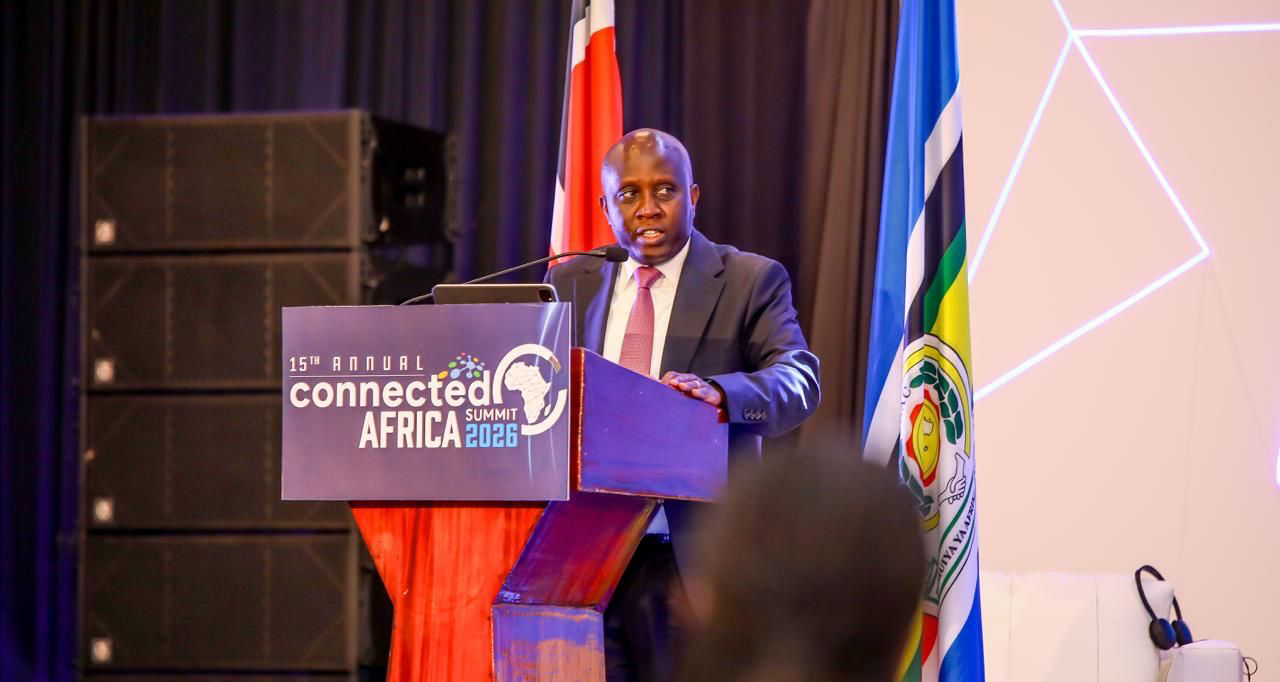
The Connected Africa Summit 2026 officially opened today in Nairobi, bringing together government leaders, policymakers, regulators, ambassadors, development partners, investors, and technology innovators from across Africa and beyond to chart the next phase of the continent’s digital transformation.
Held under the theme “Uniting Africa’s Innovation for an Inclusive Digital Market,” this year’s Summit builds on the momentum of previous editions: 2024’s “Shaping the Future of a Connected Africa: Unlocking Growth Beyond Connectivity” and 2025’s “The Digital Journey: Vision to Reality.” In 2026, the focus shifts firmly toward measurable delivery, implementation, and sustained action.
In his remarks, Eng. John Tanui, CBS, Principal Secretary in the State Department for ICT and the Digital Economy, Government of Kenya, underscored the urgency of the moment and why Africa must act now.
advertisement
“Africa stands at a critical inflection point. The decisions we make today and over the course of this summit will determine our continent’s position in the future global digital economy,” said Tanui.
He noted that innovation is transforming governments, digitising public services, attracting global investment, and driving demand for connectivity across the continent.
“Recent research by McKinsey & Company highlights this extraordinary potential. At scale, the deployment of generative AI and cloud technologies could unlock between $65 billion and $130 billion in additional economic value annually across Africa,” he added.
advertisement
Tanui pointed to significant progress in Africa’s digital backbone through submarine cable systems, terrestrial fibre expansion, and national infrastructure projects such as Kenya’s Digital Superhighway and Rwanda’s National Fibre Optic Backbone. However, he stressed that gaps remain.
“Despite this progress, there are still communities where fibre has not reached, regions where connectivity remains unreliable, and citizens who remain digitally excluded. That is why Connected Africa, and why now: because the next chapter of Africa’s growth depends on our ability to move from isolated success stories to a truly integrated digital ecosystem,” he said.
He further emphasised that connectivity alone is not enough.
advertisement
“For our digital ecosystem to thrive, it must be secure, inclusive, and trusted. Trust and cybersecurity are the foundations upon which digital transformation must be built.”
In his opening remarks, Jessy Maruti Kiveu, Chief Executive Officer of the ICT Authority, highlighted the strategic importance of innovation, inclusion, and interoperability in shaping Africa’s digital future.
“Innovation capacity and expanding connectivity are essential to driving inclusive growth and enabling Africa to act collectively with clarity, coordination, and purpose,” said Kiveu.
He outlined three central priorities for the continent’s digital agenda.
“First, advancing continental integration by strengthening interoperability, harmonising policy and regulatory frameworks, and enabling seamless cross-border digital services in alignment with our continental aspirations.
Second, enabling Africa-led innovation by creating an environment where enterprises can scale, supported by strategic infrastructure, forward-thinking policy, and trusted partnerships.
Third, ensuring inclusive participation by expanding access, building digital capabilities, and ensuring that the benefits of the digital economy reach all our citizens.”
Kiveu reaffirmed ICT Authority’s commitment to building secure and resilient digital systems.
“At ICT Authority, we remain committed to supporting this vision by securing interoperable and resilient digital systems. Without interoperability, we risk fragmentation; and without trust, transformation cannot endure.”
Hon. Lily Ng’ok, ICTA’s Board Chairperson noted that Africa is witnessing steady growth in technology adoption, innovation, and investment, shaping the continent’s digital landscape.
The Summit will feature an influential assemblage of government leaders, policymakers, ambassadors, regulators, investors, and technology executives, all contributing insights on accelerating Africa’s digital innovation, economic growth, and social development.
Confirmed ministerial participation includes leaders and delegations from Ethiopia, Malawi, Uganda, Gabon, Guinea, Chad, and Zimbabwe, with additional African states expected to attend through senior delegations.
This year’s agenda is aligned with the African Union’s Digital Transformation Strategy for Africa 2020–2030, focusing on policy and regulation, infrastructure, digital skills, innovation, trade, and development.
The Summit also builds on key continental frameworks already in motion, including the African Continental Free Trade Area Digital Trade Protocol and the African Union Data Policy Framework, both seen as critical to enabling a trusted and interoperable African digital economy.
The first day of the Summit focuses on cybersecurity, reflecting Africa’s urgent need to build resilient, inclusive, and future-ready digital economies. Over the coming days, discussions will expand to cover Digital Public Infrastructure (DPI), Artificial Intelligence, digital identity, fintech, connectivity, smart infrastructure, cloud, data governance, and innovation ecosystems.
As delegates gather in Nairobi this week, the Connected Africa Summit aims to move beyond dialogue and into action, creating practical pathways toward a connected, sovereign, and prosperous digital Africa.