
advertisement
Beyond The Bandwidth: What The Blue-Raman Cable Really Buys East Africa

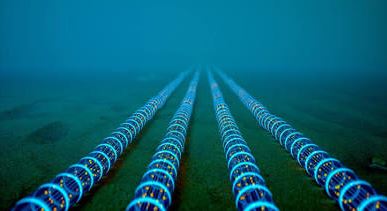
When the European Union confirmed roughly $42.8 million (KSh5.6 billion) to extend the Google-backed Blue-Raman submarine cable into East Africa, the announcement arrived dressed in the familiar language of breakthrough: a digital corridor, a strategic boost, a new chapter for the regional economy. President William Ruto unveiled the figure in Brussels as part of a wider $160 million (KSh20.7 billion) digital package, and the framing across the global wires was uniformly upbeat.
It is, on its own terms, good news. But CIOs, regulators and digital-economy planners across the region will get more value from reading this development closely than from reading the press release because the strategic story is richer, and more demanding, than the headline suggests.
What the money actually buys
advertisement
Blue-Raman is a long-haul system unveiled in 2021, variously described as spanning some 12,000 to 16,000 kilometres depending on how its core route and extensions are counted. Built with Italy’s Sparkle and backed by Google, it was designed to link Europe, the Gulf and India through a route anchored on a hub in Djibouti. The EU’s contribution, channelled through its Global Gateway strategy and Italy’s Mattei Plan, with the European Investment Bank, the pan-European research network GÉANT and Africa’s own UbuntuNet Alliance as partners, finances an extension from that Djibouti hub down the coast to Somalia, Kenya and Tanzania.
Note the partners. This is not a pure commercial telco play. The presence of GÉANT and UbuntuNet signals a research-and-education dimension, and the geopolitical packaging, part of the EU-Africa-India Digital Corridor and the broader IMEC ambition, tells you the cable is as much an instrument of European strategy as it is a piece of African plumbing. Brussels is competing for influence on the continent, and digital infrastructure is the new terrain on which that competition is fought.
None of that diminishes the value. It just changes the lens.
advertisement
The Redundancy Reality
Here is a fact that tends to get lost in the celebration: East Africa is not short of subsea cables.
Mombasa alone already lands seven or more systems, including SEACOM, TEAMS, EASSy, LION2, DARE1, PEACE, 2Africa, with Africa-1 in the mix, and the region is served by around eight cable systems in total. Dar es Salaam adds further capacity. The picture of a coastline waiting in the dark for a European cable to switch on the lights does not quite match the reality on the ground.
advertisement
So if it is not first-time access, what is the real value? Three things, and they are worth understanding precisely:
Resilience: The region’s connectivity is dangerously concentrated. In February 2024, cables including SEACOM were damaged in the Red Sea after a vessel struck by conflict dragged its anchor, and repairs dragged on for months because the waters were too contested to work in safely. In May 2024, EASSy and SEACOM were cut off the coast of South Africa, degrading service across multiple countries for roughly three weeks. Every new diverse route reduces the odds that a single incident takes the region offline. That is the genuine, unglamorous case for Blue-Raman.
Route diversity: Much of East Africa’s traffic still funnels through a narrow set of geographies, the Red Sea and the Bab-el-Mandeb chokepoint chief among them. A system that offers an alternative path to Europe is a hedge against precisely the kind of geopolitical disruption the region has already lived through.
Ageing capacity: Several of the workhorse cables are approaching commercial end-of-life. New capacity is not a luxury; it is replacement infrastructure the region will need regardless.
This is a more honest, and more useful, way to brief a board or a ministry than “faster internet is coming.”
A Sovereignty Question Worth Raising
There is a deeper pattern here that deserves the region’s attention. Over the past decade, ownership of the cables East Africa depends on has shifted decisively, away from African telcos and governments, and toward global technology firms. Meta sits behind 2Africa. Google sits behind Blue-Raman. The rails on which African economies increasingly run are owned, financed and routed by entities headquartered elsewhere.
This is not an argument against foreign capital; the continent’s connectivity gap could never be closed by domestic balance sheets alone. But it is an argument for clarity. When the infrastructure that carries a nation’s data, payments and public services is owned abroad, questions of landing-station governance, capacity allocation, pricing and data routing become questions of sovereignty, not just procurement.
The EU’s model is, to its credit, more transparent than some alternatives, and the research-network partnership is a positive signal. The point is simply that African governments and regulators do well to approach these arrangements as strategic assets to be negotiated carefully, rather than as straightforward gifts. Welcome the investment and still pay close attention to the terms.
Connectivity Is Not Capability
Now to the point that matters most.
A cable landing on a beach in Mombasa or Dar es Salaam creates economic value only if a chain of other things exists to capture it: neutral data centres to host content and compute locally, healthy internet exchange points so traffic stays in-region rather than tromboning to Europe, a deep pool of skills to build on top of the pipe, local content and platforms worth carrying, and a regulatory regime that turns cheap bandwidth into cheap, reliable service for the end user.
Without that stack, a new cable mostly lets the region import other people’s digital services a little faster and export its data a little more cheaply. The bandwidth arrives; much of the value can still flow elsewhere.
This is why the European Commission’s own framing, explicitly tying the project to artificial intelligence and the risk of a widening digital divide, is the part East African leaders should take most seriously. AI does not run on connectivity; it runs on compute, data and skills sitting close to where the connectivity lands. A cable without domestic data centres and a trained workforce risks becoming a faster route into someone else’s economy rather than a foundation for one’s own.
What East Africa Must Do To Make It Real
The opportunity is real, but conditional. To convert it, the region’s decision-makers should treat the next eighteen months as the window in which the surrounding capability is either built or quietly forgone:
Localise the compute: Use the cable as the anchor for a deliberate data-centre and cloud-region strategy, so that the new capacity feeds domestic hosting and AI workloads rather than just transit.
Strengthen the exchange layer: Invest in IXPs and peering so that the cheaper international capacity translates into cheaper local traffic and lower latency for citizens and businesses.
Negotiate thoughtfully: Secure transparent terms on landing-station access, capacity and governance, and protect competitive, open access so the benefit does not pool with a single operator.
Build the human stack: Connectivity without skills is stranded capacity. The capacity-building components that accompany Global Gateway projects should be claimed aggressively and matched with sustained domestic investment in digital and AI skills.
Tell the African story: The authoritative analysis of what this infrastructure means for the region should come from the region, not be imported alongside the cable.
The Blue-Raman extension is a credible, welcome piece of infrastructure that improves East Africa’s resilience and route diversity at a moment when both are under strain. It deserves a measured welcome.
But the headline figure, $42.8 million (KSh5.6 billion), is the least interesting number in the story. The numbers that will determine whether this becomes a genuine inflection point are the ones nobody announced in Brussels: how many megawatts of local data-centre capacity get built around it, how many engineers get trained on top of it, and how much of the value it carries stays on the continent.
A cable is an opportunity, not yet an outcome. The difference will be made by what the region chooses to build around it.