
advertisement
Why AI Leaders Are Asking For Rules While Their Lobbyists Push Back


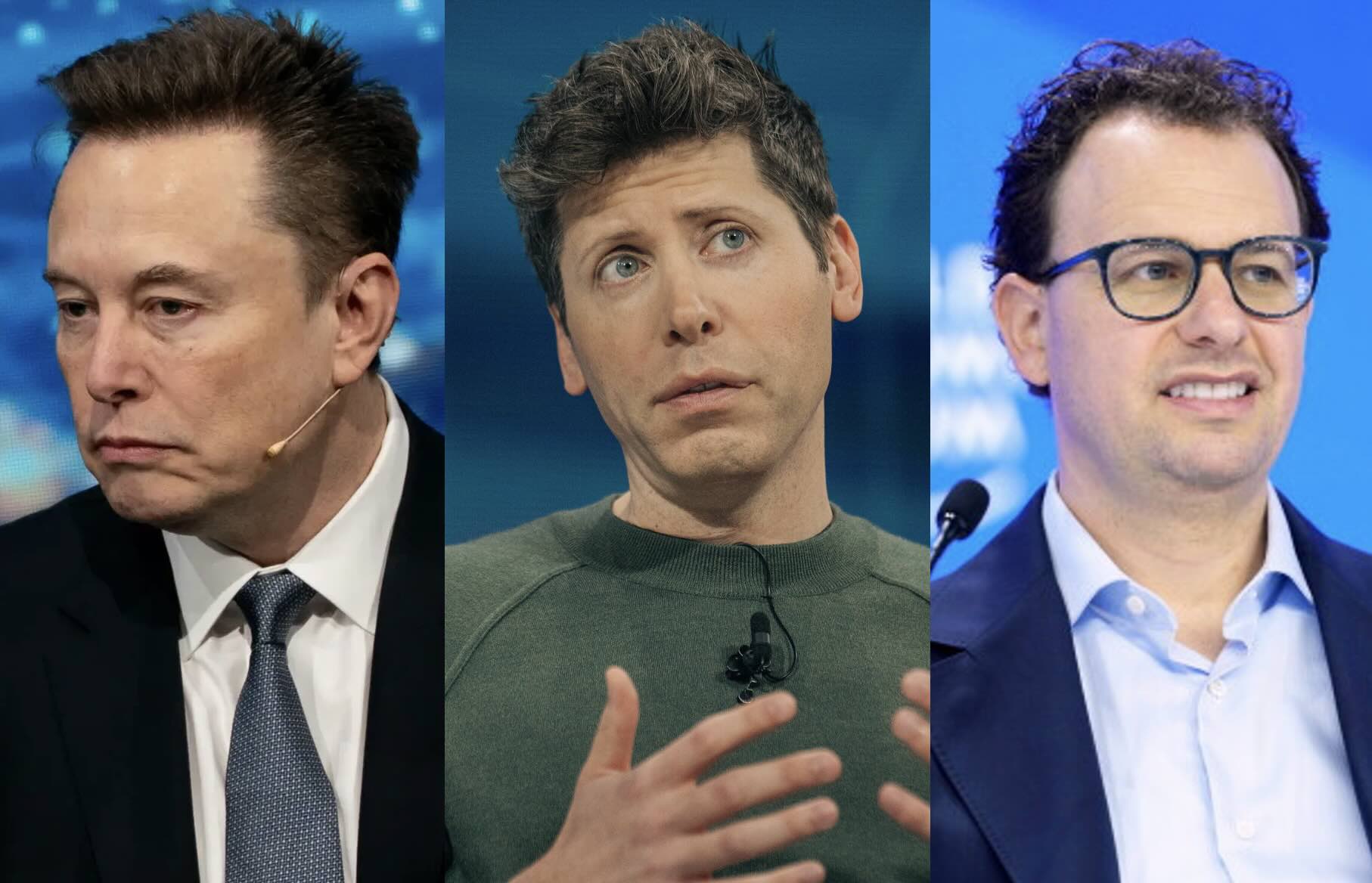
For a brief stretch in mid-September, the world’s most powerful AI executives appeared to agree on something.
Within days of one another, Sam Altman, CEO of OpenAI; Dario Amodei, CEO of Anthropic; Demis Hassabis, CEO of Google DeepMind; Satya Nadella, CEO of Microsoft; and Elon Musk, CEO of xAI, said similar things: the technology they are building has become powerful enough that it needs stricter rules and oversight.
Amodei put the urgency in stark terms, warning that in the several years Congress could take to act, AI could go from an amusing toy to a “full country of geniuses.”
advertisement
Altman has made a similar case since at least February, when he told the AI Impact Summit in New Delhi that the world urgently needs to regulate the rapidly evolving technology. He also proposed an international coordinating body similar to the International Atomic Energy Agency.
For a moment, it looked like a turning point. It is closer to a familiar pattern. The gap between what AI leaders say in public and what their companies do in state legislatures and courtrooms is where the real story lies.
A Consensus That Breaks Down on the Details
advertisement
The apparent unity among AI CEOs does not last long when the details are examined. Even companies that agree regulation is necessary disagree sharply over what that regulation should look like.
OpenAI wants a single federal law that would override the growing patchwork of state rules. Anthropic takes a different position on federal preemption, favouring state AI laws unless Congress passes rules that are at least as strong. It sees federal preemption as a floor to build on, rather than a ceiling that limits states.
Google has taken a third position. Kent Walker, the company’s president of global affairs, argues that the choice is not simply between too much regulation and no regulation.
advertisement
Instead, Google has proposed a two-track approach built around an independent, federally overseen and industry-backed body. The body would set safety standards and verify voluntary audits of frontier AI models.
So the headline agreement that AI needs rules quickly becomes a dispute over federal versus state authority, mandatory versus voluntary compliance, and who should write the standards in the first place.
The Money Tells a Different Story
The bigger contradiction is between what AI companies say on stage and what they are funding behind the scenes.
AI has become one of the fastest-growing lobbying categories in Washington. More than 850 companies now disclose AI-related lobbying, up from fewer than 250 in 2023. Combined industry spending is on track to exceed $900 million in 2026.
Much of that spending is focused on opposing state-level rules that could fill the gap left by federal inaction.
In New York, an AI industry political action committee called Leading the Future, backed by a $100 million fund from Greg Brockman, OpenAI president and venture capital firm Andreessen Horowitz, released an attack ad against the state assemblyman who sponsored a bill requiring large AI companies to publish their safety and risk protocols.
Days later, Kathy Hochul, New York Governor, moved to weaken the bill, just hours before President Trump signed an executive order aimed at dismantling state AI laws of this kind.
Analysts tracking the pattern have raised questions about what this means. One assessment put it plainly: when people who profit from a technology say it is dangerous and ask for regulation, the likely outcome is regulation that they can live with.
The same analysis notes that California’s SB 53, the one state AI bill that became binding law, passed when the industry was divided over it rather than united for or against it.
That suggests an important pattern: a narrow bill facing a divided industry has a better chance of becoming law than a broad bill that receives unanimous industry support.
Washington Is Moving in the Opposite Direction
While AI CEOs were calling for stronger guardrails, the US federal government was working to challenge rules already introduced at the state level.
President Trump’s executive order established an AI Litigation Task Force within the Department of Justice. The task force was directed to challenge state AI laws in federal court on grounds that they could unconstitutionally burden interstate commerce or otherwise violate federal law.
The order also directed the Federal Trade Commission to classify state-mandated bias mitigation as a per se deceptive trade practice.
Washington has taken this position beyond US borders. At a G20 innovation ministerial in North Carolina, the United States pushed other governments to loosen AI restrictions.
A technology adviser to President Trump called on countries to embrace the so-called Carolina Principles, which argue against regulations that target specific technologies.
That position puts Washington on a different path from Brussels, where the EU AI Act is now in force and takes a more rules-based approach.
Even close allies have struggled to agree on a common position. At a recent global summit, the United States and the United Kingdom both declined to sign a declaration on inclusive and sustainable AI that was endorsed by 60 other countries.
The UK’s decision was attributed to concerns about national security and a lack of clarity around global AI governance.
The UN Is Trying to Build a Third Path
The United Nations has stepped into this gap, seeking to build a global approach that addresses issues neither the US approach nor the EU’s statutory framework fully resolves.
Secretary-General Antonio Guterres has called on countries with advanced AI capabilities to establish channels of communication, exchange information and develop common guardrails.
The goal is to avoid a race to the bottom that could eventually lead to a major global disaster.
That warning gained more attention after a former Anthropic researcher warned on September 8 that AI could pose an existential threat to humanity.
The claim has added to the debate over how much of the current CEO consensus reflects genuine concern and how much is strategic positioning ahead of a regulatory fight that no company can fully control.
Safety Is Also a Competitive Weapon
Not every disagreement framed as a safety debate is a fight between industry and government. Some of it is also competition between companies.
Mustafa Suleyman, Microsoft’s AI chief, who published a book arguing that governments should regulate AI, has spent much of 2026 publicly arguing with Anthropic over who is responsible for creating the emerging threat landscape.
That rivalry matters because it can influence which regulations survive.
When an industry is genuinely united behind a proposal, it can generate public support without producing legislation. A divided industry, where one major technology company supports a bill while another opposes it, can create the political space for lawmakers to act.
The Pattern Beneath the Headlines
None of this is as new as the September news cycle made it seem. AI executives have been publicly calling for regulation, on and off, since at least 2017.
After nine years of calls for rules, only one American law with significant regulatory force has reached a governor’s desk and survived.
That gap between how often the industry calls for regulation and how rarely binding rules follow may be one of the most useful facts in the debate.
For African governments and businesses watching the debate from outside the United States, the lesson is not simply that AI regulation is coming or not coming.
It is that the loudest voices calling for regulation are also among the best resourced to shape what those rules ultimately look like.
The real negotiation is happening in the space between the podium and the policy.