
advertisement
Affordable Fibre Gains Ground In South Africa

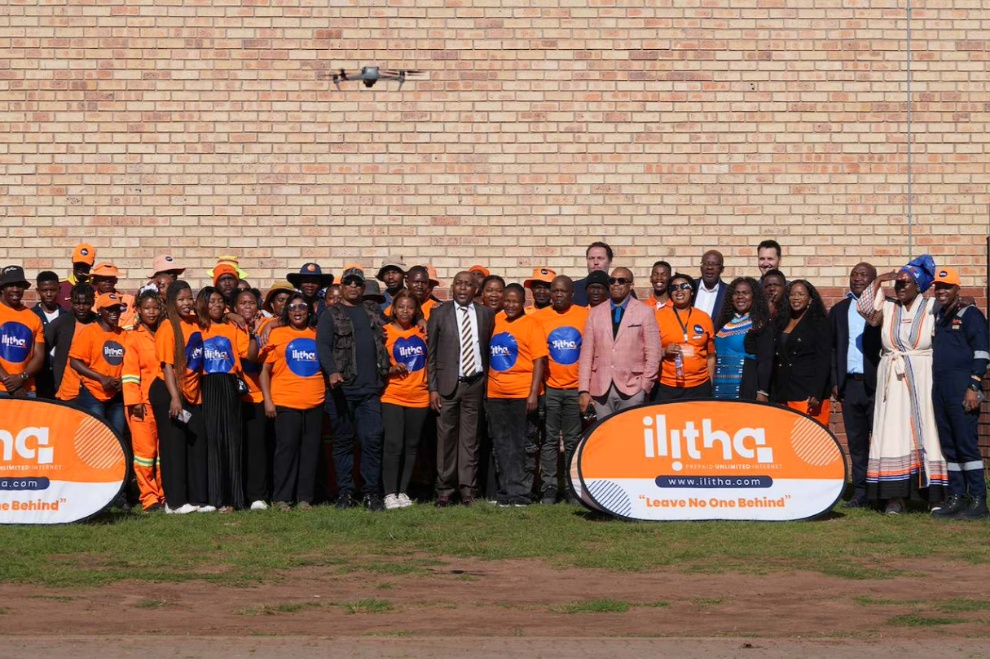
Affordable fibre is becoming an increasingly competitive segment of South Africa’s broadband market as providers expand into townships, rural areas and other communities that have historically had limited access to high-speed fixed connectivity.
Ilitha Telecommunications is among the companies expanding in these markets, with CEO Vuyani Jarana arguing that affordability alone does not determine whether households adopt broadband services.
“While affordability is key, the internet use case has a big effect on adoption and usage,” Jarana said. “What drives usage and adoption is the sense of value.”
advertisement
The company has expanded its network to 27 communities across the Eastern Cape and KwaZulu-Natal over the past 18 months. It formally launched its network in Mthatha this week as part of the expansion. Beyond connectivity itself, the company is seeking to increase the practical uses of broadband through services such as digital healthcare and online learning.
At the Mthatha launch, Ilitha showcased TruMD, a digital healthcare platform that provides online consultations with registered doctors, as well as its partnership with SpecCon, which provides accredited training programmes and qualifications.
“We are moving from asking how we connect a community to asking what we can enable once that community is connected. That is where we see the next opportunity,” says Jarana.
advertisement
Network capacity is another consideration as providers expand into lower-income areas. Ilitha said its packages can provide between 200Mbps and 300Mbps across up to 15 devices, depending on the package, while its prepaid, uncapped model allows households to use the connection without purchasing additional mobile data. The company also provides connectivity across connected communities, allowing users to remain connected beyond their homes.
Jarana said network deployment also needs to account for differences in settlement patterns. Established townships can have relatively high housing density, while self-built and peri-urban communities can have larger plots and greater distances between households, affecting the cost of connecting homes.
“We didn’t start by building a conventional network in an established urban neighbourhood and then ask how to make it work in townships. We started in these communities, and our model has been shaped by what we have learnt on the ground about how people live and use connectivity,” says Jarana.
advertisement
Ilitha’s expansion is being supported by R500 million in funding from Absa Corporate and Investment Banking.
“We have spent the past 18 months proving that this model works. The next phase is about taking what we have learnt and scaling it responsibly,” concludes Jarana.