
advertisement
Sun King Bets On Affordable Smartphones To Expand Beyond Solar

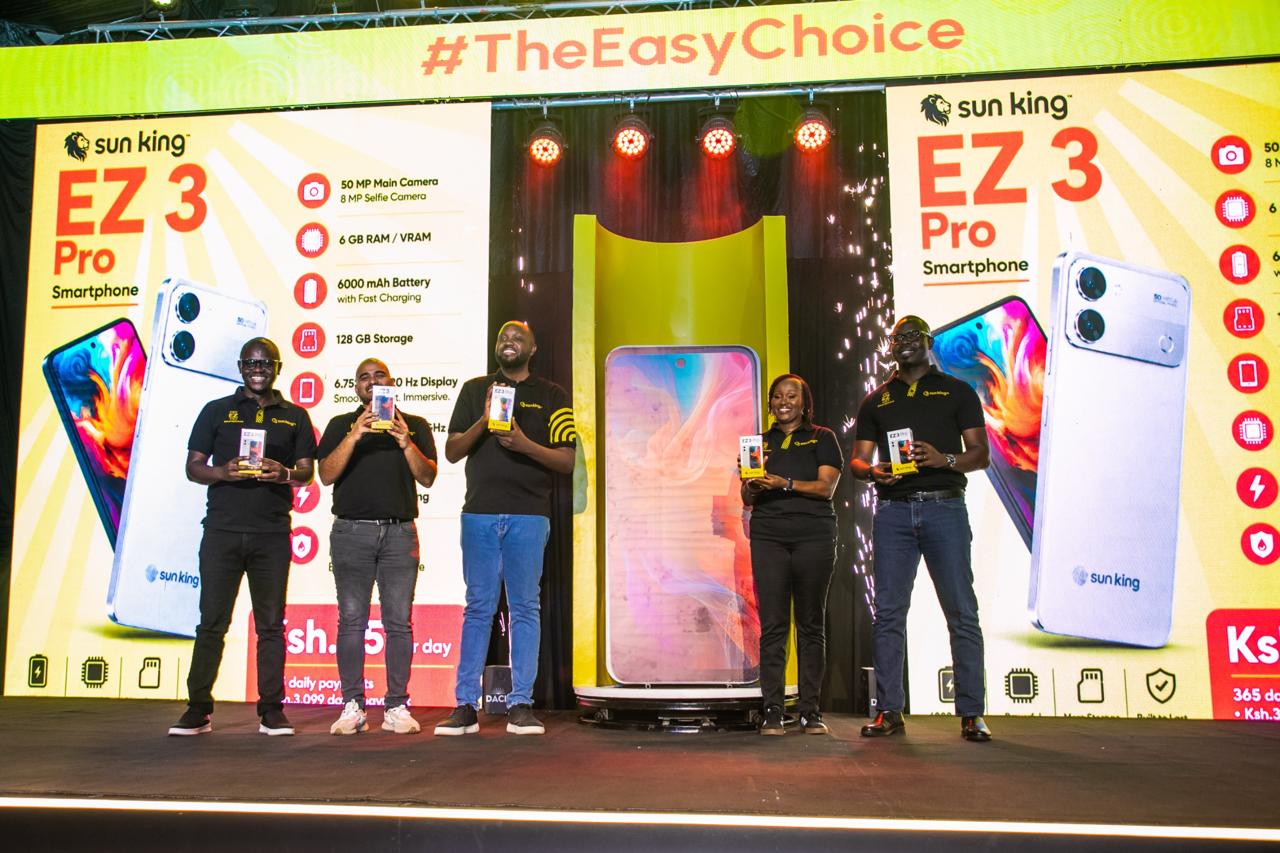
Sun King is deepening its push into Kenya’s smartphone market with the launch of the EZ 3 series, using the same pay-as-you-go model that has helped the company expand access to solar energy across the country.
The move marks another step in Sun King’s expansion beyond its traditional solar business. Rather than competing directly with established smartphone manufacturers on high-end specifications, the company is applying its existing financing and distribution model to a device that has increasingly become central to how consumers access digital services.
Sun King first entered Kenya’s smartphone market with the EZ 1, using its lipa pole pole model to allow customers to acquire the device through small daily payments rather than a large upfront purchase. The EZ 3 builds on that approach, with Sun King positioning affordability and payment flexibility alongside the phone’s hardware as key parts of its proposition. That strategy reflects a broader shift in the company’s business. Sun King built its Kenyan customer base by making solar home systems and appliances available to households that could not necessarily afford the full cost upfront. It is now applying the same principle to smartphones, effectively treating connectivity as another form of access that can be financed over time.
advertisement
The distinction is important because the EZ 3 is not positioned to win a conventional smartphone specification race. Its hardware sits firmly in the affordable segment, with a 6.75-inch HD+ 120Hz display, 4GB of RAM, 64GB of storage and a 13MP rear camera. It is powered by a Unisoc T7250 processor and has a 5,000mAh battery. The EZ 3 Pro, on the other hand, pushes the specifications higher, offering 6GB of RAM, 128GB of storage, a 50MP main camera and a 6,000mAh battery with 18W fast charging. Even so, both devices are designed around accessibility rather than competing with premium smartphones.
For Sun King’s target customer, that may be the more relevant proposition. The company says the EZ 3 is aimed at consumers including first-time smartphone buyers, students, traders and boda-boda riders. Some of the early customers highlighted by Sun King are already using the device for activities tied directly to their livelihoods.
For small businesses and informal workers, a smartphone can function as a sales channel, marketing tool, mobile banking device and connection to customers and suppliers. That makes Sun King’s move less about becoming another smartphone manufacturer and more about extending its existing approach to financing essential technology.
advertisement
The company already has experience selling hardware through a distributed network and collecting small recurring payments from customers. Its solar business has given it a customer base familiar with the model, while its operations in Kenya provide an existing platform through which additional products can be marketed and supported.
It also comes at a time when smartphone ownership is increasingly tied to participation in Kenya’s digital economy. Mobile money, social commerce, online marketplaces, digital financial services and a growing number of government and business services are accessed through smartphones.
Sun King’s Catherine Mudachi, VP Marketing, said the EZ 3 was developed based on the company’s experience serving Kenyan customers.
advertisement
“People want a phone that works, payments they can manage and a company they can trust. With the EZ 3 series, we’ve made the everyday choice even easier — and even more affordable.”
The company is also connecting the smartphone strategy to its existing energy business. Sun King says one in five Kenyans now have access to its solar products, giving it an established position among consumers who have previously used its financing model to acquire energy products. The combination of energy and connectivity is particularly relevant for households and small businesses operating outside reliable grid infrastructure. A smartphone requires not only connectivity but also a reliable source of power, bringing Sun King’s two businesses closer together.
Whether that strategy can translate into a significant smartphone business remains to be seen. Kenya’s handset market is already crowded, with established brands competing aggressively in the affordable segment. Sun King’s advantage is therefore unlikely to come from having the most powerful processor, highest-resolution camera or most advanced display.
For a company whose business was built on making solar technology accessible through small payments, that may be the more important competition to win.