
advertisement
Ramaphosa Opens Africa’s First Google Cloud Summit

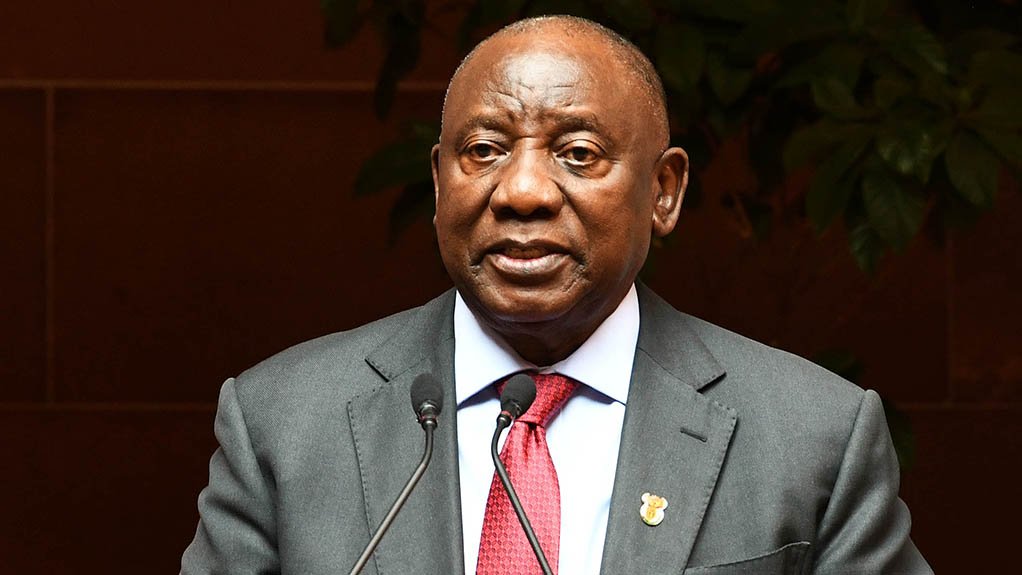
South African President Cyril Ramaphosa officially opened the first Google Cloud Summit held on African soil on Wednesday, telling delegates at the Sandton Convention Centre that the gathering was about far more than a technology conference. It was about where Africa positions itself in what he called the defining general-purpose technology shift of the era.
Running under the theme “Google Cloud is building for Africa,” the summit convened global technology executives, African policymakers, and industry leaders for a programme focused on cloud computing and artificial intelligence.
Ramaphosa delivered the keynote address after being received by James Manyika, Senior Vice President for Research, Labs, Technology and Society at Google-Alphabet; Kabelo Makwane, Google South Africa Country Director; and Maureen Costello, Vice President of Google Cloud. Also on the platform were Higher Education Minister Buti Manamela, Deputy Communications Minister Mondli Gungubele, and Eswatini’s Minister of Information, Communications and Technology, Senator Savannah Maziya, giving the event a regional rather than purely national character.
advertisement
This was the first Google Cloud Summit held anywhere in Africa. The Presidency said South Africa was deliberately selected because it hosts an estimated 70 per cent of Africa’s hyperscale data-centre capacity and is regarded as the continent’s largest and most mature cloud market.
Ramaphosa used the summit to position South Africa not merely as a consumer of cloud services but as a centre for developing, commercialising, and exporting African technology.
“Our ambition is not simply to expand and host data centres,” he said. “Our ambition is to build companies. To produce researchers. To commercialise African ideas.”
advertisement
The President compared cloud computing and AI to earlier transformative technologies such as the steam engine, electricity and the internet, arguing that countries investing today will define tomorrow’s prosperity.
“Africa intends not merely to participate in that future,” he said. “We intend to help shape it.”
Ramaphosa cited a 2024 McKinsey study showing cloud adoption among major African enterprises matches or exceeds that of North America and China. He also highlighted Cape Town’s ranking as Africa’s third-largest startup ecosystem in the latest Global Startup Ecosystem Index and pointed to South Africa’s estimated 70% share of the continent’s hyperscale data-centre capacity as evidence of its role as “Africa’s digital investment powerhouse.”
advertisement
The President linked the summit directly to Operation Vulindlela, the government’s flagship structural reform programme, describing secure and interoperable digital public infrastructure as critical to financial inclusion, healthcare, education, public administration and service delivery.
He also called on Google and other hyperscale cloud providers to help South Africa develop sovereign digital and AI capabilities, referencing the government’s Sebowa Cloud platform hosted at the Council for Scientific and Industrial Research (CSIR).
“In the digital age, sovereignty is measured not only by territorial borders,” Ramaphosa said. “It is increasingly measured by a nation’s ability to secure its data, develop its own digital capabilities and exercise meaningful control over the technologies on which its economy depends.”
The President welcomed commitments around AI skills development and digital literacy, saying South Africans must become creators and innovators rather than simply consumers of technology. He warned against allowing a new form of “digital poverty” to emerge through unequal access to digital skills.
Ramaphosa described the investment announcements made during the summit as “a vote of confidence in our economic trajectory” that would support job creation, small business growth and competitiveness. His remarks align with government’s approximately $111 billion investment mobilisation programme launched during the sixth South Africa Investment Conference in March 2026.
Government had indicated before the summit that Google would announce new investments aligned with South Africa’s Digital Public Infrastructure agenda and AI skills initiatives. While Ramaphosa confirmed that new commitments were unveiled, neither the Presidency nor Google disclosed the monetary value of the announcements at the time of publication. Until official figures are released, any circulating estimates remain unverified.
For perspective, the summit builds on Google’s previously announced $1 billion Africa digital transformation commitment unveiled in 2021, which includes investments in infrastructure such as the Equiano and Umoja subsea cable systems. Google’s Johannesburg Cloud Region became operational in January 2024 as the company’s 42nd cloud region globally.
At the formal launch of the Johannesburg region in March 2025, Google EMEA President Tara Brady projected that the facility would generate approximately $5 billion in economic output and create more than 300,000 jobs in South Africa by 2030. Those projections predate and are separate from the announcements made at this week’s summit.
Competitive backdrop
Google’s latest push comes amid intensifying competition among the world’s largest cloud providers in South Africa.
Ahead of Google’s Johannesburg region launch in 2025, Microsoft Vice Chair and President Brad Smith announced an additional approximately $300 million investment in South African data centres, bringing Microsoft’s cumulative Azure infrastructure investment in the country to about $1.13 billion.
Amazon Web Services has also invested in Cape Town data centres to support enterprise customers across the region.
The competition between Google, Microsoft and AWS for enterprise cloud, AI and public-sector workloads is increasingly being driven by data sovereignty, local infrastructure and AI capability rather than pricing alone.
Enterprise implications
Ramaphosa’s message targeted both established enterprises and emerging technology firms, promising South African organisations access to the same advanced cloud and AI capabilities available globally.
For CIOs and business leaders, however, the commercial proposition extends beyond launch-day announcements. Organisations evaluating cloud strategies will ultimately assess providers based on pricing, latency, regulatory compliance, security and sovereign cloud capabilities rather than headline investment commitments.
The inaugural Google Cloud Summit reinforces South Africa’s position as Africa’s primary battleground for hyperscale cloud investment. As Google, Microsoft and AWS continue expanding infrastructure, AI services and digital skills programmes, enterprises across the continent are likely to benefit from increased competition, broader cloud offerings and deeper local investments in the years ahead.
The discussion around digital sovereignty is particularly interesting. As more government and enterprise services move to the cloud, control over data, infrastructure, and digital capabilities becomes an increasingly important consideration.