
advertisement
Namibia Shuts The Door On Starlink, Twice


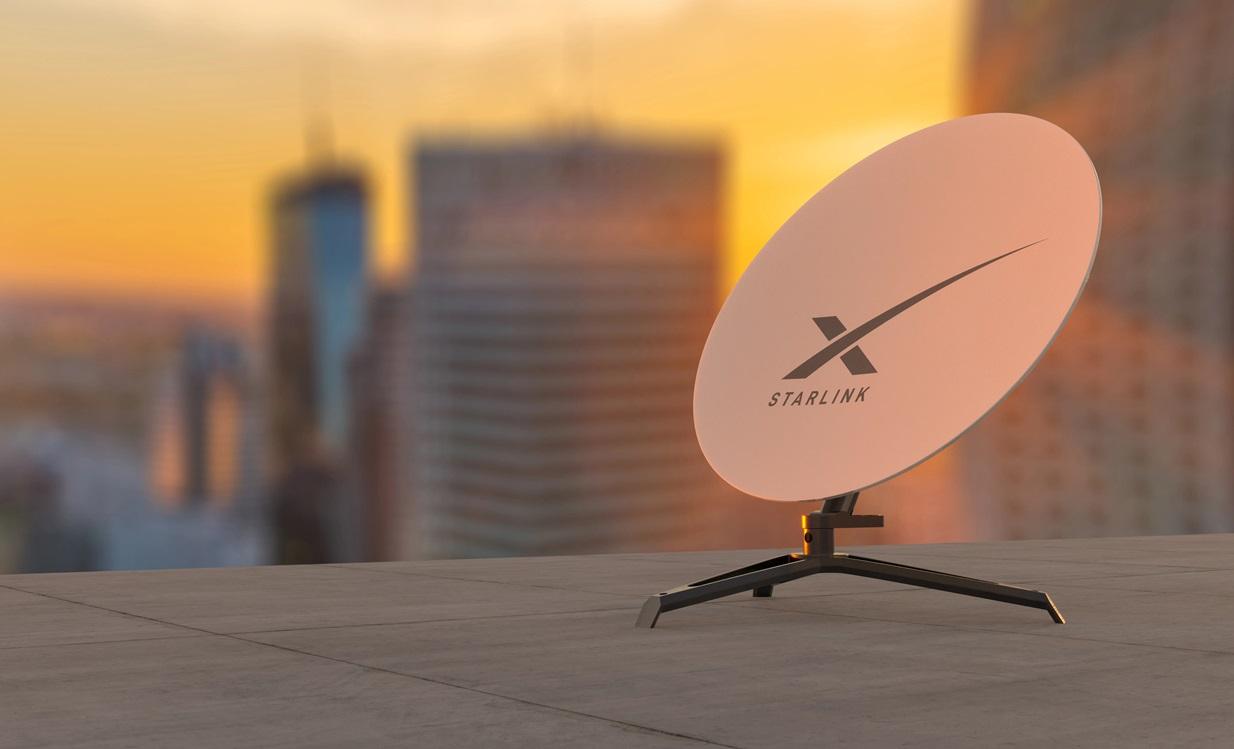
Namibia’s Communications Regulatory Authority (CRAN) has now twice refused Starlink permission to operate, first in March 2026, and again on 22 June 2026 when it dismissed all appeals.
The story behind that rejection is Namibian law requires at least 51 per cent local ownership in any telecommunications company. Starlink, a wholly foreign-owned entity, refuses to dilute its equity to any country. The result is a standoff that has become a flashpoint in a broader continent-wide debate about digital sovereignty, foreign tech dominance, and who controls the pipes of African internet
How It Came to This
advertisement
The friction between Starlink and Namibia did not start in 2026. In November 2024, CRAN issued a cease-and-desist order after finding that Starlink had been operating in the country without a licence. The regulator warned consumers against purchasing Starlink equipment and confiscated terminals from users. It was an inauspicious introduction. Starlink formally submitted its licence application in June 2024, seeking both a telecommunications service licence and access to radio spectrum.
On March 23, 2026, CRAN rejected. ICT Minister Emma Theofelus and CRAN Chairperson Tulimevava Mufeti presented the outcome at a press conference the following day
The Six Tests Starlink Had to Pass — and Where It Failed
advertisement
Namibia assessed the application against six regulatory criteria. Starlink cleared three but failed three.
On the positive side, regulators conceded that Starlink’s entry could strengthen market competition and improve connectivity in underserved areas. The company also demonstrated sufficient technical and financial capacity, and the required frequency bands were found to be available. They showed the regulator was not ideologically opposed to satellite internet in principle.
But the failures were decisive. First and most critically, Namibian law under Section 46 of the Communications Act requires at least 51 per cent local ownership in any telecommunications company. Starlink is wholly foreign-owned, and SpaceX maintains a global policy of refusing to dilute equity in any market it enters. That single point of incompatibility accounted for the bulk of the rejection.
advertisement
Second, CRAN raised concerns about national defence and public security, specifically, data sovereignty, jurisdictional authority, and Namibia’s practical ability to regulate a company headquartered in the United States. Third, regulators cited Starlink’s own compliance history: the company had operated without a licence and failed to respond to regulatory requests. That track record damaged its credibility at precisely the moment it needed to build trust.
When the appeal window opened, Starlink reportedly filed its reconsideration request, but missed the April 23 statutory deadline, giving CRAN an additional procedural basis to dismiss it.
What the Decision-Makers Said
Minister Theofelus was careful to leave the door open, even as she closed it. “All applicants are invited to revise their submissions, review the elements that led to the rejection, and resubmit their applications to the authority, which we will be happy to reassess. We fully welcome all internet service providers into the country to contribute to our national development objectives,” she said at the March press conference.
CRAN’s June statement was more blunt. Starlink’s application, it said, “remained non-compliant with the ownership and control requirements” set out under Section 46 of the Communications Act.
SpaceX, for its part, had argued that the public wanted the service. According to the company, a public consultation during the licensing process showed that 98.6 per cent of respondents backed Starlink’s entry. The company estimated it could connect 65 per cent of Namibian schools that currently lack reliable internet, 80 per cent of healthcare facilities operating on 3G or less, and more than one million Namibians still offline, particularly in rural areas. On its website, Starlink also made the emergency case: “Beyond its immediate impact for individuals, businesses and public infrastructure, Starlink’s satellite network can also ensure reliable communications during emergencies, when terrestrial networks may be compromised, which is crucial for a country exposed to natural disasters such as floods and droughts”
The Scale of What Is Being Fought Over
To understand why this matters, consider what Starlink has become. As of June 2026, it operates in approximately 160 to 166 countries and territories, according to its official availability map. On June 4, 2026, the company confirmed it had crossed 12 million active subscribers globally, adding roughly 27,700 new users per day. Its constellation now exceeds 10,300 satellites in orbit. In 2025, it generated approximately $11.4 billion in revenue , about 61 per cent of SpaceX’s total.
Starlink is connecting more than 12M active customers with high-speed internet across 160+ countries, territories and many other markets.
Thank you to all our customers around the world! 🛰️🌎❤️ → https://t.co/9VghjFeG1P pic.twitter.com/urpWSKXrFT
— Starlink (@Starlink) June 4, 2026
“Available,” however, does not mean the same thing everywhere. Eight countries have outright banned the service: Afghanistan, Belarus, China, Hong Kong, Macao, North Korea, Russia, and Syria. A further 34 or so including South Africa, Egypt, Iraq, Morocco, Algeria, and Tunisia, sit in regulatory limbo, neither approved nor explicitly banned. Forty-two more are slated for launch in 2026. Namibia now effectively joins the limbo column.
Where Starlink Has Run Into Walls
Namibia is far from alone. The pattern of resistance follows a consistent logic: local ownership rules, national security anxieties, or the protection of state-linked incumbents.
In South Africa, the continent’s most prominent holdout, the regulator ICASA requires telecoms licensees to sell 30 per cent equity to historically disadvantaged South Africans. SpaceX refuses. Communications Minister Solly Malatsi issued a policy directive in late 2025 instructing ICASA to explore Equity Equivalent Investment Programmes, a mechanism that would let SpaceX meet empowerment obligations through direct investment rather than shareholding. The directive drew sharp criticism from African National Congress (ANC) MPs and left the situation unresolved.
In Cameroon, authorities banned the import of Starlink kits in April 2024 and ordered the company to cease operations, citing no licence and national security risks. The move was widely read as protection for Camtel, the state telecom monopoly. Tech industry veteran Rebecca Enonchong was direct in her assessment: “They want to continue to have full control over the internet and disconnect at will,” she said at the time.
The Democratic Republic of Congo banned Starlink in 2024 over fears that rebel groups would use the service to coordinate operations, a fear that proved prescient given reports of militant groups using satellite terminals in other conflict zones. The DRC eventually reversed the ban in 2025.
Beyond Africa, the resistance has been sharper. China has outright banned the service, and in 2024 drafted regulations demanding real-time content censorship from any satellite broadband operator, a requirement no Western platform would accept. Russia officially banned Starlink in February 2024 and tightened the rules further with Decree №488 in April 2026, banning the import of all foreign satellite terminals on national security grounds, while also attempting signal jamming during the Ukraine conflict
Even France, within the European Union, was not without friction. The Conseil d’État (France’s highest administrative court, basically the court that handles disputes involving government bodies and regulators) annulled Arcep’s(France’s telecoms regulator) Starlink frequency licence in April 2022 for lacking a required public consultation, forcing a reissued authorisation after hearings.
Where Starlink Broke Through Easily
Nigeria became Africa’s first Starlink country in February 2023, after the Nigerian Communications Commission issued ISP and international gateway licences in May 2022. By Q1 2025, Nigeria had 59,509 Starlink subscriptions, though demand in Lagos and Abuja has since exceeded available capacity.
Rwanda followed in March 2023, becoming the second African market. Notably, the country’s regulator issued Starlink’s operating licence before the commercial launch and ran a pilot covering 500 schools suggesting a government that was actively facilitating entry rather than gatekeeping it.
Kenya’s story is particularly relevant to Namibia. Kenya had a local ownership requirement, similar in spirit to Namibia’s, but the Communications Authority of Kenya was persuaded to waive it. By June 2024, Starlink had over 8,000 subscribers and had broken into Kenya’s top 10 internet service providers within a single year of operation. Demand was so intense that Nairobi was temporarily closed to new sign-ups due to capacity overload. President William Ruto described the service’s arrival as aligning with “the country’s policy of enhancing internet connectivity.” Safaricom, Kenya’s dominant mobile operator, responded by cutting prices and upgrading speed tiers, an outcome that has become the standard argument for letting Starlink in.
Markets that approved Starlink quickly- Rwanda, Nigeria, Kenya, Mozambique, Malawi, Zambia, Eswatini – either lacked local ownership requirements, set them aside under government pressure, or prioritised connectivity access over equity protections. Those that did not, like Namibia and South Africa, are still waiting.