
advertisement
Morocco Leads Africa’s EV Battery Race

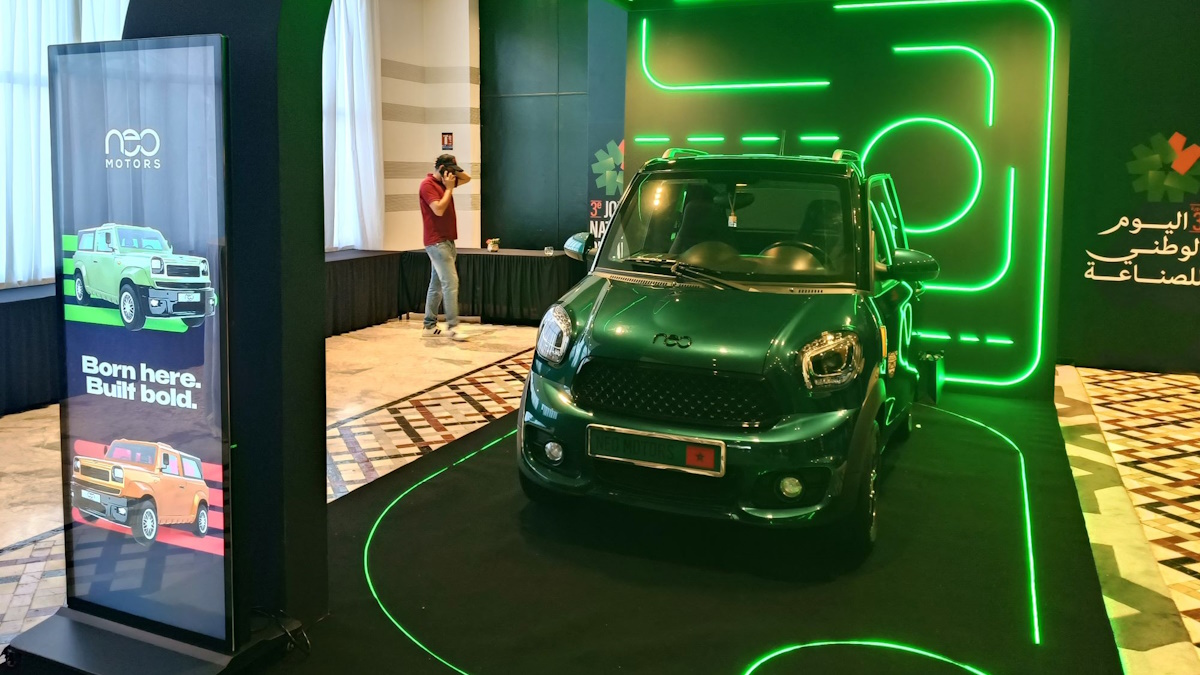
China’s electric vehicle (EV) industry is expanding its footprint in Africa beyond vehicle exports and assembly, with investments increasingly moving into battery materials and component manufacturing.
Morocco has emerged as one of the continent’s most advanced markets in this transition, attracting Chinese investment, government support and development finance for battery-related projects. South Africa, meanwhile, is positioning itself as another potential manufacturing base, with Chinese automaker BYD exploring the possibility of producing batteries locally.
The developments point to a broader shift in Africa’s EV ambitions. Rather than limiting the continent’s role to importing electric vehicles or assembling vehicles from imported components, governments are increasingly seeking to capture more value from the battery supply chain.
advertisement
A major development in Morocco came with the African Development Bank’s approval of a $114 million loan for Gotion High-Tech’s planned battery gigafactory. The project is expected to strengthen Morocco’s position in battery manufacturing and represents a significant commitment from a development finance institution to an African battery production project. The financing is also significant because access to long-term capital remains one of the major challenges facing large-scale industrial projects across Africa. Development finance support could make battery manufacturing projects more attractive to commercial investors and potentially encourage similar investments elsewhere on the continent.
Morocco has spent several years building the foundations for an automotive and battery manufacturing ecosystem. Chinese companies have increasingly become part of that strategy, with investments extending from vehicle production to battery materials. In 2024, Morocco signed a $300 million agreement with China’s BTR New Material Group to develop a cathode materials plant in Tangier. A separate Chinese-Moroccan joint venture, Cobco, is also developing battery component manufacturing capacity in the country.
The country is also seeing investment in other parts of the battery supply chain. Abu Dhabi-based Falcon Energy Materials has commissioned a 25,000-tonne-per-year anode materials pilot project at Jorf Lasfar near Casablanca and has entered into technical partnerships with Chinese companies including Shanghai Shanshan New Material and Hensen. These projects complement Morocco’s established automotive manufacturing industry, creating the beginnings of a supply chain that connects raw and processed materials, battery components and vehicle production.
advertisement
Morocco’s advantage is partly the result of deliberate industrial policy. The country has spent years attracting automotive manufacturers and suppliers, creating an industrial base that can be extended into electric vehicles and their components.
South Africa Eyes a Different Opportunity
Further south, South Africa is pursuing a different route. BYD, one of the world’s largest manufacturers of battery electric and plug-in hybrid vehicles, is exploring the possibility of establishing battery manufacturing operations in the country. Rather than initially following other manufacturers into local vehicle assembly, the company is considering an investment centred on the battery technology that has been fundamental to its business.
The possibility emerged more clearly following the launch of a BYD Finance joint venture with South African financial services group Absa in July, when company executives discussed ambitions extending beyond vehicle sales.
advertisement
For South Africa, battery manufacturing could connect the country’s automotive industry with its mineral resources while creating opportunities to participate in a higher-value segment of the EV supply chain. Policy is becoming an important part of that equation. The South African government has updated its Critical Minerals and Metals Strategy and is considering changes to automotive incentives designed to encourage greater local value addition in electric vehicle manufacturing.
One proposed measure would allow a portion of the value of critical minerals sourced from Southern Africa to count towards local value addition in EV battery production. The objective is to encourage the processing of minerals within the region rather than exporting raw materials and importing finished battery components. If BYD moves ahead with a South African battery facility, the project could provide a significant boost to the country’s efforts to establish an EV manufacturing ecosystem. It could also provide the company with a regional base for batteries used in vehicles and energy storage applications. However, unlike Morocco, South Africa has yet to secure a comparable large-scale battery manufacturing commitment.
Policy Could Determine the Winners
The contrasting positions of Morocco and South Africa highlight a broader question for African countries seeking to participate in the EV transition: whether possessing mineral resources is enough to attract manufacturing investment. The evidence so far suggests it is not. Battery manufacturing requires access to electricity, transport infrastructure, skilled labour, industrial land, financing and reliable supply chains. It also requires policies that give investors enough certainty to commit capital to projects that can take years to reach commercial scale.
Morocco’s progress has been driven by the combination of industrial policy, an established automotive sector and its ability to attract foreign manufacturers. Its location also gives manufacturers relatively easy access to European markets, an important consideration for companies seeking to establish export-oriented production.
South Africa brings different advantages, including a large automotive industry, established industrial infrastructure and significant mineral resources. Its challenge is converting those advantages into a sufficiently attractive policy and investment environment for large-scale EV and battery manufacturing.
The developments also demonstrate the growing role of Chinese companies in shaping Africa’s emerging EV supply chain. China’s dominance of global battery manufacturing gives its companies considerable experience in areas ranging from cathode and anode materials to battery cells, packs and electric vehicles.
For African governments, Chinese investment offers an opportunity to accelerate industrial development, but the long-term economic benefit will depend on how much production, skills, technology and value addition remain within local economies.
The African Development Bank’s financing of Gotion’s Morocco project adds another dimension to the equation. Development finance institutions have traditionally supported infrastructure, energy access and broader industrial development, but increasing participation in battery manufacturing could help address the capital requirements of an industry that is still emerging on the continent.
For other African countries considering similar investments, the competition is therefore likely to be less about who has the largest deposits of lithium, cobalt, manganese or other minerals and more about who can build the industrial ecosystem around those resources.
Morocco has moved further along that path than most African markets. South Africa is now attempting to build its own position. The decisions made by other countries on industrial policy, infrastructure and investment incentives could determine whether Africa becomes primarily a market for imported electric vehicles or develops a meaningful role in the global EV supply chain.