
advertisement
Ethio Telecom Reports 40% Faster Peak-Hour 4G After AI Upgrade


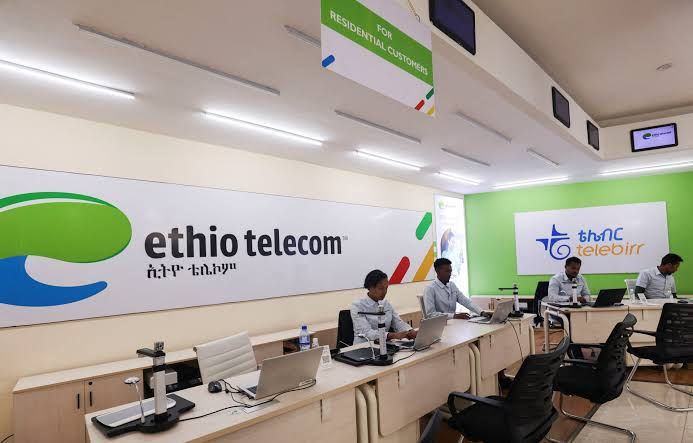
Ethio Telecom and ZTE have completed Ethiopia’s first pre-commercial AI-enabled radio network deployment, reporting a 40 per cent improvement in user throughput during peak hours and an 11 per cent increase in 4G capacity.
Announced on November 4, the deployment uses artificial intelligence to allocate radio network resources according to changing traffic demand. The companies say the technology improves network performance using existing infrastructure rather than relying solely on additional mobile sites.
The results come as Ethio Telecom faces delays in its physical network expansion. The operator serves more than 90 million subscribers, but installed only 603 of the 1,228 mobile sites planned for the 2025/26 financial year, representing 49 per cent of its target, according to figures reported by Addis Fortune in July.
advertisement
Mobile data users reached 51.53 million, below the target of 56.63 million.
Equipment imports arrived mainly in May and June, delayed by the Red Sea shipping crisis and fuel shortages, Addis Fortune reported.
Speaking in July about the delayed projects, Ethio Telecom CEO Frehiwot Tamiru said: “4G population coverage and network capacity should exceed the initial first-year targets.”
advertisement
Her remarks concerned the delayed network expansion projects entering service, not the AI deployment announced in November.
How the AI upgrade works
The pre-commercial system combines Frequency Division Duplex (FDD) Massive Multiple-Input Multiple-Output (MIMO) technology with ZTE’s AIREngine, which uses AI-driven beam scheduling to direct radio resources towards areas experiencing higher traffic demand.
advertisement
Massive MIMO allows network antennas to serve multiple users simultaneously, while AI-driven scheduling helps allocate capacity as usage patterns change.
Ethio Telecom and ZTE say they spent approximately two years developing the system, which they describe as Ethiopia’s first pre-commercial AI-enabled Radio Access Network (AIR RAN).
The reported 11 per cent capacity increase and 40 per cent improvement in user throughput are measured against what the companies describe as a traditional network solution. Neither company has provided independent verification of the results.
Questions remain over commercial rollout
The companies have not disclosed the city or number of mobile sites involved in the deployment, the baseline network speeds, or how long the trial lasted.
They have also not announced when the technology will be commercially deployed across Ethio Telecom’s network.
Neither company’s announcement included direct comments from an executive explaining the deployment’s expected commercial impact or the investment required to scale it.
The project forms part of Ethio Telecom’s Next Horizon: Digital & Beyond 2028 strategy, which targets 100 million subscribers by the end of the 2027/28 financial year.
The AI upgrade could help the operator improve network capacity as demand grows, but its wider impact will depend on commercial deployment, measurable performance gains and progress in expanding physical network coverage.