
advertisement
Nvidia’s Founder Is Gone. The Questions Are Not.

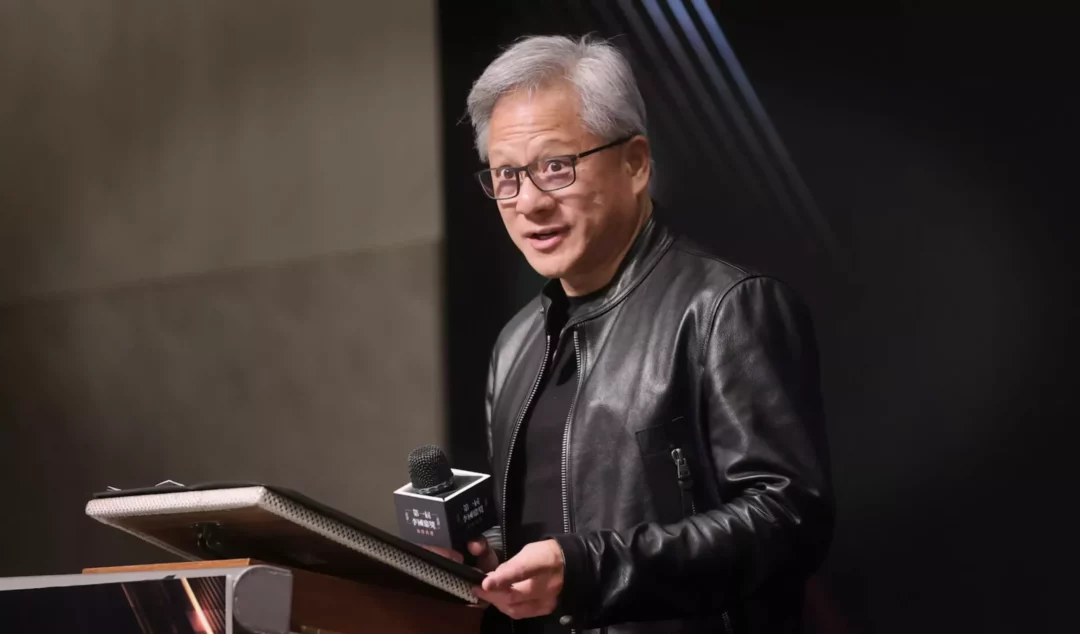
On Sunday 8 November, Nvidia employees opened an email from the man who co-founded their company in 1993. “I was unfaithful to my wife,” Jensen Huang wrote, according to CBS News, adding that he had let down employees, the board and shareholders. He did not name the woman involved.
Four days later, on Thursday 12 November, Nvidia announced he had resigned as chief executive, president and board member, effective immediately. A filing with the US Securities and Exchange Commission says Chief Financial Officer Colette Kress will serve as interim CEO while keeping her finance role, and that the board has started a search that will weigh internal and external candidates. Harvey C. Jones becomes the company’s first-ever board chair. “The Board has full confidence in Colette and the leadership team,” Jones said in the announcement.
What is public about the case behind the resignation is a mix of confirmed fact, unconfirmed reporting and flat denial. The three paragraphs below separate them, because they are often blended in the coverage.
advertisement
Start with what is confirmed. Nvidia’s filing records that Huang resigned on 12 November, effective immediately, and that Kress and Jones now hold the interim CEO and chair roles. Huang himself admitted the infidelity in his message to staff, CBS News reports. CBS, citing two law enforcement sources, says the Justice Department’s National Security Division is investigating Megaspeed, and Fortune reports that Singapore is investigating the company too, for suspected breaches of its laws.
Much of the rest is reporting that no one has confirmed. US intelligence agencies reportedly believe Alice Huang, formerly of Megaspeed and unrelated to Jensen Huang, was an asset of China’s Ministry of State Security, and the New York Times reports that Huang was the target of a foreign intelligence effort, both as relayed by CBS. The Information, via Fortune, reports that at least $7.5 billion of Nvidia chips moved through Megaspeed and a Malaysian subsidiary to Chinese data centres, though another outlet cites $2 billion. The Wall Street Journal, via Fortune, reports that a second relationship, with an Nvidia executive, led the board to weigh removing him.
Several of those claims are denied or disputed. Megaspeed denies illegal chip transfers, Beijing’s foreign ministry dismissed the spy allegation as baseless, and Nvidia previously said it found no evidence of illicit transfers. On 8 November the board said it had no reason to believe national security or company secrets were compromised, and in the reports reviewed it has not published findings. President Trump said Huang told him he had no idea the person was a spy.
advertisement
How The Story Reached Washington
The thread runs through Megaspeed, a Singapore-based cloud company that rents out AI computing power. Fortune reports that Alice Huang, an executive who joined in 2023, stepped down as managing director after the company changed hands, and that a Malaysian subsidiary received more than 200 shipments of restricted Nvidia technology between June 2024 and June 2025, per the New York Times. Fortune adds that renting chips already sitting in Southeast Asian data centres is legal under current US rules, while buying chips through front companies and shipping them to China may violate export controls. That distinction is where the legal fight will turn.
A report published on 10 November by TokenPost describes how the federal case moved. In August 2025, Nvidia’s general counsel, Tim Teter, asked to meet investigators at the Commerce Department’s Bureau of Industry and Security. The investigators declined and passed the request up to Under Secretary Jeffrey Kessler. Later that year the Justice Department asked Commerce to pause while its National Security Division pursued a criminal inquiry. The report says the timing alone does not show the contact caused the handoff. Commerce says it followed its procedures. Nvidia says it regularly contacts officials to provide information and seek guidance.
Congress has not stood down. Representatives Brian Mast, John Moolenaar and Eric Crawford wrote on 9 November asking Huang to attend a closed-door briefing on 18 November about Nvidia’s protections against foreign espionage and his dealings with Alice Huang, according to Tom’s Hardware. Korean broadcaster SBS reports the House is still pursuing his testimony after the resignation and has raised the possibility of a subpoena. Senator Elizabeth Warren said the resignation does not absolve Huang, other executives or the company, and that they still owe Congress answers.
advertisement
Among the foreign-policy specialists the Council on Foreign Relations asked, Chris McGuire called the episode “a failure on multiple levels.” His argument is that Commerce has left too much export-control enforcement to the private sector. Rebecca Patterson wrote that because Nvidia is so central to US AI efforts and to major stock indices, its leadership questions carry spillover risk. These are their assessments, not findings.
What The Numbers Say About AI, And What They Do Not
Nvidia’s shares closed on 12 November at $166.19, down 4.34 per cent, on volume roughly four to five times normal, according to Motley Fool’s market report. That is about 30 per cent below the record close of $239.24 on 6 October, by my calculation from reported figures. AMD rose 5.86 per cent and Broadcom 5.54 per cent the same day, which the report describes as investors rotating toward other AI names. The broader S&P 500 fell 0.35 per cent.
The business Huang leaves behind was growing fast. For the quarter ended 26 July, Nvidia reported revenue of $96.2 billion, up 106 per cent, with data centres making up $89.0 billion of it, per Yahoo Finance’s summary. Kress told analysts in August that the outlook was “supply-constrained,” and said she expected hyperscale customer growth to pick up as Vera Rubin systems ramp. Nothing in the reports I reviewed says that roadmap has changed, and Kress’s first message to staff named no products.
Analyst Ming-Chi Kuo said the bad news is largely priced in and that any effects of a leadership change would show up in 2028 at the earliest. He named China demand and export controls as the key risks and said Google’s TPU could benefit most, according to a TechRadar live feed. Google unveiled two new TPUs on 9 November. These are one analyst’s views.
The People Inside
Kress’s message to employees did not mention Huang by name. It referred to an “extraordinarily difficult period” and promised more “in the coming days,” according to Yahoo’s reproduction of the email. The company-wide meeting is set for 18 November at 9 am Pacific, six days after the announcement. Annie Scranton, who runs Pace Public Relations, told Fortune that “coming days” does not mean six days away. Another PR executive, Johan Konst, called six days reasonable and said Kress struck the right tone.
The Next Seven Days
Nvidia reports quarterly results on 17 November, the first scheduled look at the company under its interim chief. On 18 November, employees are due their all-hands meeting and the House committees have asked Huang to appear. It is not clear whether he will. Whether the independent investigation, which the board put in the hands of outside counsel, will report publicly has not been said.