
advertisement
Microsoft Rolls Out Inclusive AI Project In Kenya

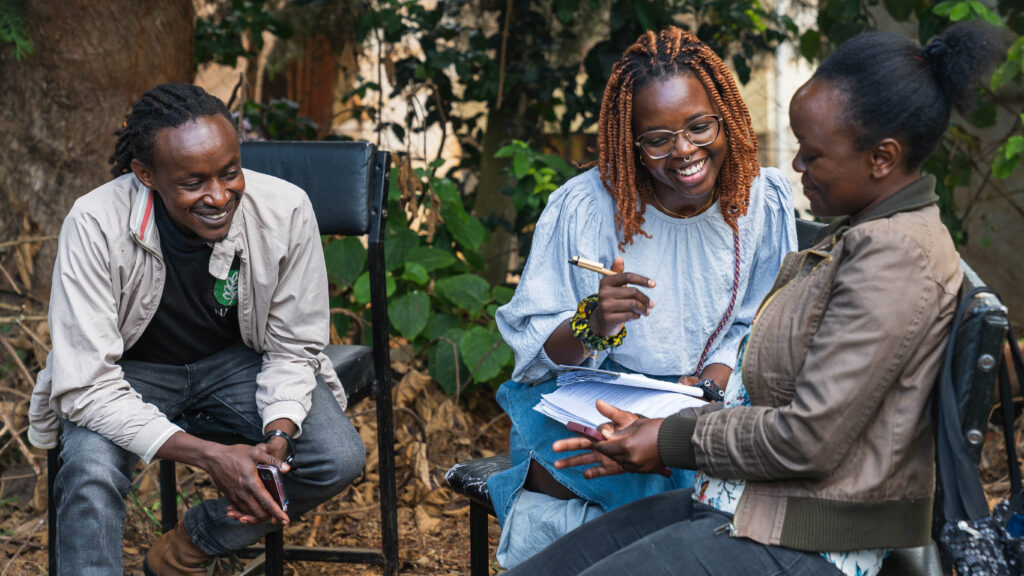
Microsoft has launched Project Gecko, a new artificial intelligence initiative designed to improve how AI works for underrepresented communities by building models that understand local languages, cultural contexts, and real-world conditions, beginning with Kenya and India.
The initiative is being developed by Microsoft Research Africa in Nairobi, Microsoft Research India, the Microsoft Research Accelerator in the United States, Digital Green, and several academic and philanthropic partners. The team is creating low-cost, customizable AI tools that work through text, speech, and video, even in low-bandwidth areas.
At the center of the project is the MultiModal Critical Thinking Agent (MMCTAgent). This model analyzes speech, images, and video to deliver context-grounded answers. It is now available on Azure AI Foundry Labs, with open-source code published on GitHub. Microsoft says the project supports its mission to build AI that is more inclusive and representative of global communities.
advertisement
Agriculture was selected as the starting point because smallholder farmers face major language and connectivity barriers when using digital tools. Many work in local dialects, rely on oral instruction, and use specialized agricultural terms that English-trained AI systems often miss. These realities make agriculture an ideal environment for developing and testing context-specific AI.
Project Gecko builds on Digital Green’s FarmerChat, a speech-based assistant used by extension workers. Digital Green has a library of more than 10,000 farming videos in 40 languages, but the content was previously difficult to search or apply. With Gecko’s integration, farmers can ask questions in their local language and receive answers through text, audio, or video—including direct jumps to the exact part of a community-created video where the solution appears.
Field studies show that farmers strongly prefer voice-based interactions. However, many African and Indian languages lack the speech recognition and text-to-speech tools needed for voice-enabled AI. To address this, Microsoft researchers have built new speech and translation models from scratch using local datasets. They rely on small language models that run efficiently on low-cost devices common in rural areas.
advertisement
The project already supports Swahili, Kikuyu, Kalenjin, Dholuo, Maa, and Somali, based on 3,000 hours of crowd-sourced Kenyan speech. Feedback from more than 130 farmers is shaping features such as clarifying questions, step-by-step guidance, and peer-to-peer knowledge tools.
Microsoft positions Project Gecko as part of a broader effort to redesign AI for regions with limited connectivity, diverse languages, and resource constraints. Lessons from agriculture will be used to create templates and design patterns for sectors such as healthcare, education, and retail. A multilingual playbook for developers building AI for underrepresented communities is expected soon.
The long-term goal, Microsoft says, is to support AI systems that accurately reflect the languages, contexts, and needs of the communities they serve.
advertisement