
advertisement
Government AI 100 Highlights Global Leaders Shaping Public-Sector AI


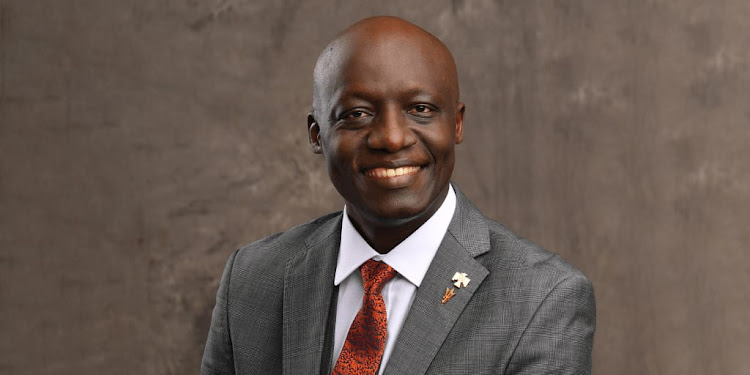
The latest Government AI 100 list has been released by global public-policy platform Apolitical, recognising 100 public servants and government leaders who are influencing how artificial intelligence is governed and applied within public institutions worldwide. The list brings together policymakers, regulators, and senior officials responsible for translating AI from concept into public-sector practice.
Among those recognised is Ambassador Philip Thigo, Kenya’s Special Envoy on Technology, whose inclusion places Kenya among countries actively contributing to global discussions on how artificial intelligence should be governed and applied in public institutions.
Amb, Philip Thigo has been named to Apolitical’s Government AI 100 list in consecutive years, first in the 2025 cohort and again in 2026, highlighting his continued leadership in advancing AI governance.
advertisement
In 2025, he was acknowledged for shaping Kenya’s digital policies, advising on data innovation and open government, and promoting AI that is secure, inclusive, and fair. His 2026 recognition reaffirmed his role in guiding how governments adopt and regulate AI, positioning Kenya alongside senior public servants worldwide in global policy conversations.
What the Government AI 100 Is About
The Government AI focuses on leadership inside government, people involved in setting policy direction, drafting regulatory frameworks, and overseeing how AI is introduced into public services such as healthcare, education, digital government platforms, and public administration.
advertisement
By curating the list annually, Apolitical aims to support knowledge-sharing among governments facing similar questions around accountability, ethics, data use, and institutional readiness. The list acts as a reference point for how different countries are approaching the governance of emerging technologies. (Apolitical)
Why the List Carries Weight
As AI becomes more embedded in public systems, governments are under pressure to ensure its use is lawful, fair, and aligned with public interest. Decisions around automation, data analysis, and algorithmic systems now sit at the centre of public policy.
advertisement
The Government AI 100 highlights officials who are directly responsible for these decisions. Their work shapes how quickly AI is adopted, how risks are managed, and how public trust is maintained. The list shifts attention away from private-sector innovation toward the public institutions tasked with oversight and accountability. (LinkedIn – Apolitical)
Global Representation on the 2026 List
The current Government AI 100 includes leaders from Africa, Europe, North America, the Middle East, and Central Asia, illustrating that AI governance is being shaped across diverse political and economic contexts.
Recognised leaders include Mkhitar Hayrapetyan, Armenia’s Minister of High-Tech Industry, whose work focuses on national digital development, and Omar Sultan Al Olama, the United Arab Emirates’ Minister of State for Artificial Intelligence, Digital Economy and Remote Work Applications, known for embedding AI into long-term government strategy. Officials from the United States, Canada, and Uzbekistan also appear on the list, reflecting the shared responsibility governments face in managing AI systems that increasingly affect citizens’ lives.
The Government AI 100 highlights a shift in how governments approach AI. Leaders are taking charge of how the technology is deployed in public services, working to ensure it is used responsibly, fairly, and in ways that genuinely benefit people.