
advertisement
Fittech: When Digital Transformation Moves To Your Wrist

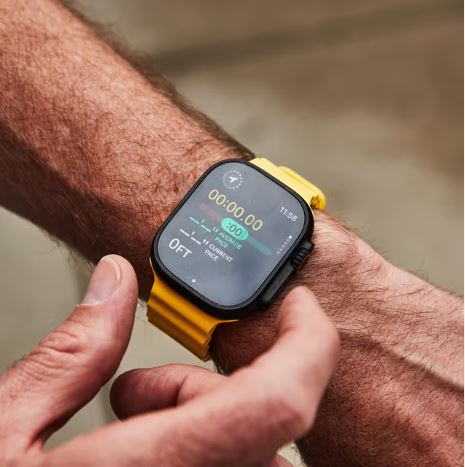
There is an interesting irony in the world of technology.
As digital leaders, we spend our days discussing artificial intelligence, cloud computing, data platforms, cybersecurity and digital transformation. Yet one of the most compelling examples of these technologies working together isn’t in a data centre or an enterprise application.
It’s on our wrists.
advertisement
I’ve worn smartwatches for years, logged hundreds of kilometres as a runner, spent countless hours in the gym, and played more rounds of golf than I’d care to admit. Along the way, I’ve realised that the conversation around FitTech isn’t really about gadgets. It’s about how technology quietly shapes human behaviour. The best wearable isn’t necessarily the one with the most sensors or the longest specification sheet—it’s the one that consistently nudges you towards healthier decisions.
Fitness technology, or FitTech, has evolved remarkably over the past decade. What began as simple pedometers and heart-rate monitors has become an intelligent ecosystem powered by artificial intelligence, advanced sensors, cloud computing, GPS, predictive analytics and increasingly sophisticated health algorithms.
As someone who spends his professional life helping organisations navigate digital transformation while pursuing fitness through running, strength training and golf, I’ve had the opportunity to experience this evolution from both sides.
advertisement
The technologist in me admires the engineering.
The athlete in me values what it enables.
Those two perspectives don’t always point to the same answer.
advertisement
Technology Should Fit Your Life
Like many technology enthusiasts, I initially approached wearable technology the same way many organisations approach enterprise software.
I wanted the biggest feature list. More sensors. More analytics. More dashboards. More intelligence.
Eventually, I discovered that choosing a fitness watch is surprisingly similar to selecting enterprise technology. There isn’t a universally “best” solution.
There is only the solution that best supports the outcome you’re trying to achieve. For me, that outcome isn’t defined by one sport. My fitness life revolves around three very different disciplines.
Running demands accurate GPS, pace tracking, cadence analysis, heart-rate monitoring and recovery insights. Strength training benefits from wellness tracking, recovery metrics and reliable workout monitoring.
Golf introduces an entirely different set of requirements—course maps, yardages, hazard information, shot tracking and battery life capable of lasting an entire round.
Finding a single wearable that performs well across all three isn’t as straightforward as most people imagine.
My Journey Through FitTech
I’ll admit it. I’ve always been an Apple fan.
So when I first entered the world of wearables, choosing an Apple Watch felt like the obvious decision. It looked fantastic, integrated beautifully into my digital ecosystem and delivered the polished experience Apple is famous for.
There was only one problem. I had to charge it every single day. Every evening became a familiar ritual.
As someone moving between client meetings, gym sessions, weekend runs and eighteen holes of golf, battery anxiety slowly became part of the ownership experience. The device designed to make life easier became another thing I had to think about.
Then I tried the Huawei GT3. The feature that impressed me most wasn’t another health metric or a new training mode.
It was the battery.
Nine days. Not nine hours. Not a day and a half. Nine full days.
For the first time, I stopped thinking about charging my watch and simply started wearing it. I trusted that it would be ready whether I was heading into a boardroom, a long training run or a busy week of travel.
That was the beginning of my liberation from battery anxiety. The GT3 became my everyday companion for health tracking, running and general wellness.
Golf, however, remained a different story. For that, I still relied on a dedicated Garmin golf watch because specialised golf devices continued to offer richer course mapping, yardages and golf-specific insights.
For a period, I owned two excellent watches. One for life. One for golf.
Then my FitTech World evolved. When Huawei introduced the GT5 Pro with integrated golf functionality, I finally found a watch that aligned with how I actually live and train. Is it the absolute best running watch? Probably not. Is it the most advanced golf watch on the market? Also probably not.
But it performs exceptionally well across the activities that matter most to me.
Sometimes, actually a lot of times, the best technology isn’t the most specialised. It’s the technology that quietly fits into your life.
The Metrics That Matter
One of the biggest misconceptions about wearable technology is that success comes from collecting more data.
It doesn’t.
Success comes from acting on the right data. Ironically, some of the features I value most are also the simplest. A reminder to drink water. A prompt to stand after sitting too long. A notification encouraging me to move.
Sleep insights that remind me recovery is just as important as training. Stress monitoring that helps me recognise demanding weeks before they become exhausting months.
These aren’t headline features. But over time they influence behaviour far more than another colourful dashboard filled with numbers.
As technology leaders, we often speak about digital adoption. Wearables demonstrate an important truth. The best technology doesn’t demand constant attention. It quietly helps people build better habits.
Don’t Become a Slave to the Dashboard
Today’s fitness devices measure almost everything. Heart-rate variability. VO₂ Max. Training readiness. Recovery scores. Sleep stages. Stress. Calories. Fitness age. Body composition. The insights are valuable.
The danger lies in becoming obsessed with the numbers instead of the purpose behind them. I’ve seen runners skip perfectly good training sessions because a recovery score wasn’t ideal. I’ve watched people celebrate closing activity rings while ignoring the quality of the workout itself. Technology should inform decisions. It should never replace judgement. No smartwatch has ever completed a workout on behalf of its owner. Discipline still has no digital substitute.
AI: From Tracking to Coaching
Artificial intelligence represents the next major leap for FitTech.
For years, wearables answered one simple question:
What happened?
Increasingly, they are beginning to answer a much more valuable one:
What should I do next?
By analysing sleep quality, recovery, heart-rate variability, training history, stress levels, workload and environmental conditions, AI is moving beyond reporting information towards providing personalised coaching.
Imagine a watch that recognises you’ve travelled across time zones, reviewed your calendar, noticed elevated stress levels and recommends replacing today’s interval run with a recovery walk.
Or one that identifies subtle physiological changes over several weeks and encourages you to schedule a medical check-up before symptoms become obvious.
That’s no longer science fiction. It’s where FitTech is and is heading.
The future will extend beyond the wrist. Wearables will integrate with nutrition platforms, smart homes, healthcare providers and workplace wellbeing programmes to deliver a far more complete picture of personal health.
The value won’t come from generating more data. It will come from generating better decisions.
Lessons for Digital Leaders
Perhaps the biggest lesson FitTech offers CIOs has very little to do with fitness.
The companies creating the most successful wearable experiences aren’t simply building smarter devices. They’re solving human problems.
The same principle applies to enterprise technology. Employees don’t embrace systems because they contain hundreds of features. They embrace systems because those systems make work easier.
Customers don’t remain loyal because an application offers endless capabilities. They remain loyal because solving their problem feels effortless.
It reminds me of one of the central ideas behind the Jobs To Be Done theory. Customers don’t buy products simply because of their features. They “hire” them to accomplish a job.
Take the classic example. Nobody wakes up wanting the latest power drill with Bluetooth connectivity, voice controls and built-in speakers. They want a perfectly drilled quarter-inch hole. So they can hang a family Potrait or Art. The drill is simply the means to an end.
FitTech works exactly the same way.
Most people don’t wake up wanting one hundred exercise modes, dozens of health sensors or AI-generated dashboards. They want to become healthier. They want to lose weight. They want to improve their golf handicap (Don’t ask about mine it is bad!).
They want to finish their first 10K. They want to sleep better. They simply want to remember to drink enough water during a busy day.
The technology is important. But only because it helps people achieve those outcomes with less effort and less friction. That’s a lesson every digital transformation leader should remember.
Looking Ahead
We’re only at the beginning of the FitTech revolution. Wearables are becoming digital health companions rather than fitness accessories. Artificial intelligence will make recommendations increasingly personal. Sensors will become more accurate. Healthcare integration will deepen. Preventive care will become smarter. And our watches will evolve from tracking our health to helping us actively manage it. That future is exciting.
But perhaps the greatest lesson remains surprisingly simple.
Technology has always been at its best when it empowers people to become better versions of themselves.
Whether you’re a CIO leading enterprise transformation, a runner preparing for your next race, a golfer chasing a lower handicap, or someone simply trying to build healthier habits, the principle remains unchanged.
The most important technology in your fitness journey isn’t the watch on your wrist.
It’s your willingness to take the first step. The watch simply reminds you to keep going.
*Joe Ouko is a Digital Transformation Leader, Technology Strategist and Doctoral Fellow with a passion for helping organisations harness technology to create meaningful business outcomes. Beyond the boardroom, he is a certified fitness coach, avid runner and golfer, and an advocate for men’s wellbeing through The B4 Project, where he explores conversations around health, leadership, fatherhood and purpose. Joe believes the best technology is the kind that quietly helps people become better versions of themselves.
I know Joe , such a cool guy.
Great article Joe The Champ! I love your fitness videos and posts.