
advertisement
Egypt’s PM Inaugurates 29th Edition Of Cairo ICT Conference


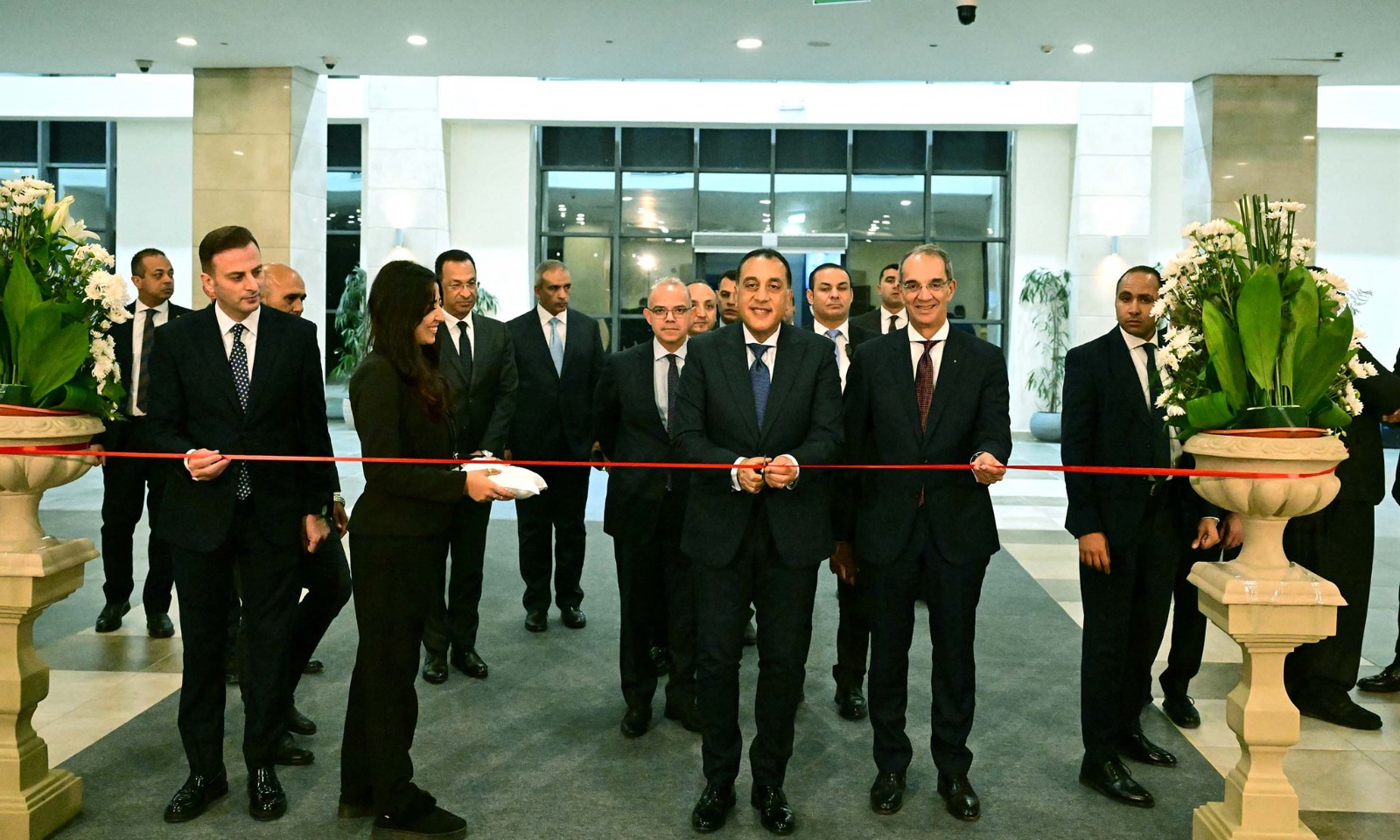
Prime Minister Dr. Mostafa Madbouly inaugurated the 29th edition of the Cairo International Technology Exhibition and Conference (Cairo ICT), the largest and most influential technology event in the Middle East and Africa.
Held under the auspices of the Ministry of Communications and Information Technology (MCIT), this year’s edition ran from 16 to 19 November at the Egypt International Exhibition Center in New Cairo, under the theme “AI Everywhere.” More than 500 exhibitors participated alongside senior representatives from ministries, authorities, and leading national institutions.
Dr. Madbouly was received by Dr. Amr Talaat, Minister of Communications and Information Technology, along with several high-level officials, including Eng. Raafat Hindi, Deputy Minister for Infrastructure and Digital Transformation, Dr. Mohamed Farid, Chairman of the Financial Regulatory Authority, and Osama Kamal, Chairman of Trade Fairs International. The Prime Minister praised the strong presence of Egyptian companies across diverse sectors, noting that the ICT sector has become a strategic pillar of the national economy and a key partner in driving sustainable growth.
advertisement
In his remarks, Dr. Madbouly emphasized Egypt’s commitment to building a comprehensive national digital strategy that transforms the ICT sector from a service-based industry into a productive, job-creating, export-driving economic force. He stressed that clear objectives and precise implementation plans are essential to advancing Egypt’s digital transformation.
During his tour, the Prime Minister visited the MCIT pavilion, where he reviewed progress on the Digital Egypt Strategy. Minister Talaat explained that the strategy focuses on empowering citizens, expanding access to digital services, and enabling digital skills while fostering new economic opportunities. Its four core pillars include seamless digital access, strengthened local manufacturing for a productive digital economy, advanced digital empowerment for citizens, and the promotion of innovation and entrepreneurship.
A key highlight of this year’s event was the trial launch of new services for Egyptians abroad through the Digital Egypt Platform. These include authenticated documents from the Ministry of Foreign Affairs, such as certified birth, marriage, divorce, and death certificates. Minister Talaat also announced the upcoming launch of the Digital ID (Bitaqaty) card for remote identity verification, which will allow citizens to complete notarization and other services online. He added that 45 exclusive digital services are being introduced in the first phase, covering the commercial registry, notarization, civil status, and social insurance.
advertisement
The minister also outlined recent achievements in local manufacturing. Fifteen global brands have invested $200 million in mobile phone manufacturing facilities in Egypt, with a combined annual production capacity of 20 million devices. Local manufacturing now meets more than 81 percent of domestic demand. Egypt also hosts four optical fiber cable manufacturers with a combined capacity of 4 million kilometers per year. Total investments in mobile device and fiber cable production have reached $263 million, creating 9,000 direct and indirect jobs.
Dr. Talaat also highlighted national initiatives aimed at developing digital skills and innovation. The DIGITOPIA competition, targeting talents aged 10 to 35 in programming, artificial intelligence, digital arts, and cybersecurity, received over 25,000 applications, with 72 teams advancing to the semi-finals. Final results will be announced on 29 November. He also celebrated the success of the Mahara-Tech online training platform, which has trained 285,000 learners and received the 2025 UNESCO ICT in Education Award. Egypt University of Informatics (EUI) marked the graduation of its first cohort in computer science, business technology, and digital arts.
The ICT sector continues to record strong performance, achieving a 14 percent growth rate, a 6 percent contribution to GDP, and projected digital exports of $7.4 billion this year. Egypt has also advanced to Group A in the Global Government Digital Transformation Readiness Index, reflecting its progress in digital governance.
advertisement
Across the exhibition halls, national institutions showcased a wide range of digital innovations, including a real estate export platform developed with the Ministry of Housing and the Administrative Control Authority, a digital litigation system implemented with the Ministry of Justice and the Public Prosecution, a speech-to-text AI system for digital justice, and a digital religious content platform developed with the Ministry of Awqaf. Initiatives from Egypt Post, the Central Bank of Egypt, the Financial Regulatory Authority, ITIDA, the National Telecom Regulatory Authority, and the Arab Organization for Industrialization were also prominently featured.
This year’s Cairo ICT hosted five major events under one umbrella: the twelfth edition of PAFIX, the region’s leading digital payments and financial inclusion forum; the second edition of the Artificial Intelligence, Data Centers, and Cloud Computing Forum (AIDC); the fifth edition of Connecta for youth and entertainment technologies; the Innovation Arena for startups; and, for the first time, the Cyber Zone cybersecurity showcase. The Future of Egypt Authority particpated as Guest of Honor, presenting its vision for digital transformation, data centers, and artificial intelligence.
Over four days, Cairo ICT 2025 featured interactive sessions and live demonstrations on the latest advancements in artificial intelligence, the Internet of Things, 5G technologies, cybersecurity, smart cities, EdTech, cloud computing, green technologies, fintech, and digital identity solutions, reinforcing Egypt’s position as a regional leader in technological innovation.