
advertisement
Africa’s Technology Gap In The Eyes Of CIO100 Judges



Ask Ahmed Atere how the CIO100 entries have changed since he first judged them, and he starts with the filing cabinet. A few years ago, he says, “digitisation” mostly meant turning paper into soft copies and saving them somewhere. Now the conversation has moved on.
“We have soft copies. What can we do with the data we have gotten in those soft copies? How do we analyse it? How do we use that to predict for the future?” says Atere, director and co-founder of MEED Networks Ltd in Nigeria, who is judging the awards for the third time.
It is an encouraging picture, and he means it that way. He sees organisations reaching for analytics, for prediction and for systems that finally talk to each other. But the question he poses, what can we do with what we have, is the one that Francis Thairo, a first-time judge, believes too many organisations have yet to answer.
advertisement
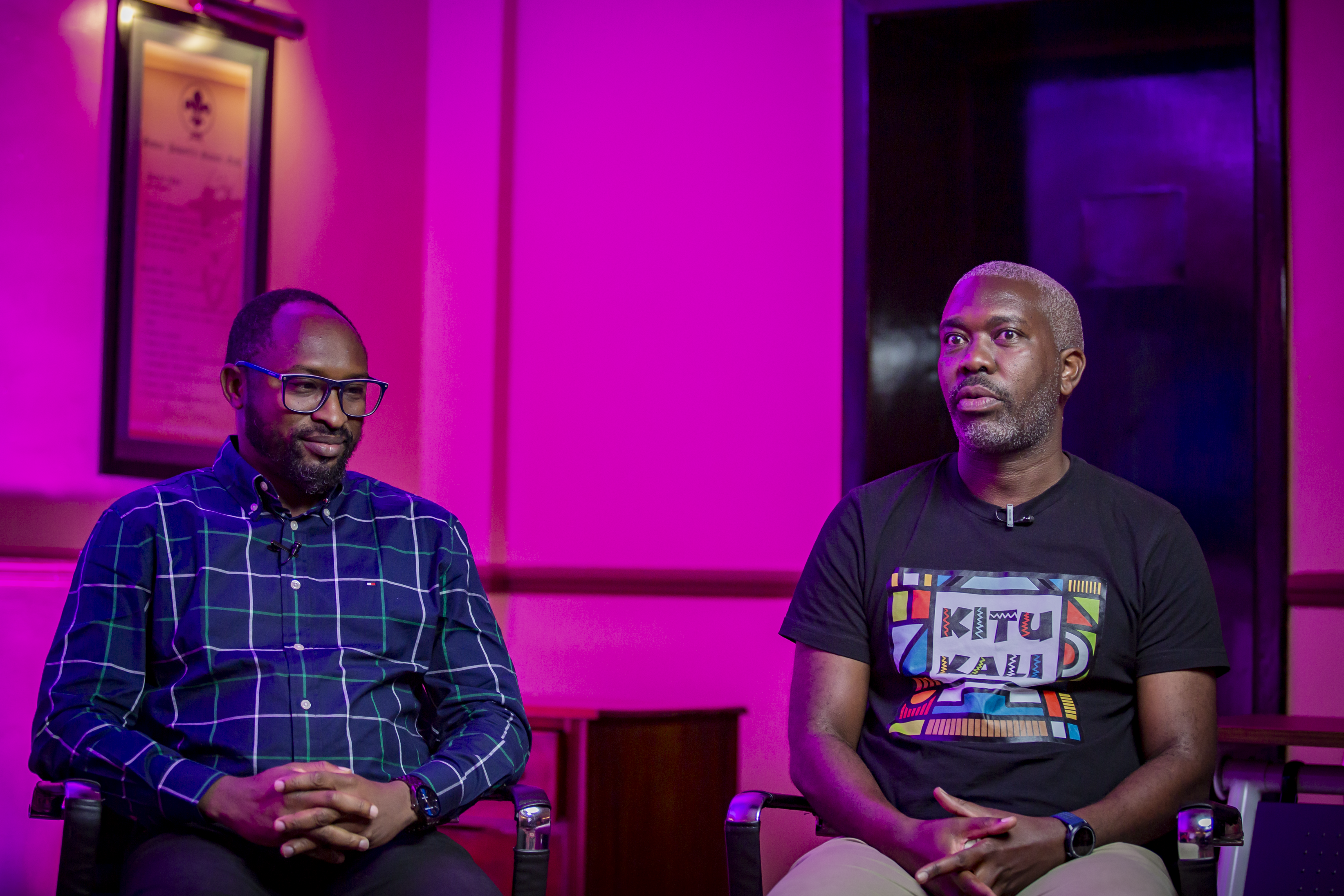
Thairo heads Innovation and Technology Solutions at Kyoshinet and judges from an East African vantage point. We asked both judges about what the submissions show, and the picture they paint is one of high appetite and shallow use. Both spoke while scoring was under way, and both were describing an impression formed from the entries in front of them, not a measured statistic. Still, their observations line up in ways worth paying attention to.
The answer is no
When we asked Thairo which technologies were being well executed, his answer was blunt.
“The answer is no, the utilisation is quite low,” he says. “I mean, yes, we’ve got people who are using AI for their cybersecurity, going to the cloud to do various things, but the application is low.”
advertisement
He spells out what that looks like from a judge’s desk. “You’re finding that you’re paying a good dollar amount to access these technologies, but the application in that business is low. That actually points to the fact that we probably need to learn more of how we apply these new innovations into our businesses and into our institutions.”
The point is not that nobody is doing it well. Thairo says the strongest entries so far are positive enough to serve as case studies at the CIO100 Symposium slated for 25th to 27th of November. It is that the gap between the best projects and the rest is wide, and that many organisations are paying for technology they then adopt at a minimal.
What good use looks like
Part of the problem, in Thairo’s reading, is a narrow idea of what “using AI” means. The judges’ new innovation criterion this year was written with that in mind. It rewards application, he explains, and has little interest in the label.
advertisement
“The application could be as simple as putting that AI to check the quality of things that are being made or passed to your customer. It could be AI that could help you see a bottleneck in a process. Yes, I know we’ve got a lot of AI going around, using Agentic AI the likes of Gemini, ChatGPT, you name it ….to compile reports, compile email replies, prepare a management or board report. No, it’s not that. It is to help the business acc.”
Atere did not use the word “utilisation”, but his observations point the same way. He singles out efficiency as the area where Africa has the most to gain and pays the least attention. “Efficiency is one thing across Africa, I’ll be sincere, which we don’t really focus more on,” he says. A government office or insurer that uses AI to handle several times the work it did before can serve far more people, he explains, and that means lower costs and, in time, more revenue.
“If we’re able to use AI to guarantee more efficient services, particularly in the government sector, I think we can have a lot more revenue coming. We’re going to save more costs,” Atere adds.
Why the tools sit idle
Atere and Thairo offer complementary explanations for why so much technology is underutilized.
The first is the fashion for the label. Atere says some entrants hear “AI”, want in, and forget the organisation’s primary goal, which leaves a tool with nothing in particular to do. The second is people. A system can be delivered and still not be used, and in Atere’s view adoption is critical.
“You should realise that the way things work in Africa, adoption is very critical,” he says. “So it’s better for us to also plan for change management. It’s not enough to do a project that will digitise the entire infrastructure. It’s another project to see how you want people to adopt that process and leave what they were doing before.”
The third is where the money goes. Atere describes one entry that spent half its budget on hardware for a deployment that was headed for the cloud anyway, and others that put around a quarter of spending into managed services. Those are choices about owning and running technology, not about putting it to work, and they leave less for the training, adoption and process change that produce results.
The fourth is skills, which Thairo calls “a missing gap in quite a number of submissions”. The judges look for a good mix of capability built inside the organisation and expertise brought in from external partners, and it is that mix he finds missing.
The cost is not the barrier
What makes the gap harder to excuse, Thairo argues, is that access is no longer the obstacle. “You cannot avoid going to the cloud, you cannot avoid using AI, you cannot avoid using machine learning, you cannot avoid low-code development,” he says. “These technologies are there with us. They’re easy to get, easy to apply for. You don’t have to go through crazy budgets to get them. You can get them from as low as a $10,000 or $20,000 per annum budget, and you’re already in that spectrum.”
If the initial investment is that low, the missing ingredient is not money. “It is for us as CIOs to now take a step back and ask ourselves, what more do I need to learn or experiment with?” he says.
Closing the gap
The advice that follows from all this is practical. Thairo wants CIOs to change how they think about partners. “These technologies are there to stay with us,” he says, “and there are solution providers and specialists that we should be able to tap on, and outsource those skills. That’s a trend that we probably need to shift a little bit in our CIO perspectives. It’s not looking at just this technology, but seeing who else can I work with to apply this technology.”
Atere’s counterpart is discipline on the business side. Tie each tool to the organisation’s goals, plan for adoption from the start and report results you have actually achieved rather than ones you expect.
For Thairo, the answer is partly to encourage and share lessons learnt and it is one reason the CIO100 events exist. The strongest entries, he says, will be unpacked as case studies so that other CIOs can see what emerging technology with best practice should look like. Until more organisations make that leap, the judges’ reading of this year’s entries stands: the question has moved on from whether organisations can get the technology, to how innovative they can be with it.