
advertisement
Africa’s Power Grid Will Determine Where AI Takes Off

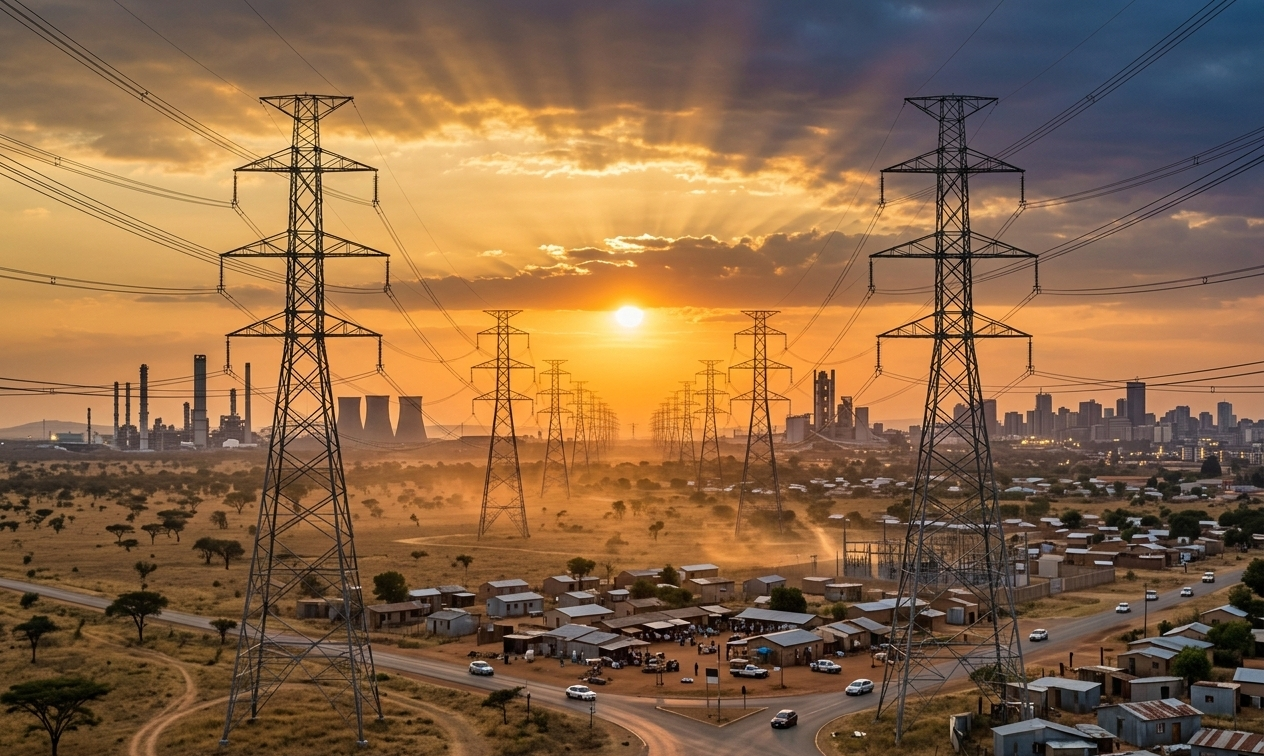
Africa’s artificial intelligence ambitions are increasingly driving investment in data centres and high-performance computing infrastructure. However, as operators expand across the continent, one challenge continues to determine where these facilities can operate reliably: access to affordable and consistent electricity.
For Rob Saunders, chief technology officer at Raxio Group, power reliability is a fundamental consideration when deciding where to establish data centres. The company operates facilities across Uganda, Ethiopia, Mozambique, Côte d’Ivoire, the Democratic Republic of Congo and Angola, markets where electricity infrastructure presents varying challenges. Speaking to African Business, Saunders explained that even a relatively small 1.5-megawatt facility with four backup generators requires approximately 90,000 litres of diesel stored on site.
Rather than relying entirely on national electricity networks, Raxio builds dedicated medium-voltage connections from substations, maintains two independent power supplies and installs sufficient backup generation to operate its facilities independently. Power, Saunders said, “sits at the very forefront of our decision-making whenever we go into new markets.”
advertisement
His assessment reflects a broader challenge facing Africa’s AI infrastructure ambitions. While discussions at Africa Tech Festival in Cape Town have focused on sovereign computing, AI factories and access to advanced processors, the availability of reliable electricity remains a more immediate constraint.
The Africa Data Centres Association estimates that the continent had approximately 360 megawatts of operational data centre capacity at the beginning of 2026. Yet unreliable electricity continues to increase operating costs and complicate infrastructure investment. World Bank enterprise survey analysis suggests African businesses lose approximately five per cent of annual sales to power outages, while backup generation can cost nearly three times as much as electricity supplied through the grid.
For data centre operators expected to maintain 99.999 per cent uptime, these challenges translate into significant investments in alternative power infrastructure.
advertisement
Nigeria illustrates the scale of the problem. The country’s national grid experienced multiple collapses in December 2025 and January 2026, with generation falling to zero megawatts during the January incidents. ThisDay has documented more than 100 grid collapses since 2015. Despite serving a population of more than 215 million, the grid struggles to consistently deliver 5,000 megawatts. Energy consequently accounts for more than 35 per cent of operating costs for Nigerian data centres, according to TechCabal.
A one-megawatt facility operating on diesel can consume approximately 270 litres of fuel every hour, making prolonged reliance on generators expensive.
Rack Centre, a Lagos-based data centre operator, has been exploring alternatives through natural gas and solar power. Chief executive Lars Johannisson has said gas can be 30 to 60 per cent cheaper than diesel, although energy remains a major operational challenge. “Energy is the elephant in the room,” he said.
advertisement
The financial implications extend beyond data centre operators. Standard Bank’s Africa Trade Barometer estimates that power outages cost Nigeria approximately $26 billion annually, with businesses spending another $22 billion on generator fuel.
South Africa offers a different approach, supported by developments in its electricity market that allow private companies to procure renewable energy and transmit it through existing electricity networks.
Teraco, the country’s largest data centre operator, is developing a 120-megawatt solar plant in the Free State at an estimated cost of $118 million (R2 billion.) The company will own the facility and distribute its electricity to data centres in Johannesburg and Cape Town through Eskom and municipal networks, a process known as wheeling. Expected to become operational by the end of 2026, the plant is projected to generate more than 354,000 megawatt-hours annually.
Teraco chief executive Jan Hnizdo has identified South Africa’s solar resources as a competitive advantage for data centre investment, particularly compared with markets where renewable energy procurement arrangements remain less developed.
Raxio’s Saunders has similarly pointed to the limited availability of solar power purchase agreements supported by wheeling arrangements across several of the company’s other African markets.
Ethiopia presents another dimension of the challenge: access to affordable electricity does not necessarily guarantee long-term availability. Approximately 92 per cent of the country’s electricity comes from hydropower, making it an attractive destination for energy-intensive industries. However, the growing electricity demands of cryptocurrency mining and data centres have placed additional pressure on supply, particularly in a country where nearly half the population lacks household electricity access.
Ethiopian Electric Power ended its flat electricity tariff of approximately 3.14 US cents per kilowatt-hour for data miners from December 2025. In September, Cointelegraph reported that the utility had reduced electricity supplied to cryptocurrency miners by 77 per cent during a hydropower shortage.
The developments highlight the risks of building energy-intensive computing infrastructure around electricity supplies that can fluctuate with seasonal conditions and national demand. For AI infrastructure investors, the implications are clear. Access to affordable power must be accompanied by reliable supply, sufficient generation capacity and agreements that can support operations over the long term.
This is also becoming an important consideration for CIOs selecting cloud and data centre providers. Beyond computing capacity, organisations need to understand how facilities secure their electricity, how frequently they rely on generators, whether renewable energy supplies are contracted and how seasonal shortages could affect service availability.
As demand for AI computing increases, data centre operators are increasingly taking on responsibilities traditionally associated with energy companies. Investments in solar farms, gas generation, backup systems and dedicated electricity connections are becoming part of the infrastructure required to compete in the market.
Raxio is already considering further investments in this area, having acquired land next to its Mozambique data centre that could accommodate a dedicated solar plant.
The decision reflects a broader reality for Africa’s AI ambitions: access to advanced chips and investment capital will not be enough. The continent’s AI infrastructure will ultimately expand where operators can secure electricity that is reliable, affordable and available around the clock.