
advertisement
Why Safaricom Is Turning To The Debt Market


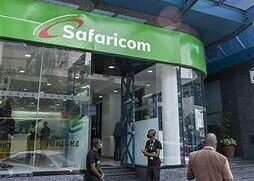
Safaricom, a telecom and digital‑services company officially launched a major financing initiative by issuing a “green bond” under a newly approved debt framework.
On 7 November, the Capital Markets Authority (CMA) granted Safaricom permission to establish a Domestic Medium Term Note (MTN) programme worth up to USD 310.08 million (KSh 40 billion).The MTN programme allows issuance of different types of notes: green, social, or sustainability‑linked bonds, in multiple tranches,
A few weeks later, on 25 November 2025, Safaricom announced via its official public channels that it would issue the first tranche: USD 116.28 million (KSh 15 billion) in fixed‑rate Green Notes, with a “greenshoe” option to raise an additional USD 38.76 million (KSh 5 billion) if demand is strong.
advertisement
The bond carries a fixed interest rate of 10.40 per cent per annum, and spans a 5‑year tenor. The minimum amount an individual investor needs to commit is USD 386 (KSh 50,000), with the option to top‑up in multiples of USD 77.52 (KSh 10,000). Crucially, Safaricom states that 100 per cent of the bond proceeds will be allocated to “Eligible Green Projects” as defined under its Sustainable Finance Framework- a commitment to financing or refinancing environmentally aligned investments such as renewable energy, green infrastructure, or energy‑efficient systems.
Safaricom emphasised its sustainability focus, “Proceeds will exclusively finance and/or refinance Eligible Green Projects under our Sustainable Finance Framework, reinforcing our commitment to environmental stewardship.”
As described in the issuance announcement:
advertisement
“We are pleased to announce the launch of the first tranche of Fixed Rate Green Notes under our Domestic Medium Term Note Programme (MTN Programme) of up to KES 40 Billion.”
What it Means for Investors
If you as an individual investor decide to subscribe to this bond, you’re essentially lending money to Safaricom under pre‑agreed terms. Here’s what happens:
advertisement
- The bond pays a fixed 10.40 Per cent interest per year, meaning you earn predictable returns annually.
- The tenor is 5 years. At the end of the 5 years (maturity), Safaricom will return your original capital (principal).
- For example, if you invest USD 386 (KSh 50,000), you’d earn roughly USD 40.60(KSh 5,200) per year. With regular interest payments, you collect income while waiting for the principal to be returned at maturity. Because the bond is classified as a “green bond,” interest earned is reportedly tax‑exempt under Kenyan law, improving your net return.
- The bond is described as senior and unsecured, meaning in the event of financial distress the bondholders rank ahead of junior debt but are not secured with physical collateral.
Safaricom’s paperwork also outlines the offer timeline: the subscription window opened 25 November 2025, closing 5 December 2025. Allotment (who gets how many notes) is scheduled for 8 December. The bonds are to be listed on the Nairobi Securities Exchange (NSE) on 16 December 2025 meaning after listing investors will be able to trade the bonds on the secondary market. 2025–2030 (over the 5-year bond duration), Safaricom plans to deploy the raised funds toward “eligible green projects”: infrastructure upgrades, connectivity expansion, sustainability-backed operations
Why Safaricom Is Doing This
In its recent financials, Safaricom revealed a marked increase in short-term borrowings a jump many analysts attribute to operational and expansionary needs. As of September 2025, short-term debt surged by approximately USD 101.55 million (KSh 13.1 billion) to USD 432.56 million (KSh 55.8 billion). By securing long-term funding via the bond, Safaricom is converting short-term liabilities into longer-term, more manageable debt in its recent financials.
Safaricom CEO Peter Ndegwa, noted that the issuance of the bond highlights the company’s strategic shift toward sustainable, purpose-driven growth.
“By adopting innovative financing solutions, we create long-term value for our stakeholders while delivering positive environmental and social impact,” Ndegwa said. “This approach will continue to guide our growth, ensuring every step forward is both purposeful and sustainable.”
Moreover, by classifying the bond as “green” and dedicating proceeds to sustainability projects, from renewable energy to environmentally friendly infrastructure the company aligns with global and local ESG (environment, social, governance) financing trends. That helps enhance its corporate image, possibly attract socially conscious investors, and contribute to long‑term resilience and environmental stewardship.
Who Can Participate
One of the standout features of this issuance is accessibility, relatively low compared to many corporate instruments, enabling retail investors to take part alongside institutions.
Investors can apply via several channels: participating banks, licensed stockbrokers, and notably a mobile-based subscription option using USSD (483810#), making it more convenient for everyday retail customers to invest, thereby structuring and regulating the process. Top-ups beyond the minimum are allowed in increments of USD 77.52 (KSh 10,000). .
What This Means for Investors, Safaricom, and Kenya’s Market
For investors especially those looking for stable, fixed-income returns this bond offers an attractive blend of predictable interest (10.40 per cent), manageable minimum investment, and tax-exempt returns. The listing on NSE adds liquidity a significant advantage over many long-term investments.
For Safaricom the bond provides long-term capital that can be deployed into sustainable infrastructure, network expansion, green energy, and other growth areas without over-relying on short-term debt or foreign borrowing.
For Kenya’s financial market, this issuance represents a milestone: a major corporate green bond, accessible to retail investors, and pushing forward the development of the domestic debt capital market. It may pave the way for other large firms to raise sustainable financing locally.