
advertisement
Unlocking Africa’s Energy Future Through Battery Swapping


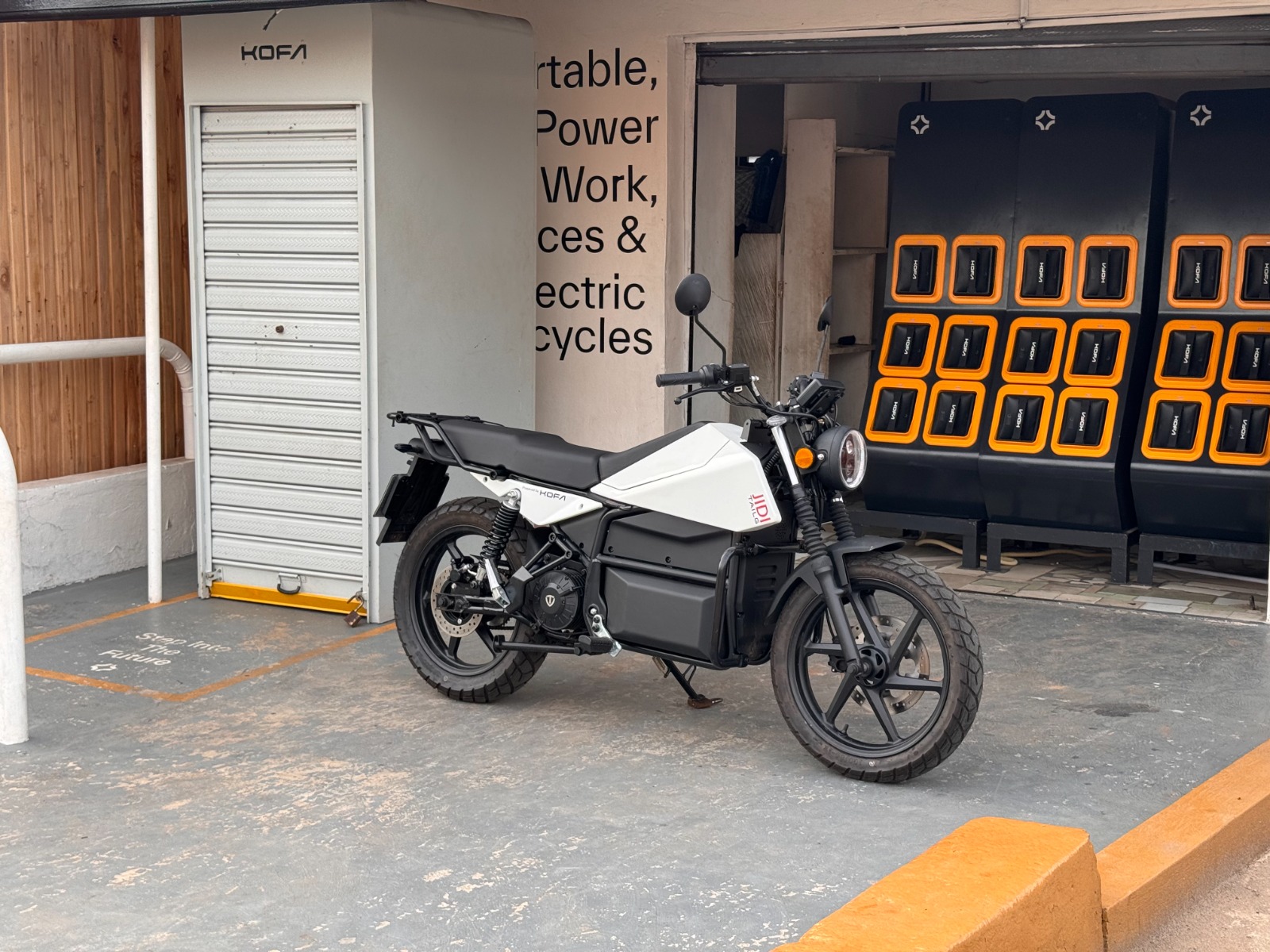
Battery swapping is emerging as one of Africa’s most practical paths to clean mobility and distributed energy access, but the sector is still young, fragmented, and often misunderstood. In this exclusive interview, Erik Nygard, CEO of Kofa, breaks down what it will take to scale swapping profitably across the continent and how Kofa is building differently. From Africa specific engineering and AI enabled energy optimisation to policy reform and financing models, Nygard argues that the continent does not need to copy India or China. It needs its own “Energy Rail,” purpose built for local conditions. He shares why reliability will define the winners, why batteries are more than mobility assets, and how swapping could power not only vehicles, but livelihoods and entire energy ecosystems.
1: Battery swapping is still a young sector globally. How would you describe the current stage of development in Africa, early experimentation, fast adoption, or something in between?
Africa is in a stage of early scaling. Operators across East and West Africa now manage thousands of bikes and swaps, proving demand and technical viability. However, networks remain city level rather than national, and reliability, economics, and financing structures still need to mature. We are past the pilot era, yet the next phase is about scaling profitably in African conditions. This is exactly where Kofa is focused.
advertisement
2: There has been noticeable momentum across East and West Africa over the past two years. Do you see enough market activity and investment to build a sustainable swapping ecosystem, or is the growth still too fragmented to scale?
There is strong momentum, but the underlying rails, including battery asset finance, energy policy, and standardised commercial structures, are still evolving. Demand from delivery, logistics, and productive use customers is solid, but true sustainability requires aligned growth across fleets, financiers, distributors, and regulators. Kofa is deliberately building around this alignment rather than chasing superficial scale.
3: As countries like India and China continue to commercialize swapping at national scale, how far behind is Africa, and should we even be trying to follow the same trajectory?
advertisement
Africa is currently years behind in raw scale, but we should not copy India or China. Our realities are different, including unreliable grids, informal transport systems, multi owner vehicles, and batteries serving as productive power assets. Africa does not need a car centric charging model. It needs an Africa specific energy network where batteries power both mobility and income generation. That is the trajectory Kofa is engineering.
4: Startups in Rwanda, Kenya, Tanzania, and Ghana are testing different swapping models. Which strategies appear most suitable for Africa’s diverse markets, and why?
Many strategies today chase scale, often at the expense of reliability and service quality. The core promise of swapping is simple. A fully charged, high quality battery must always be available when needed. Achieving this requires operational discipline and platforms that support both automated and manual swap systems cost effectively across different neighbourhoods. True twenty four seven clean energy access, still rare compared to petrol, is a major differentiator when executed well. Kofa’s approach is reliability first, with AI enabled forecasting and operations ensuring stations stay stocked and service remains uninterrupted.
advertisement
5: What is Kofa doing differently from the rest of the industry players?
Kofa is building Africa’s first modern Energy Rail, a continent specific infrastructure layer designed to deliver reliable, high quality, and low cost clean energy through an optimised battery network. This rail runs on a fully AI enabled software stack engineered from the ground up with one mission. A fully charged, high performance battery must be available immediately, anytime, anywhere.
Every battery, station, and charge cycle is monitored down to the last kilowatt, giving customers full visibility and control over their energy usage while ensuring the network operates at maximum efficiency. This deep data foundation powers advanced AI optimisation by predicting demand, managing battery health, keeping stations stocked, and continually reducing the cost to serve. Because Africa’s needs are diverse, the Kofa Energy Rail is multi OEM and multi use case by design, supporting multiple motorcycle brands, delivery fleets, and productive use devices through one unified, intelligent clean energy platform.
6: Policy conversations in many countries are focused on EV adoption, not energy networks. What regulatory or infrastructure priorities could better support swapping as an energy service, not just a mobility add on?
Governments should recognise batteries and swap stations as energy infrastructure, not vehicle accessories. Priority actions include duty and VAT exemptions for batteries and stations for a defined period to support adoption. Policy must shift from EV charging rules to distributed energy storage and swapping infrastructure frameworks, taking a more holistic approach.
7: Investors increasingly reward rapid hardware deployment, more bikes, more stations, and more batteries. Operationally, what critical factors are investors still underestimating about running these networks profitably over time?
Investors often underestimate how many independent value layers exist in the e mobility ecosystem. These include vehicle manufacturing, vehicle distribution, after sales service, infrastructure development, infrastructure operations and maintenance, energy provisioning, and energy management. In Africa, there is already strong, established know how on the ground for nearly all of these layers.
What remains poorly understood is the energy optimisation layer. This is the intelligence that synchronises batteries, stations, charging, and field operations into a reliable network. Managing large, distributed fleets of batteries is fundamentally a software and mathematics challenge, supported by operational discipline. Demand forecasting, battery health management, charging orchestration, misuse prevention, dynamic station siting, and continuous reliability determine profitability and scalability. This is the core of the Kofa Energy Rail, the optimisation and AI layer that ties the ecosystem together.
8: African mobility and energy usage patterns are often informal, multi owner, cash driven, and constrained by unreliable grids. How do these realities shape local system design?
Africa demands hardware and systems built for harsh, variable, real world conditions. These include high heat, humidity, dust, rain, vibration, rough roads, and heavy daily use. Batteries, stations, and supporting infrastructure must be engineered with high safety margins and robust physical design.
Resilience extends beyond hardware. African grids experience frequent outages, so swap stations and devices must continue operating safely and predictably even when power or connectivity fails. This requires offline capable systems, local edge intelligence, and IoT architectures designed specifically for unreliable power, unstable networks, and complex operational edge cases. At Kofa, these realities are treated as core design requirements to ensure consistent performance on the ground.
9: As swapping expands, batteries become both financial and energy assets. What risks should the industry be proactively planning for?
The biggest risk lies in having the right system to continually manage and adapt to changing battery conditions while delivering consistent, high quality service. As riders and businesses become more reliant on this energy for their livelihoods, reliability becomes non negotiable. Any drop in service directly impacts income and trust.
This places enormous importance on the Energy Rail, which must anticipate issues early, maintain performance, and respond quickly to degradation or failure. End of life asset management is another major risk. Batteries must be safely retired, repurposed, or recycled, and networks must be continually replenished with new batteries. Models that cannot manage this profitably will struggle to sustain service quality. Long term success depends on the intelligence, infrastructure, and economics required to maintain a healthy battery fleet throughout its entire lifecycle.
10: There is an ongoing debate around importing proven EV technologies versus developing locally built systems. Which components or technologies must be engineered on the continent to succeed?
Many commodity components such as cells, base electronics, and upstream materials can leverage best in class global supply chains to enable rapid deployment and cost efficiency. However, the technology stack, software, and system architecture that deliver the actual service must be engineered locally, close to real world conditions and users. Africa’s environments, mobility patterns, grid challenges, and user behaviours are too unique for imported assumptions.
Design requirements must be captured on the ground with real users, and systems must be built to operate reliably within African constraints. As the ecosystem matures, Africa will naturally expand deeper into more engineering layers. The opportunity lies in combining global technology strengths with local engineering intelligence to create solutions that scale rapidly while remaining fit for purpose.
11: Looking ahead five to seven years, what will separate African companies that survive the scaling phase from those that disappear?
The survivors will combine strong unit economics, high utilisation networks, disciplined battery lifecycle management, robust financing structures, and deep local partnerships. Companies built solely around hardware rollout will fade. The winners will be engineered for Africa, powered by data and AI, and built with operational discipline. These are the principles guiding Kofa’s long term strategy.