
advertisement
The $30 Phone That Could Unlock Africa


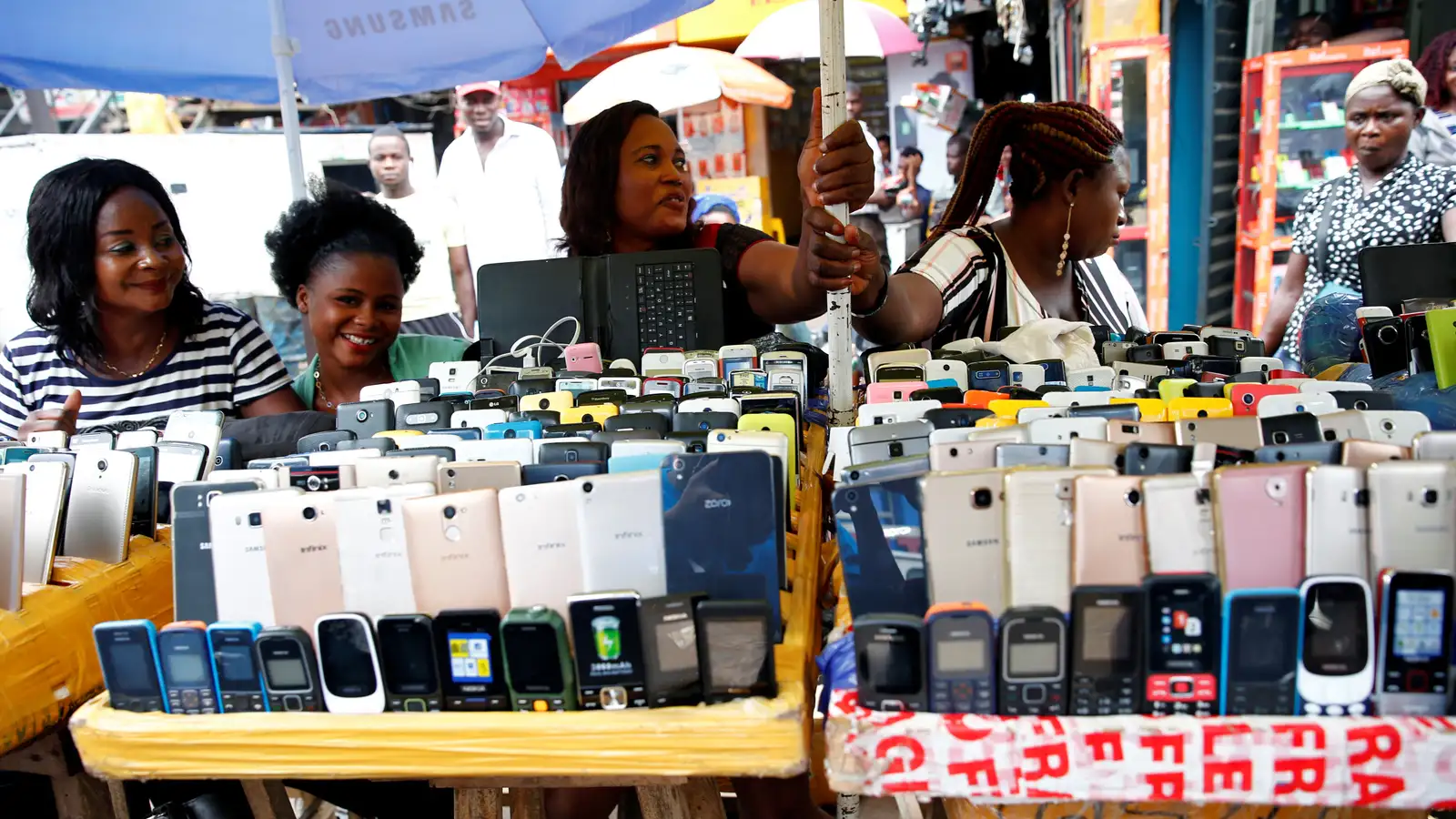
The last time you bought yourself a smartphone, how much of your income did you have to spend?
For some, the poorest in Sub-Saharan Africa in particular, their entry ticket into the digital arena — an internet-enabled phone — remains out of reach. According to GSMA’s The State Of Mobile Internet Connectivity 2025 Report, the poorest 20 per cent of the population spend the equivalent of 87 per cent of monthly income on an entry-level handset. For the poorest 40 per cent, it costs 63 per cent.
This officially makes Africa home to the world’s most expensive phones for the poor, even when those devices are the cheapest options available. The consequences are grotesque: millions remain excluded from the internet despite living within mobile broadband coverage.
advertisement
The continents digital revolution has long been described in terms in what could only be described as abstract to most. It is held in towers, cables, and networks. Policymakers and telecom executives point to expanding 4G and even 5G coverage as proof that the continent is catching up. Yet, as the report makes clear, the greatest barrier is no longer infrastructure. It’s affordability.
According to the GSMA, 96 per cent of the global population lives within the footprint of a mobile broadband network. Sub-Saharan Africa, historically the least connected region, saw significant gains in 2024, accounting for 75 per cent of the global reduction in coverage gaps.
Yet progress in coverage masks a deeper problem: usage gaps. Across the world, 3.1 billion people live in areas with mobile broadband coverage except for one thing: they do not use it. Sub-Saharan Africa represents a large share of this group.
advertisement
The report underscores that in Africa, two-thirds of those within coverage but not online do not own a phone at all. Simply put, networks exist, but access to the devices that connect people to them does not.
Enter The $30 Solution
One of the report’s most striking findings is the role of handset pricing. GSMA calculates that a $30 internet-enabled device could make mobile access affordable to up to 1.6 billion people worldwide who currently live within coverage but remain offline. A significant portion of whom reside in Africa.
This $30 phone, though hypothetical, would not require new technology or breakthroughs in engineering. Instead, it is that sweet spot where affordability would meet accessibility. At this price point, entire communities could realistically participate in the digital economy.
advertisement
Remember your smartphone? It is proof affordability in Africa is not uniform. The report highlights how underserved populations — women, rural dwellers, and those with disabilities — are disproportionately excluded. Across low- and middle-income countries (LMICs), women face higher affordability barriers. On average, the cost of an entry-level handset represents 23 per cent of women’s monthly income, compared to 12 per cent for men. Rural populations are consistently less likely to own an internet-enabled device. In LMICs, rural adults are 25 per cent less likely than urban adults to use mobile internet. In Sub-Saharan Africa, that gap widens dramatically to 48 per cent. The gender and rural divides highlight that affordability is not merely a function of economics. It is also shaped by social norms, wage gaps, and unequal access to resources.
3G Phone In A 5G World
While affordability prevents many Africans from owning a smartphone, device quality creates a second barrier for those who do. Globally, 16 per cent of mobile internet users are still using 3G smartphones or feature phones, limiting their ability to fully benefit from higher-quality services. In Sub-Saharan Africa, that figure soars to 60 per cent. The report notes that even as 5G now covers more than half of the world’s population (54 per cent), the technology remains out of reach for most Africans, not because of networks, but because of devices. For many, even 4G-capable smartphones are unaffordable. This mismatch — between advanced networks and outdated devices — is the result of different internet experiences from the rest of the world.
Yet another sobering insight from the report concerns the slow pace of adoption in Africa’s most vulnerable economies. In least developed countries (LDCs), landlocked developing countries (LLDCs), and small island developing states (SIDS), mobile internet adoption has stalled. Only 25 per cent of the population in LDCs uses mobile internet, compared to 54 per cent across LMICs overall.
None of these groups have seen an increase in adoption since 2021.
The Daily Internet That Isn’t Diverse
Curiously enough, among Africans who do use mobile internet, usage patterns remain narrow. The report finds that while 82 per cent of mobile internet users in LMICs go online daily, most limit their activity to one or two functions: communications, social media, and entertainment. Other possibilities — such as online banking, healthcare, or government services — is far lower. Such limited awareness means that even when they go online, they may not experience the full benefits of connectivity.
For those who overcome the affordability barrier and go online, new obstacles emerge. The report identifies safety and security concerns as the top barrier to further use among existing users. Across urban areas in LMICs, including African countries, safety and security outrank affordability as the most cited barrier to deeper use. Users worry about scams, fraud, harmful content, and online harassment. These fears disproportionately affect women and urban populations. This finding challenges the assumptions that once people are connected, usage will automatically expand.
A Tale of Two Africas
The GSMA data paints a picture of stark contrasts. On one hand, Africa is closing coverage gaps faster than any other region, with huge investments in infrastructure. On the other, adoption has stalled in the poorest states, device affordability is the steepest in the world, and a majority of users remain on outdated 3G devices. This dual reality suggests that the lever that will turn the continent on its axis will be determined less by how many towers are built, and more by whether affordable devices become available.
Blessedly, the report outlines several strategies to address the affordability crisis:
- Reducing import duties and value-added taxes on entry-level smartphones.
- Expanding microloans and pay-as-you-go models that spread handset costs over time.
- Supporting domestic manufacturing to cut distribution costs and create economies of scale.
- Providing direct support to underserved groups, especially women and rural households.
- Ensuring content and services are locally relevant and available in multiple languages.
Each of these requires collaboration: between governments, mobile operators, and development partners.
The stakes couldn’t be higher. GSMA estimates that closing the global usage gap could add $3.5 trillion to GDP between 2023 and 2030. Closing the gender gap in mobile internet adoption alone could contribute $1.3 trillion. For Africa, where half a billion people remain offline despite coverage, the economic stakes are enormous. Affordable devices are not just about individual empowerment. They drive of economic growth, build bridges into financial inclusion, and resilience to shocks like climate change or pandemics.
At $30, the humble handset could prove to become what every IT leader thinks emerging technologies are: the most transformative technology in Africa’s history. For hundreds of millions of Africans, the future isn’t locked in a cloud or a data centre, but in the price tag of the most basic device.