
advertisement
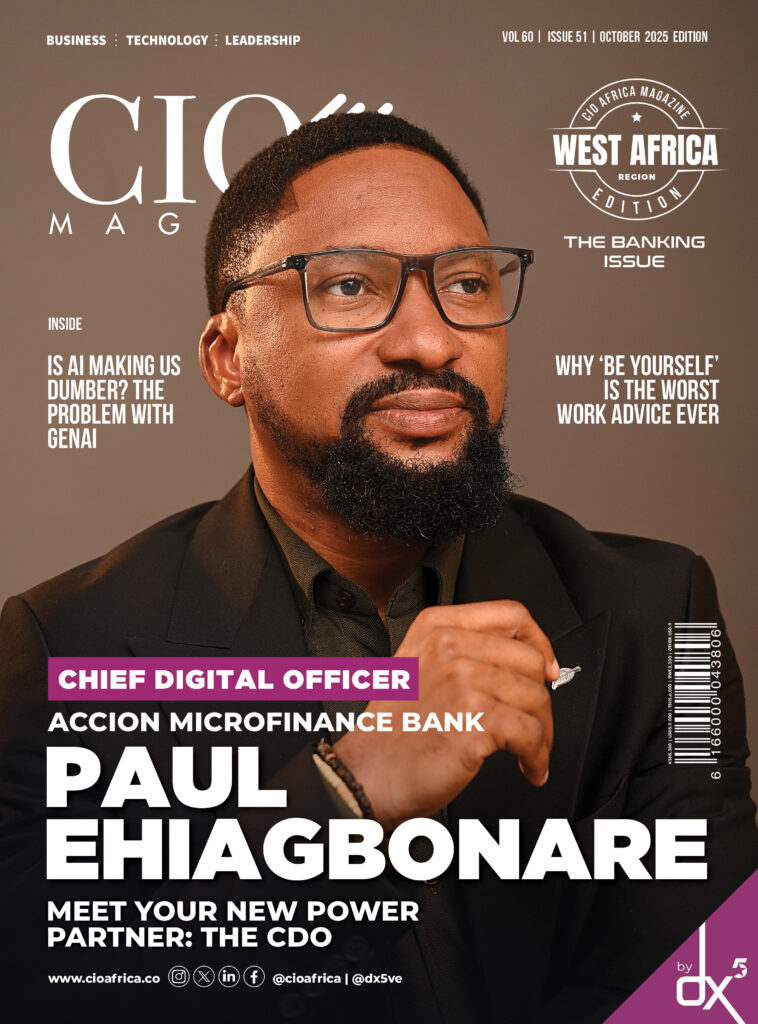
Meet Your New Power Partner: The Chief Digital Officer



Something amazing is happening: the technology C-suite is getting crowded. Alongside CIOs, CTOs, and CISOs, a new role has been steadily gaining prominence: the Chief Digital Officer (CDO). Not to be confused with the Chef Data Officer, also acronymed as CDO.
For some, the CDO is a temporary disruptor—here to fast-track transformation until the CIO absorbs the mandate. For others, the CDO is a permanent fixture, focused on translating digital ambition into business value. Whichever side of the debate you fall on, CIOs cannot afford to ignore the rise of the CDO. Organisations across the continent are racing to monetise data, build customer-first digital platforms, and explore AI. It makes the CDO’s mandate one unmissable.
Meanwhile, the CIO remains the guardian of infrastructure, security, and scale. As a pair, if aligned, they can deliver extraordinary outcomes. Accion Microfinance Bank’s Chief Digital Officer, Paul Ehiagbonare, sits at the centre of this evolution. He has launched inclusive digital platforms and championed data-driven strategies. He is shaping what the CDO role looks like in Africa’s financial services sector with a thrilling vision of the CIO–CDO dynamic. In that world, of tech leadership, collaboration—not competition—defines success.
advertisement

You’re among the few executives in Nigeria carrying the title of Chief Digital Officer. What does that role mean in your own words?
The Chief Digital Officer role is one of thought leadership and visionary alignment — connecting technology, data, customer experience, and business outcomes, and seeing them not just for what they are today but for what they should become. At Accion MfB, it means ensuring that every digital initiative drives financial inclusion, enhances customer trust, and contributes to sustainable growth. It’s not just about deploying tools; it’s about transforming culture, processes, and mindsets while ensuring technology works for people and doesn’t create exclusion for those it is meant to serve.
advertisement
When you stepped into this role at Accion MfB, what was the biggest misconception you had to address internally or externally?
The biggest and common misconception — not just at Accion but across the industry — was that digital meant building apps, cosmetic technology, or simply automating existing processes. We had to shift the narrative. Digital is the strategic use of technology to improve how an organisation operates, delivers value, and drives sustainable growth. It goes far beyond digitisation. True digital transformation is about maturity, excellence, efficiency, and relevance. It’s about rethinking business models, expanding customer reach, managing risk better, and unlocking new revenue streams. For us, it’s not about flashy channels but redesigning how the bank works to deliver better outcomes and tap into opportunities that only digital makes possible.
Many still wonder whether the CDO is a permanent role or a transitional one that CIOs will eventually absorb. What’s your take on this?
advertisement
I believe the CDO role is permanent — especially in Africa. The role isn’t just a function; it’s about who the person is and the unique vision they bring. The CIO ensures systems resilience and operational integrity, while the CDO looks outward and forward — focusing on how technology, data, and foresight can unlock business growth, customer relevance, and new opportunities.
Globally, the rise of the CDO came from the realisation that infrastructure alone doesn’t guarantee transformation. In Africa, where financial inclusion, digital trust, and AI adoption are critical, the CDO provides the strategic leadership to ensure technology works for people, not just processes. The CIO provides the rails; the CDO ensures those rails lead somewhere meaningful. With the growing importance of inclusion, trust, and AI-driven personalisation, the CDO role isn’t transitional — it’s a strategic pillar that organisations will depend on for long-term competitiveness.
In the African context, how do you see the CIO and CDO mandates evolving together?
CIOs and CDOs must evolve as complementary forces. The CIO ensures stability, security, and resilience — making sure the baseline technologies are reliable. The CDO builds on that foundation to ensure relevance, growth, and innovation. Together, they enable enterprises not just to digitise, but to leapfrog into entirely new models of inclusion and value creation. The CIO keeps the lights on; the CDO ensures those lights shine in the right direction. In a context where millions remain financially excluded, this partnership is not optional. It’s the engine that will define Africa’s competitiveness in the digital era.

Financial inclusion is central to Accion MfB’s mission. How is digital transformation helping you reach underserved and excluded communities differently than traditional banking?
Digital has become the bridge to communities that traditional branches could never sustainably reach. With solutions like AccionMonie, Save2Loan, Gig by Accion, Impact by Accion, and mobile-first platforms such as USSD and POS, we are making financial services affordable, accessible, and inclusive for SMEs, rural households, the Gig Economy and women entrepreneurs. But more than tools, digital is becoming an equaliser. It allows a market woman in a rural town to save safely, a young entrepreneur to access credit, and women-led businesses to scale with confidence. For us, digital isn’t just the vehicle for financial inclusion — it is the engine that powers dignity, opportunity, and long-term prosperity.
You’ve championed initiatives like AccionMonie. How do you balance internal digital infrastructure needs with building customer-facing innovations?
Balancing internal infrastructure with external innovation is critical. At Accion, we strengthen the core first — automating processes, ensuring data integrity, and modernising systems — so that customer-facing innovations have a strong, reliable foundation. You can’t innovate outside if the inside is broken. That’s why we focus on creating a digital backbone that supports scale and resilience, while at the same time rolling out our products that directly impact customers. For us, internal efficiency and external innovation aren’t competing priorities — they are two sides of the same coin that ensure sustainable digital transformation.
What does “success” in your role look like over the next two to three years?
Success for me is achieving 75 per cent plus digital adoption, positioning Accion MfB firmly among Nigeria’s top three microfinance banks, and embedding AI-driven personalisation into how we serve customers. But beyond the numbers, success means scaling financial inclusion without compromising trust — ensuring that millions more SMEs, rural households, and women-led businesses can access and use digital finance with confidence. In practical terms, success looks like a bank that is faster, smarter, and more human — where technology doesn’t just digitise transactions but truly transforms lives.
CIOs often manage the infrastructure, while CDOs focus on data as an asset. How do you ensure that the data you oversee isn’t just collected but turned into real business value?
We see data as the story of our customers’ lives — not just numbers on a dashboard. We go beyond big data to combine it with street data and local context: how people earn, spend, save, and repay within their real environments. By analysing repayment habits, transaction patterns, and behavioural insights, we translate data into credit scoring, risk management, and product innovation. Data is not about storage. It’s about strategy. It’s about moving from volume to value — turning fragmented information into actionable insights that help us serve customers better, expand financial inclusion, and unlock new revenue streams.
The thing about microfinance is that many of your customers fall outside the purview of data collection, and as a result, do not have data footprints. What are some of your unique challenges of data quality and governance?
It would have to be that many microfinance customers are invisible to traditional financial systems. They don’t have credit histories, payslips, or formal documentation. We’ve had to rethink what counts as data. We now consider alternative sources such as transaction flows, repayment cycles, telco data and even community behaviours to build a more complete picture. The key is governance and fairness — ensuring that this data is accurate, ethically used, and truly reflective of people’s realities. That’s how we turn invisibility into opportunity. It isn’t just about data quality; it’s about creating the bridge that makes financial inclusion real and sustainable.
Putting aside the hype, where do you see the role of AI and machine learning in shaping inclusive financial services in Africa?
AI will be central to the future of inclusive finance. Its strongest contributions will be in smarter credit scoring, where alternative and behavioural data unlock access for the previously excluded; fraud prevention, where real-time intelligence protects customers and institutions; and personalisation, which is no longer a luxury but a statement of fact — customers expect financial services to adapt to their needs. Looking ahead, AI will also enable two-way communication without language barriers, making it possible to serve customers in their own dialects and contexts, whether through chatbots, voice, or other interfaces. But for all of this, AI must be ethical and fair — designed to include, not exclude. Done right, AI won’t just automate processes; it will expand opportunity, build trust, and bring millions into the financial system for the first time.”
From your experience, what makes for a productive partnership between CIOs and CDOs?
That rests on clear boundaries, mutual respect, and a shared vision. The CIO provides core technology and its stability — ensuring infrastructure, security, and compliance. The CDO provides agility — driving innovation, customer relevance, and new growth opportunities. When these roles complement rather than compete, the organisation benefits from both resilience and reinvention. The CIO builds the rails; the CDO charts the journey. Together, they make digital transformation sustainable and impactful.
Do you see the relationship as more collaborative or competitive?
Collaborative. The CIO and CDO are solving different parts of the same puzzle. The CIO ensures the organisation runs securely and reliably, while the CDO ensures it evolves and stays relevant. Competition only arises when mandates are blurred, but with clear roles, collaboration becomes not just natural — it becomes essential for real transformation.
If you were advising a CIO today, in what areas should they lean on a CDO’s expertise — and vice versa?
CIOs should lean on CDOs for driving business innovation, leading digital transformation, optimising internal business processes, and shaping customer-focused products — as well as turning data into monetisable insights and driving digital adoption. CDOs, in turn, must lean on CIOs for designing technology frameworks, managing infrastructure demands, and running day-to-day technology operations with stability and reliability. The CIO also ensures systems resilience, cybersecurity, and regulatory compliance — all of which provide the foundation on which transformation can stand. The CIO keeps the enterprise running securely and efficiently; the CDO ensures it evolves and stays relevant. Together, they don’t just support the business — they multiply its ability to innovate, operate efficiently, and grow sustainably.
You’ve overseen projects like digital bootcamps for women entrepreneurs. What lessons can CIOs take about designing tools that are truly adopted by end users?
The lesson is clear: adoption starts with empathy. Technology only succeeds when it’s designed around people’s realities — their language, culture, and daily struggles. At our bootcamps, we saw that women entrepreneurs embraced digital tools not because they were sophisticated, but because they were simple, relevant, and trustworthy. For CIOs, the takeaway is that infrastructure alone is not enough. They must work hand-in-hand with CDOs, product, and customer teams to ensure the technology they enable is built for real human contexts. When CIOs align their frameworks with user-centred design, adoption isn’t forced — it flows naturally.
Is empathy how you approach building inclusive digital products that work for SMEs, rural populations, and women-led businesses?
Yes. Inclusion means designing mobile-first solutions that are lightweight, affordable, and accessible even in low-connectivity environments. But it also means going deeper, understanding the daily realities of rural women, SMEs, and micro-entrepreneurs: how they earn, how they spend, and the barriers they face. That’s why we build tools that fit naturally into their lives — whether through USSD, POS, or simple mobile apps — rather than expecting them to adapt to complex systems. True inclusion happens when technology bends to people’s realities, not the other way around.
Trust is everything in financial services. How do you think about building digital trust with your customers?
Trust is built on three things: security, transparency, and consistency. Customers need to know their money is safe, their transactions are clear, and the services they use will work reliably every time. In this digital era, trust goes even further — it’s about giving customers confidence that technology will not exclude them, confuse them, or fail them when it matters most. We design with one principle in mind: people must feel safe, understood, and respected. Because without trust, there is no adoption, and without adoption, there is no inclusion.
What advice would you give CIOs who want to remain strategically relevant as roles like the CDOs gain traction?
My advice is simple: embrace evolution and partnership. The CIO role is not being replaced — it is expanding. In some organisations, we already see the roles converging into a CTDO model, which shows just how critical technology and digital are together. CIOs who remain relevant will be those who move beyond infrastructure and operations to also engage in strategy, data, AI, and customer impact. The CDO brings complementary strengths in innovation and business transformation, but the CIO remains the backbone of resilience and security. When both roles collaborate — whether as separate executives or within one CTDO mandate — the organisation gains both stability and growth. Relevance comes from collaboration, not resistance.

Your role operates within the constraints of regulation and legacy systems. How do you keep your team motivated to innovate?
We keep innovation tied to impact. When teams see how automating a process leads to faster loan disbursements, or how a new USSD feature helps a rural woman save securely for the first time, they understand their work is changing lives. That connection fuels motivation more than any system upgrade ever could. Even in constrained environments, purpose powers creativity. Legacy systems and regulations may set the boundaries, but it’s the sense of mission — building trust, expanding inclusion, and improving customer experience — that keeps teams pushing forward.
If you fast-forward five years, what does the executive technology leadership structure look like in African enterprises? CIO + CDO + CISO, or something different?
Across Africa, CIOs, CDOs, and CISOs are already part of the executive structure. That shift has already happened. I see new roles gaining ground: the Chief AI Officer, as artificial intelligence moves from experimental to strategic; and the Chief Innovation Officer, responsible for embedding innovation as a continuous discipline across the enterprise. Some organisations are exploring merged roles like CTDO (Chief Technology & Digital Officer), but in my view, merging can dilute focus. Africa’s enterprises need specialised leaders working in close partnership. Technology must be stable, digital must be inclusive, AI must be ethical and intelligent, and innovation must be constant. So it won’t be just about titles; it’s about creating a leadership structure where each role adds depth, and together they drive resilience, relevance, and growth.
What drew you personally to becoming a CDO?
I wanted to sit at the intersection of technology, business, customer experience, and purpose. For me, digital isn’t just a career path. It’s a calling. It allows me to connect technology with people’s realities, align innovation with business growth, and ensure that every transformation has purpose at its core. What drives me is creating impact and inclusion at scale.
What’s the boldest digital bet you’ve made so far at Accion MfB?
AccionMonie was our boldest bet. Betting that microfinance customers would embrace digital channels at scale. It was a real risk, because many believed these customers preferred only traditional methods. But the results have been remarkable: we’ve seen over 1,000 per cent + growth, proving not only that digital works in microfinance, but that it can transform inclusion in Nigeria. What started as a bold experiment has become a catalyst for how we reimagine financial access for millions.
If you could challenge African CIOs to rethink one assumption about data or digital strategy, what would it be?
Many CIOs already recognise that data is strategic. But the real challenge is moving beyond recognition to transformation. Too often, data is still managed as a reporting function rather than a driver of innovation, inclusion, and new business models. My challenge to CIOs is this: stop treating data as something to analyse after the fact, and start using it to shape products, decisions, and customer experiences in real time. Data isn’t just a support tool. It’s the frontline of competitiveness. Those who use it to create value at scale will set the pace for the future.
We’ve covered work extensively. What do you do when you’re relaxing or for fun?
I love to see movies, particularly sci-fi. I go to the cinema. Seeing future technologies in action, and their good and bad sides, is a big thing for me. I also watch Netflix or Prime, or YouTube videos at home. And I love to spend time with my family. We visit recreational areas. We go to resorts. And we just have some fun to just enjoy and relax. I also have about three books I’m reading: The Intelligent Investor by Benjamin Graham, The CEO Next Door by Elena L. Botelho, Kim R. Powell, and Tahl Raz, and The China Strategy by Edward Tse. I want to finish them before the end of the year so I’ll carry them along with me wherever I go.