
advertisement
Meet The Historian Leading East Africa’s Digital Revolution


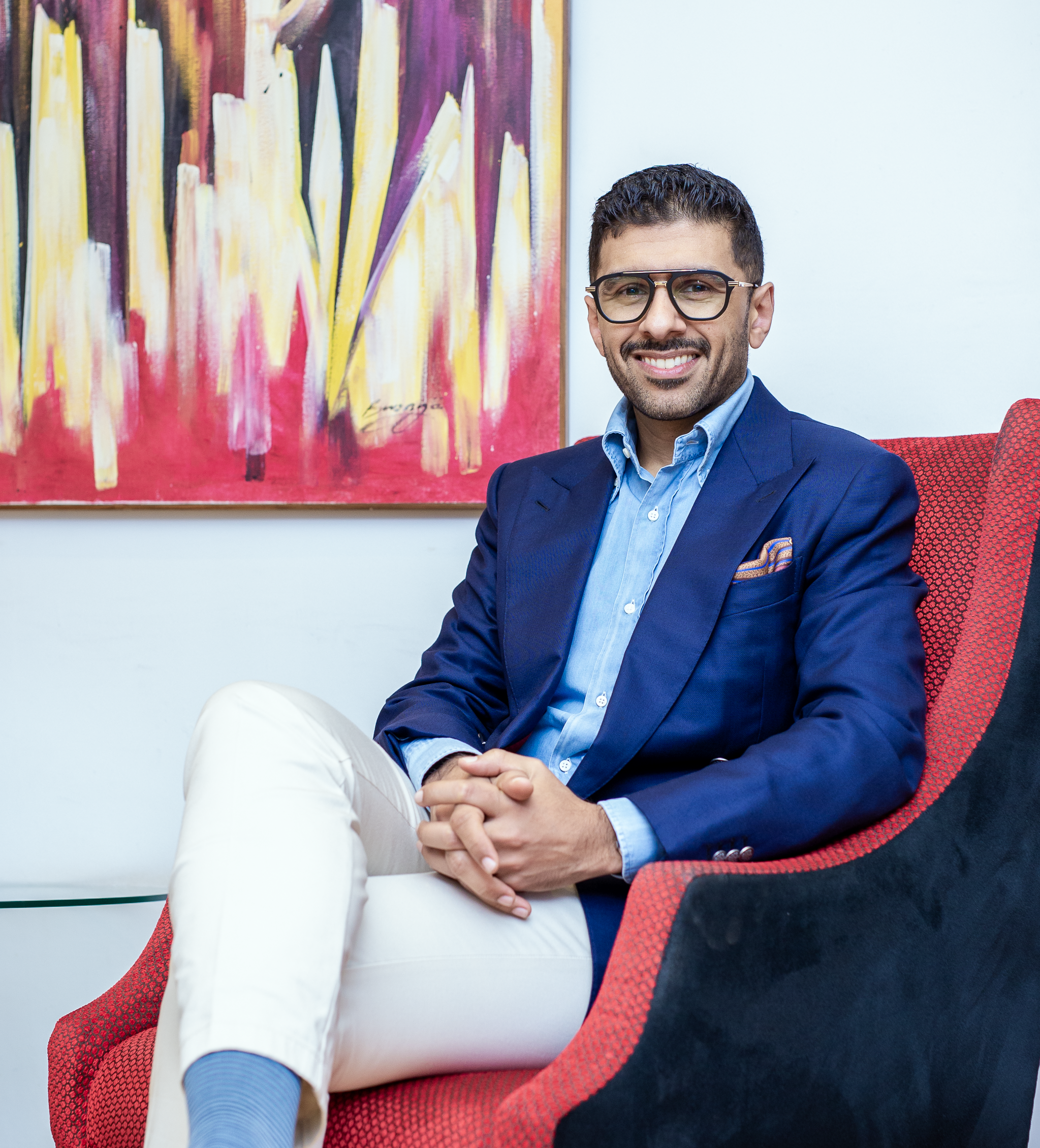
When you meet most people in IT leadership, you expect to hear about their years in coding, their engineering degrees, or their first computer. With Nadeem Nadeem, the Director IT Business, the story begins somewhere else among history books and economic theories.
He laughs as he tells me, “Professionally, I’m a historian and economist. That’s what I studied when I was in university. I’ve always had a passion for both of those things. I’ve always been interested in the intersection of history and how various technologies have spurred societal and economic development over time.”
The Copy Cat Chronicle
advertisement
Copy Cat’s story goes back to 1985, when founders Rajoo Patel and Nazir Noordin launched an office equipment business. “They came up with the name Copy Cat because it’s so catchy”, Nadeem explains, “but also because it represented that all of our copies were a perfect duplicate of the original.” Back then, poorly maintained copiers meant smeared or streaky copies. Copy Cat’s mantra was simple: spotless service, spotless copies. Even before selling a single machine, they stocked spare parts and trained their technicians, determined that “we’re going to take this to market in a really professional way,” as Nadeem puts it.
In the 1990s, as computing spread, Copy Cat expanded beyond copiers into broader ICT solutions. “We started bringing in desktops… connectivity, cabling, and it very quickly evolved into a full-fledged systems integration division.” Today, the company still sells “office automation” products (printers, cash handling machines, etc.), but those run in parallel with a huge enterprise tech arm: networking, data centers, security, apps, and more.
Staying Ahead in a World That Won’t Sit Still
advertisement
Technology is a restless force. Just when you think you’ve caught up, cloud reshapes the landscape, AI takes the headlines, cybersecurity grows more complex, and a new acronym is already waiting around the corner. The question isn’t just how companies keep up, but how the leaders at the helm do. How do they stand steady in an industry that refuses to sit still? How does he stay  abreast? “One thing is
continuous learning,” he tells me. He points to his desk where a McKinsey report sits open. “I was reading it this morning, it’s on unlocking profitable B2B growth through Gen AI. I read a lot: industry reports, news, research. And I make sure I’m present at the right events. That’s very important.”
But learning doesn’t stop at articles or conferences. Nadeem is preparing to go back to school. “I’m actually going back to do my Executive MBA. I still have so much more to learn, and to take us to the next phase of growth, I feel that kind of formal training is necessary.”
advertisement
He says, “You have to have what I like to refer to as a pragmatic filter.”
It’s a refreshing perspective in a space often swept away by hype. “In our industry, there’s too much noise. Fifteen years ago everyone said cloud would change the world. But cloud is just infrastructure, hosted elsewhere. It hasn’t transformed humanity overnight, it just gave us a new place to spin up servers. The same is happening with AI. People believe it’s a silver bullet, but it has to be rationalized. You need to understand it within the context of your organization, your environment, and your customers.”
That filter isn’t built alone. Nadeem speaks about the power of networks not the digital kind, but human ones. “I have friends across industries: data centers, telecoms, banking. We sit together, not formally, just as friends, and talk about what’s happening in our spaces. Where they see pain points, how technology is shifting. Those conversations often give me the direction of where to focus my energy. And honestly, they help refine my thinking.”
“I mentor some startups,” Nadeem says, “but with my peers, it’s mutual. We grow together. Sometimes we’re blunt, even harsh. That honesty sharpens ideas. It’s friendship that makes you better”
Inside his own company, the same philosophy applies. It starts with people. “I can’t say this enough: you have to hire the right people. I’d rather hire slowly and make sure they fit, and if someone is toxic, you get rid of them fast. Otherwise, they drag the whole organization back.”
And once the right people are in, Nadeem invests in their growth. Copy Cat’s talent framework begins with fresh graduates in a rotational program. “They get a taste of everything; security, AI, applications, networking. Then after a year, we sit down and ask, “What are you passionate about?” If someone says security, we put them on that pathway. They can still change, but eventually, when you’re ready to be an architect, you need deep focus. That usually happens three to four years in.”
And when they reach mastery, Nadeem makes sure they stay sharp by challenging them directly. He laughs as he recalls their reactions: “Sometimes I’ll read about a cutting-edge security solution and bring it up in a meeting. I’ll see their faces drop ‘oh no, Nadeem has heard about this. ’ Then I push them: have you done the certifications? How are we telling this story to customers? What does it mean for them?”
It’s this mix of formal structure and informal challenge that keeps both Nadeem and his team alert in a field where complacency is costly. Or as he puts it simply, “The best thing is to catch them off guard.”
The Peopleware Principle: Leading Tech with Empathy and Impact
When you think about technology companies, it’s easy to picture rows of machines and servers. But Nadeem reminds me, almost from the start, that at the heart of Copy Cat are people. More than 200 of them, spread across Nairobi, Mombasa, Kisumu, Eldoret, and even further into the region Uganda, Ethiopia, and Rwanda.
While his immediate team consists of eight direct reports, his reach cascades across the business. “I’m a big believer in empowering people,” he says firmly. “I’m not the kind of person who believes that I want to control everything. I actually believe that makes me highly ineffective. Once you hire the right people, you need to empower them. You have to do the work in HR, in frameworks, in performance management, but then you let people fly.”
That philosophy frees him to do what leaders often forget to make time for: the thinking. Engaging senior leaders, scanning the horizon, shaping strategy. Early in his career, Nadeem was the detail driven leader who rolled up his sleeves and got into the mud of every project and every architecture design. He still values that grounding it taught him the business, but today his lens is wider. “It’s really about shifting to scaling teams, empowering people, and then looking at impact. How do I measure impact? How do I look at the value we’re delivering to customers?”
That shift is not just personal, it’s regional. Technology in East Africa comes with its own peculiar realities. Nadeem chuckles when he explains what that means in practice: “We had a project where we had to convert municipal toilets in Turkana into data centers. Until you’ve had to worry about those kinds of things, you don’t understand what it is to do a project in Africa.”
This mix of ambition and improvisation is what makes Copy Cat’s expertise so critical. “We have the global benchmarks, but someone has to distill all that into what is practical here,” he says. “In Africa, you’re not just deploying hardware or software, you’re working with people. There’s hardware, there’s software, and there’s peopleware. And arguably, the peopleware is the most complex, because you have to take people on the journey of technology. It’s not just about systems.”
That’s where his Afro-optimism returns. Nadeem sees impatience in Kenyans, the refusal to wait for better services, the demand for everything to be available on the phone as a strength, not a flaw. “We’ve become totally impatient,” he smiles. “And I think that’s such a great thing. We should never lose that impatience it’s what pushes us forward. It’s why we leapfrog.”
And yet, you can’t help but wonder, how does a company like Copy Cat, 40 years old, with all the weight of history behind it, still manage to feel fresh in a world where today’s big idea can be forgotten by tomorrow? “Remaining relevant for 40 years is not easy,” he admits. “One of the practices I brought in is having a rolling strategic plan. Looking far out, but reviewing it every single year. That way we can constantly pivot to the needs of the market.”
But staying relevant also means knowing who to listen to. And here, Nadeem is clear: customers aren’t one audience, they are many. “We are a deeply technical organization, so we start with the technical teams. But business users matter just as much, because they’re the ones demanding the outcomes. And of course, executives too, especially when it’s large turnkey projects. These are huge investments. They need to understand the return.”
It’s a balancing act, part strategist, part bridge builder. And perhaps that’s what defines Nadeem’s leadership most: his ability to stand at the intersection of systems and people, legacy and reinvention, patience and impatience, history and tomorrow.
AI, Startups, and the Soul of Innovation
If you’ve worked in IT long enough, I’d imagine you’ve probably lived through chaos; servers crashing at midnight, frantic calls, “urgent” tickets piling up faster than they can be solved. IT teams, for years, have been the firefighters of organizations. Always on edge. Always reacting.
But Nadeem believes that era is ending and AI is the accelerant.“If I had to bet on just one capability that will redefine IT services in the next three years, it’s AIOps,” he tells me without hesitation.
AIOps, short for Artificial Intelligence for IT Operations, is about letting machines take over the grunt work of monitoring, detecting, and fixing problems before they spiral. “It’s enabling IT teams to move from being reactive to being proactive,” Nadeem explains. “That manual break fix approach is disappearing. And this means IT people can finally stop firefighting and focus on real outcomes.”
There’s something quietly radical about this shift. Freed from constant crisis mode, technologists can put their energy into building new things like digital lending platforms or smarter customer experiences. Nadeem sees it as a return to what IT should have always been about: value creation, not damage control.
And that brings us to something close to his heart, the Copy Cat Innovation Hub.
“Sometimes it’s easy to forget that we’re a deeply technical company,” Nadeem says. “People will come to us not because of our price, not because of who we know. It should be because we have the technical competency that no one else has. And I’m proud that today our customers bring us problems no one else can solve.”
The Innovation Hub is where that plays out. It’s part laboratory, part playground. Here, Copy Cat engineers can sandbox problems, run multi-vendor tests, and prove out solutions before deploying them in the wild. “If a customer says, ‘I don’t think that migration will work,’ we can take test data, replicate the environment, and prove it. That gives customers confidence.”
But it’s not just about risk free testing. It’s also about curiosity. “People should enjoy their jobs,” Nadeem insists. “I want our technologists to have a place where they can say, hey, I wonder what happens if I try this? Or what if I put this vendor and that vendor together?” Out of that tinkering have come industry reference architectures, blueprints refined through trial, error, and hands on play.
He proceeds to say, “Our customers are large, complex organizations with large, complex problems.” Copy Cat works mostly at the enterprise level, often through telcos that help reach smaller businesses. Still, he admits, sometimes it feels like he has a startup ecosystem inside his own teams: “They’ll come up with an idea or build a solution and  say, ‘we think this should go to market。’ In their own way, each team behaves like a startup.”
And then he shifts to a frustration that many in Kenya’s tech scene will recognize. “The startup space in this country needs some soul searching,” he says carefully. The problem, as he sees it, isn’t just the lack of capital, it’s where the capital goes. “It rarely goes to indigenous Kenyans solving indigenous Kenyan problems. That’s highly problematic.” It’s the kind of critique you don’t often hear spoken plainly. But coming from Nadeem, it ties back to his historian’s perspective: technology only matters when it grows out of the soil it’s meant to serve.
Building Unity in Complexity
But behind the tech jargon, there’s a very human question: how do you make so many moving parts feel like one whole? Especially in a company like Copy Cat, where the portfolio stretches from office equipment to AI-driven data centers.
It always circles back to people. As he puts it, “Number one is having the best talent,” a reminder that real alignment depends on teams who see the whole picture, not just their slice of it.
But it doesn’t end there. Copy Cat has learned to lean into what Nadeem calls “productive friction.” “So you manage infrastructure, this person manages connectivity. Now let’s talk about full-stack observability, the ability to fault find across an entire technology environment. Who does that belong to? Infrastructure? Connectivity? Security? Applications?” He pauses, almost amused by the puzzle. “I can’t decide that. The stakeholders have to. Sometimes they argue, and that’s fine. That alignment has to happen naturally, even if it comes with some heated debates.”
It’s a reminder that cohesion isn’t about eliminating differences, it’s about managing them. In fact, the strongest teams Copy Cat builds are multidisciplinary by design. “If we have someone deploying a solution on the cloud, that person doesn’t only understand cloud. They’ll have a foundation in security, in on-premises infrastructure, maybe even DevOps. So, they’re not just moving something from here to there, they’re thinking: is this really achieving the outcome for the customer?”
That execution first mindset is what Nadeem calls Copy Cat’s “secret sauce.” Not innovation for its own sake, but relentless, disciplined follow-through. “Execution is the hardest part of succeeding,” he says. “And it’s the most undervalued. It must happen every single day.”
Of course, execution is rarely smooth in Africa’s tech landscape. Many customers already have services from other vendors, sometimes modern tools with APIs that make integration seamless, other times clunky legacy systems that don’t play nice. Nadeem doesn’t sugarcoat it. “There are moments when we’re integrating with technologies from organizations that don’t even know who we are, because we don’t have a contract with them. Those are not easy conversations. But if everyone agrees the customer comes first, then eventually everyone marches in the same direction.”
And sometimes, saying no is the best answer. “Believe you me, it happens more often than you think that we say to a customer, ‘this project is not for us. ’ Either there’s a misalignment of expectations, or we don’t believe we can deliver the outcome given the circumstances. What we won’t do is compromise our reputation. In 40 years, not a single customer can say Copy Cat came and did a bad job. And that’s because we know when to walk away.”
In Nadeem’s telling, cohesion isn’t just about unifying teams inside Copy Cat it’s about helping industries unify themselves with the future. And that, perhaps, is the bigger picture he’s always chasing.
Building Skills in a Shifting Tech World
Everywhere you turn in tech today, one theme dominates the conversation, skills. Or rather, the shortage of them. From Silicon Valley to Singapore, AI and cloud expertise are in such demand that companies scramble to fill roles faster than universities can graduate students. The World Economic Forum has even warned that nearly half of all workers will need reskilling by 2027 to stay relevant.
So, how does a proudly Kenyan company like Copy Cat navigate this reality? “Talent is fundamental to our industry,” Nadeem says with no hesitation. “You have to make sure you have a talent pipeline of people who are constantly being certified and constantly learning.”
That balance between bringing in external expertise when needed and cultivating homegrown talent is something Copy Cat has leaned into heavily. “We are a 100 per cent Kenyan company. Hiring local talent is an imperative. In fact, I’d say 95 per cent of our staff are local whether that’s Kenyans in Kenya, Ugandans in Uganda, or Ethiopians in Ethiopia.”
Copy Cat’s management trainee pipeline has quietly become one of East Africa’s strongest tech talent feeders. Nadeem laughs as he admits the irony:“Sometimes I feel like I’m running a university for everyone else. My competition, my customers, everyone wants to take my people.”
And yet, he doesn’t sound bitter. If anything, there’s pride. “It’s a wonderful thing to see. I love going to a customer and realizing the CIO sitting across from me started their career at Copy Cat.” It’s more than training – it is the values. Agility, boldness, creativity, and dynamism. We live them,” Nadeem insists. They’re not just wall posters. They’re built into KPIs. Each role carries its own definition of what those values look like in practice. And it shows. “What I love is when people who are deeply aligned to those values go out, work for vendors or competitors, and eventually come back. Because they miss it.”
The Tools of Tomorrow
 If skills are one side of the coin, technology platforms are the other. During our conversation, Nadeem lights up when OpenShift and Red Hat’s Lightspeed come up.
For the uninitiated, here’s the gist: modern businesses are dragging old, heavy legacy applications into the cloud era. Imagine trying to fix an engine while the car is still running. Traditionally, you had to stop everything to update one piece. OpenShift changes that. It slices applications into manageable “containers,” so you can fix or add features to one part without taking down the whole system.
“OpenShift is basically a platform that sits on Kubernetes environments,” Nadeem explains,“but with enterprise grade security, compliance, and support. You get the innovation of open source with the stability enterprises need.”
Enter Lightspeed. Think of it as a generative AI assistant for developers. “Instead of digging through endless documentation or forums, you can just type a question in plain language, and Lightspeed gives you the answer fast, accurate, and in human language.”
Copy Cat is the largest Red Hat partner in Africa. Nadeem says, “I’ve lost count of how many core banking modernization projects we’ve done. All on OpenShift.” They don’t just use technology; they help make it work in Africa.
And what does this mean for IT leaders? Nadeem is clear: managing people will always outweigh managing systems. “People are the most important thing. As AI takes over monotonous work, people will become even more important—because the skills to integrate AI into real-world operations will be scarce and in huge demand.”
What Tomorrow Demands
Three years from now, where does he see Copy Cat? He notes: AI-first services, hybrid and multi cloud leadership, and becoming a true innovation partner for customers.
He doesn’t buy into the AI hype. “I’m actually the biggest critic of people who mention AI when they’re asked about the future. But I’ve fallen into that trap myself,” he chuckles. “There are very practical places where AI can solve problems fast. But it should be done with eyes wide open.”
His pragmatism cuts through the noise. “AI companies say it will create more jobs. I’m not that optimistic. Entry-level jobs are already disappearing in the West. That’s a reckoning we’ll face in the next 12–24 months. Governments need to wake up and prepare youth for the 22nd century, not the 21st.”
It’s a sobering reminder that Africa’s tech optimism must also wrestle with real-world disruption. “How we navigate these issues will define our place on the global stage. That’s the opportunity we have but no one is seizing it seriously.”
The Man Outside the Title
Even with all the pressure of leading in tech, he finds his center in everyday joys. His son, whom he affectionately calls his “bro,” remains his reset button. He’s also on the board of a school, where thinking about youth and the future of education keeps him connected to the bigger picture.
And then there’s travel, food, and sports like padel, tennis and mountain biking. “New places, new flavors, new ideas. That’s what energizes me.”