
advertisement
Kenya Sharpens Innovation Strategy Through Global Index Alignment

As Kenya sharpens its ambition to transition into a first-world economy, innovation is increasingly taking centre stage as both a policy priority and a measure of national competitiveness. One of the most important yardsticks in this journey is the Global Innovation Index (GII), a globally recognised benchmark that evaluates how effectively countries are nurturing innovation ecosystems, translating ideas into value, and competing in the knowledge economy.
Against this backdrop, the Kenya National Innovation Agency (KeNIA) is intensifying its leadership role in positioning the country among the world’s leading innovation-driven economies, drawing inspiration from global frontrunners such as Singapore. Innovation, KeNIA maintains, is no longer a peripheral agenda but a strategic lever for economic transformation, investment attraction, and sustainable growth.
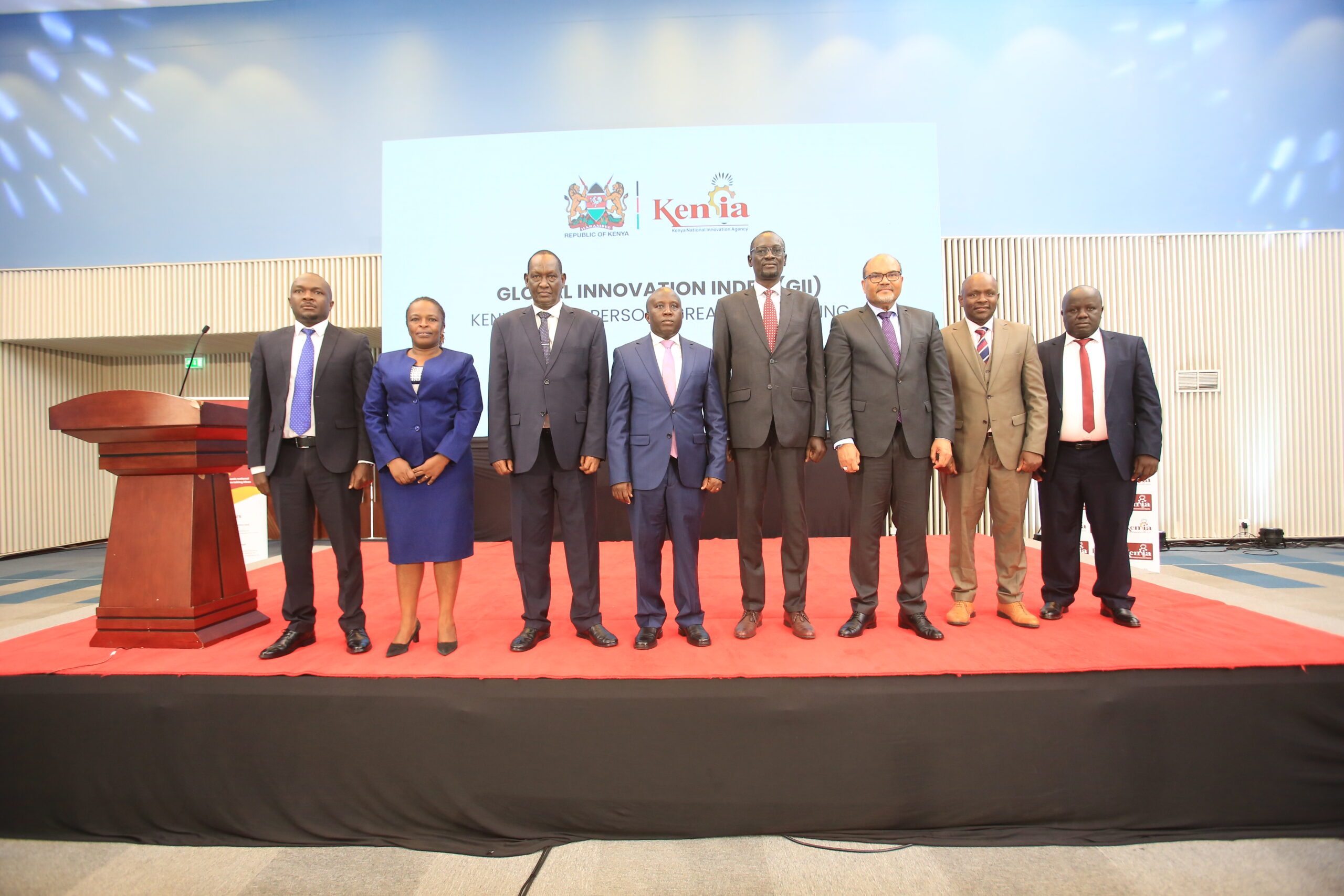
This renewed focus was evident at a high-level Global Innovation Index Focal Persons Breakfast Meeting convened by KeNIA, which brought together the Head of Public Service, Principal Secretaries from across government, senior officials from key state departments, and chief executives of state corporations. The meeting provided a platform to review Kenya’s current GII performance and to build consensus around a more coordinated, data-driven approach to improving the country’s global standing.
advertisement
The engagement operationalised a Cabinet decision made on 26 April 2025, which called for the harmonisation of national innovation data, improved performance tracking, and stronger inter-agency coordination. The aim is to ensure that Kenya’s innovation efforts are not fragmented, but aligned behind a shared national vision that can be measured, benchmarked, and continuously improved.
A key milestone from the meeting was the official launch of the Global Innovation Index Steering Committee. The multi-agency body has been mandated to provide strategic oversight, coordinate policy and data inputs, and ensure that Kenya’s innovation ecosystem is aligned with international benchmarks used in the GII. Its establishment marks a shift in how the Index is perceived, from a periodic ranking exercise to a strategic national instrument that can guide policy, investment decisions, and institutional reforms.
Speaking during the meeting, Mr. Josphat Nanok – Deputy Chief of Staff at the Executive Office of the President, underscored the central role of coordination and data in Kenya’s innovation journey.
advertisement
“Kenya can transform its ideas into scalable solutions that compete on the first-world stage by strengthening coordination across government, academia, and industry, and by leveraging robust data for policy and investment decisions. Data is a strategic asset, and our collective efforts will determine how Kenyan innovations shape not just our economy, but Africa’s future in the global knowledge economy.”
Prof. Abdulrazak the Principal Secretary (PS) – State Department for Science, Research and Innovation emphasized the need for deliberate investment in data-driven policy, world-class research infrastructure, and innovation-friendly regulatory frameworks as critical enablers of Kenya’s innovation ambitions. “Kenya has the talent and the ideas to drive Africa’s transformation. Our responsibility is to create the systems that allow this potential to scale.”
Reaffirming KeNIA’s mandate, Dr. Omwansa, CEO of KeNIA highlighted the Agency’s commitment to building a resilient, innovation-driven economy by translating research outputs into globally competitive enterprises and strengthening Kenya’s visibility on the global innovation stage. KeNIA remains at the center of national efforts to coordinate innovation actors, align policy, and drive measurable improvements in GII performance.
advertisement
As part of this renewed approach, Kenya’s GII performance analysis has identified several priority indicators that will now be monitored with greater precision. These include human capital and research metrics, such as tertiary enrolment and the number of science and engineering graduates, tracked in collaboration with the State Department for Higher Education. Infrastructure and digital economy indicators will focus on ICT access, usage, and government online services, working closely with the Communications Authority of Kenya and the State Department for ICT. In addition, greater emphasis will be placed on knowledge and creative outputs, including patents, utility models, and mobile application development, to better reflect Kenya’s growing innovation output.
Together, these measures signal a more deliberate and coordinated national effort to embed innovation at the heart of Kenya’s development agenda, one that positions the country to compete more effectively on the global stage while delivering tangible economic and social returns at home.