
advertisement
KCB Bets On Digital Banking As Profits Hit $526.7M


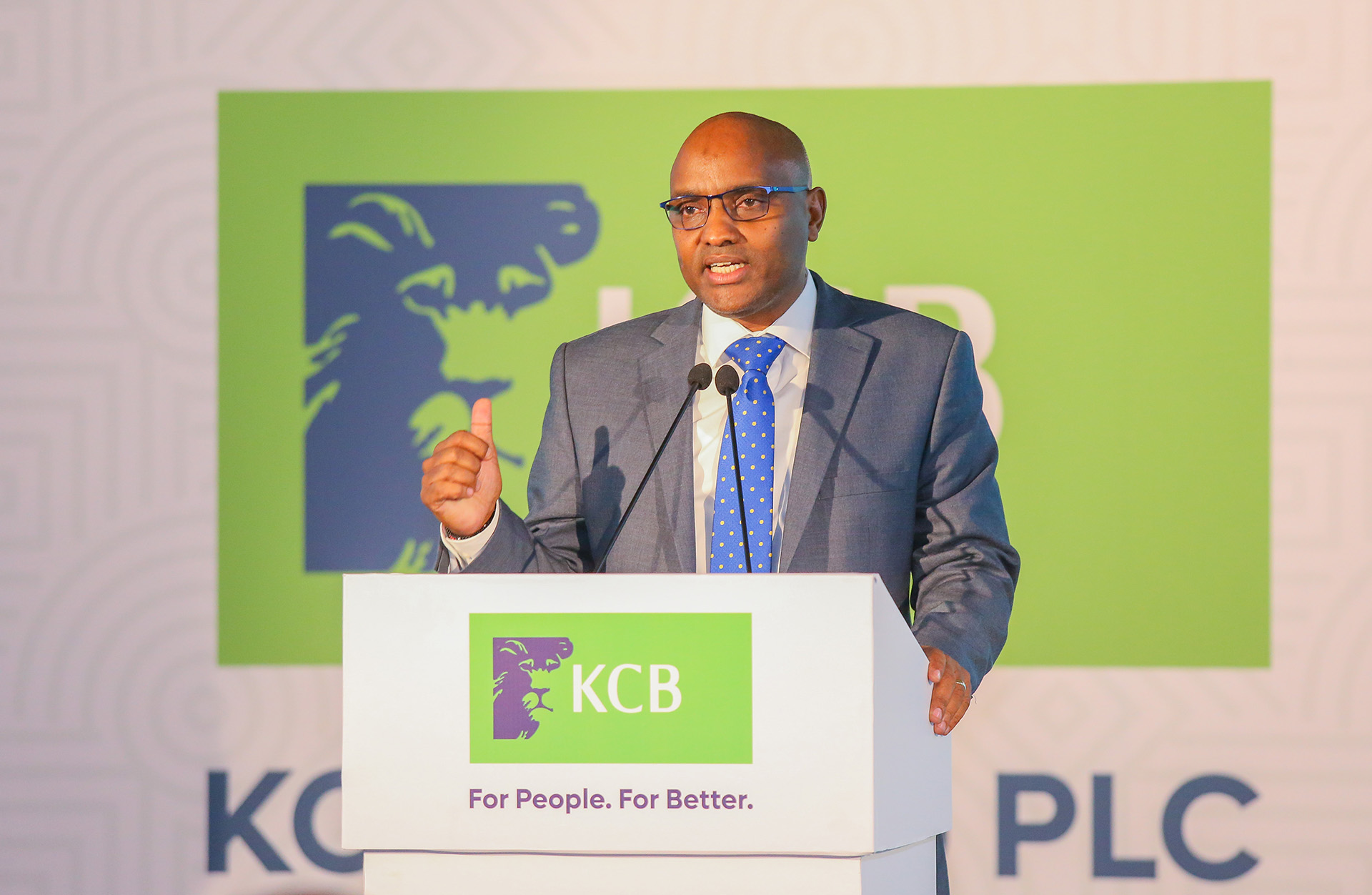
KCB Group is strengthening its push into digital banking and fintech partnerships after reporting $526.7 million (KES68.4 billion) in profit after tax for the 2025 financial year, an 11 percent increase driven by growth in lending, digital services and regional expansion.
The results underline how technology and digital financial services are becoming central to the strategy of the Group as financial institutions across the region compete to expand mobile banking, digital payments and fintech ecosystems.
KCB’s total revenues rose to $1.65 billion (KES214 billion) from $1.57 billion (KES204 billion) the previous year, while total assets grew 9.3 percent to $16.56 billion (KES2.15 trillion) as the bank expanded its loan book and digital banking services.
advertisement
Group CEO Paul Russo said the performance reflects continued investments in technology-driven banking platforms and digital innovation.
“Our performance reflects the strength of the KCB franchise, the resilience of our regional footprint and our continued investment in digital innovation,” Russo said while announcing the results.
Technology-driven services are increasingly contributing to the group’s income streams. Non-funded income now accounts for 31 percent of total revenues, supported by digital banking platforms and transaction services.
advertisement
KCB has also rolled out a new unified mobile banking application designed to integrate payments, savings and investment services into a single platform as part of its broader digital transformation strategy.
The bank’s balance sheet also expanded significantly, with customer loans growing to $12.24 billion (KES1.59 trillion) while deposits rose to similar levels as the bank strengthened its funding base across regional markets.
According to the group’s audited financial statements, shareholder funds stood at $2.55 billion (KES331 billion) while return on equity reached 22.5 percent, reflecting efficient use of capital.
advertisement
KCB is also expanding its digital commerce footprint through fintech partnerships. The group recently signed an agreement to invest in payments platform Pesapal, a move expected to accelerate e-commerce and digital payments for businesses across Africa.
Regulators have also approved the bank’s plan to acquire a 75 percent stake in Riverbank Solutions, a payments technology firm, further strengthening its position in the digital payments ecosystem.
Beyond fintech investments, the group continues to support regional initiatives and sustainability programs, including a $1.75 million (KES227 million) sponsorship of the 2026 WRC Safari Rally Kenya and a financing facility from the African Development Bank to support climate-smart investments and trade finance.
KCB operates in Kenya, Tanzania, Uganda, Rwanda, Burundi, South Sudan and the Democratic Republic of Congo, with more than 450 branches, 1,200 ATMs and over 1.3 million agents and merchants supporting its digital and physical banking network.
KCB’s technology-driven strategy reflects a broader shift across African banking where mobile banking, digital payments and fintech partnerships are increasingly shaping growth, financial inclusion and cross-border trade.
As mobile financial services expand across East Africa, banks are racing to strengthen their digital platforms in order to attract customers, reduce operating costs and compete with emerging fintech players.