
advertisement
How Young West African Farmers Are Utilizing Social Media

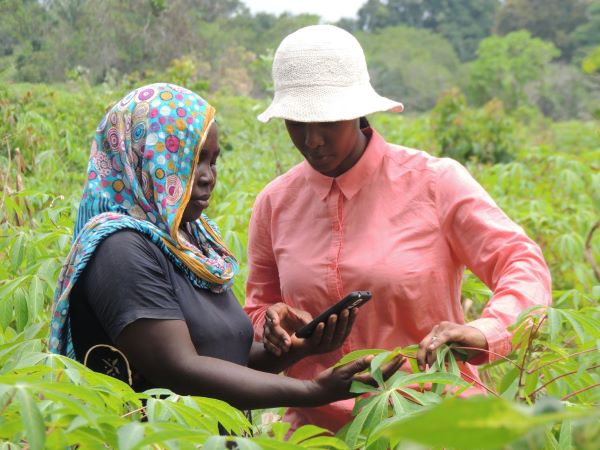
Millions of young farmers across West Africa are re-inventing everyday social media platforms, transforming them into agricultural tools that improve farm productivity, boost income, generate employment, and enable peer-learning online. This is according to new research from Caribou in partnership with the Mastercard Foundation.
Across Côte d’Ivoire and Benin, young agricultural entrepreneurs are using social media platforms for purposes beyond their original design. They have turned group chats and communities into marketplaces where farmers compare prices across markets. They use live streaming to show urban customers their products to build trust that leads to sales. They share videos teaching each other how to spot plant diseases or mix organic pesticides.
The research, which interviewed young producers, processors, and traders across rice, cashew, and soy value chains, documents how farmers have extended access to critical information that traditional agricultural systems provide through the innovative use of social media platforms.
advertisement
In countries where official agricultural support services, known as extension services, reach fewer than one in five farmers and where rural farmers routinely receive below-market prices, everyday social media platforms have become essential infrastructure for many.
Social media addresses these gaps. This same cashew farmer might instead receive daily price updates via WhatsApp from farmers in other regions. The soy processor may post product photos on Facebook and receive mobile money payments from customers hundreds of miles away. Young farmers can film pest management techniques and share solutions, creating practical knowledge repositories.
The study documents how farmers have transformed everyday platforms into essential agricultural tools. WhatsApp Is used as market Intelligence. Farmers create groups organized by crop and region, sharing proce Information and alerting each other to reliable buyers or fraudsters. Facebook Is used as a storefront where processors and traders create business pages showcasing products and operations, building customer trust and brand loyalty.
advertisement
TikTok, on the other hand, is used as a training platform as young farmers create videos demonstrating farming techniques that can be watched repeatedly and adapted to local conditions. Instagram Is utilized for branding where urban processors use professional presentation to attract middle-class customers and international buyers.
Growing digital divides and policy blind spots
National digital strategies across the West African Economic and Monetary Union focus largely on formal businesses and purpose-built platforms. They have limited focus on the digital channels and tools used informally by large portions of the population.
This disconnect has consequences. Farmers using social media for business operate without consumer protection or recourse when defrauded. They cannot easily access training, funding, or support available to formal businesses. Those without smartphones or data, particularly rural women, are at risk of exclusion.
advertisement
The research by Mastercard Foundation found that while governments and donors spend millions building specialized agricultural platforms attracting hundreds of users, millions of farmers have already built their own digital ecosystem on existing social platforms.
The research also revealed divides between male and female farmers in platform use. While young men in cities use TikTok to build agricultural brands, rural farmers may not afford data for certain platform functions, such as video content.
Women are responding through collective action. The study documents “DigiQueen” clusters in Benin where women pool money for phones and data, sharing devices and teaching digital skills. In Côte d’Ivoire, women’s cooperatives use WhatsApp voice notes in local languages to include members with limited literacy.
“Social agriculture is led by youth and women who are reshaping livelihoods and reimagining a future for farming that is community-driven, digitally enabled, and full of potential to scale. Unlocking this potential will be the next big leap for agrifood systems.” Charlene Migwe, Program Director at Caribou, said.
“Women agripreneurs across West Africa are innovating with limited resources, from sharing devices, teaching digital skills, and building inclusive networks on platforms not designed for agriculture. Imagine what they could achieve with the right tools, training, and support. The potential to unlock even greater impact is there, and could be transformative for them and their communities.” Eunice Muthengi, Acting Senior Director for Research and Learning at the Mastercard Foundation, said.