
advertisement
How The West Africa Digital Corridor Is Redrawing Africa’s Connectivity Map


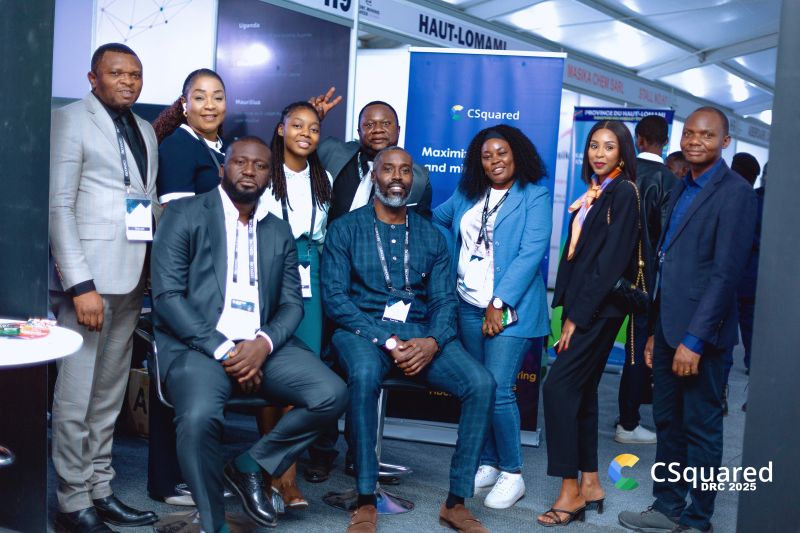
When fiber optic cables first reached Africa’s shores, their promise was largely confined to coastal cities. High-speed internet landed at the beaches of Accra, Abidjan, and Lagos but for landlocked capitals like Ouagadougou or communities deep inland, that capacity was little more than a headline. Today, that story is changing across West Africa as new digital highways are knitting together coast and continent, connecting countries and, more importantly, connecting economies.
At the heart of this transformation is CSquared, a pan-African technology company quietly building the infrastructure that underpins Africa’s digital integration. For nearly a decade, the company’s mission has been simple yet ambitious: to construct the digital highways that connect Africa to itself and to the world. Under the leadership of Chief Executive Officer Ian Paterson, that mission is taking on new shape through a regional initiative linking Ghana, Togo, Côte d’Ivoire, Liberia, and Burkina Faso, what he calls the West Africa digital corridor.
“West Africa has always been a strategic focus because it sits at the intersection of opportunity and need. It’s one of the most dynamic yet underserved connectivity regions on the continent, home to some of Africa’s largest economic hubs but also to markets where access remains uneven,” says Paterson.
advertisement
For Africa’s digital transformation to succeed, international bandwidth must reach inland markets. Subsea systems like Google’s Equiano cable have revolutionised Africa’s external connectivity, bringing enormous capacity to the continent’s coastline. Yet the true test lies in how efficiently that bandwidth travels inland to data centres, enterprises, and communities that form the backbone of local economies.
That’s where CSquared’s terrestrial backbones come in. The company, which serves as Equiano’s landing partner in Togo, doesn’t just manage the cable’s coastal entry point. It extends that capacity across borders, carrying high-speed internet from Lomé through Accra and Kumasi to Ouagadougou, creating a seamless digital corridor that spans multiple economies.
The result is a network built not for exclusivity but for openness. CSquared’s infrastructure operates on an open-access model, meaning multiple internet service providers, mobile operators, and enterprises can share and use the same backbone rather than duplicating it. The impact is profound: shared infrastructure drives affordability, reduces inefficiency, and lowers barriers for smaller innovators to enter the market.
advertisement
“When networks are neutral and shared, smaller ISPs, innovators, and community networks gain equal footing with larger operators. The result is a more dynamic ecosystem, one where affordability improves, digital skills grow, and entrepreneurs can reach markets once limited by geography,” Paterson explains.
While infrastructure is the visible part of this transformation, collaboration is its true foundation. The success of the West Africa corridor, Paterson notes, came from early alignment between governments, regulators, and private partners, a model he believes should be replicated elsewhere on the continent.
In Ghana, the government’s Digital Acceleration Project explicitly encourages private participation in broadband rollout. CSquared’s fiber networks in Accra and Kumasi complement that policy by extending last-mile access and enabling multiple operators to deliver services over shared infrastructure. In Togo, the company’s partnership with government around the Equiano landing forms a direct extension of the National Broadband Strategy, ensuring international capacity doesn’t stop at the coast but continues inland through a neutral, open-access framework.
advertisement
These examples show that when public policy and private investment move in tandem, connectivity moves faster. Regional cooperation, often seen as a bureaucratic ideal, becomes tangible when fiber physically crosses borders, linking regulators, investors, and communities under a shared digital framework.
“The success of this corridor has come from early alignment between governments, regulators, and private partners. It’s a demonstration of how regional policy coordination and private investment can move in tandem to accelerate connectivity,” Paterson says.
The economic effects of such integration are already visible. In Togo, studies around the Equiano landing projected more than $200 million in GDP gains and 37,000 new jobs between 2022 and 2025, along with a 14% reduction in retail internet prices. Similar trends are emerging along the Accra–Monrovia–Ouagadougou corridor, where CSquared’s shared infrastructure has reduced data transit costs by as much as 30%.
These aren’t just statistics, they represent the multiplier effect of connectivity. In Accra and Nairobi, for instance, small and medium-sized enterprises that once struggled with unreliable internet are now leveraging cloud platforms, digital payments, and e-commerce tools to reach regional markets. Reliable broadband, Paterson says, “changes the rhythm of an economy.”
According to World Bank estimates, every 10% rise in broadband penetration can lift GDP by more than 1%. For economies across West Africa, that translates into more competitive industries, stronger digital services, and more inclusive growth.
As Africa pushes toward its goal of universal, affordable broadband, the role of regulation becomes increasingly central. Paterson believes the continent’s next wave of progress depends on harmonised cross-border policies that encourage private investment while protecting fair competition.
“For policymakers, the priority must be to create a regulatory environment that encourages investment while enabling competition. Simplified permitting, harmonised regulations, and transparent governance frameworks can dramatically accelerate broadband rollout,” he says.
This regulatory coherence will also be essential as data becomes the lifeblood of regional economies. A connected Africa requires shared digital standards, not just shared cables. That includes everything from data protection to cloud interconnectivity and digital skills development.
The lessons from West Africa are shaping how CSquared approaches expansion in East and Southern Africa, where similar gaps exist between coastal capacity and inland opportunity. For Paterson, the aim is clear: replicate the corridor model across regions, adapting to local conditions but maintaining the same principles of openness, collaboration, and regional integration.
“Connecting countries is only the first step,” he says. “The real goal is connecting economies, communities, and opportunities.”
If Africa’s economic future depends on how seamlessly its markets can talk to each other, then these digital corridors are not just about connectivity, they are about sovereignty, resilience, and inclusion. The cables running quietly beneath West Africa’s soil are, in many ways, the foundations of its future prosperity.
They remind us that the path to a truly Digitally Connected Africa doesn’t begin or end at the shore. It runs through collaboration, the kind that links vision to reality, coast to capital, and ambition to impact.