
advertisement
Dr. Kalkidan Esayas On ESG, Climate, And Uplifting Women In Ethiopia


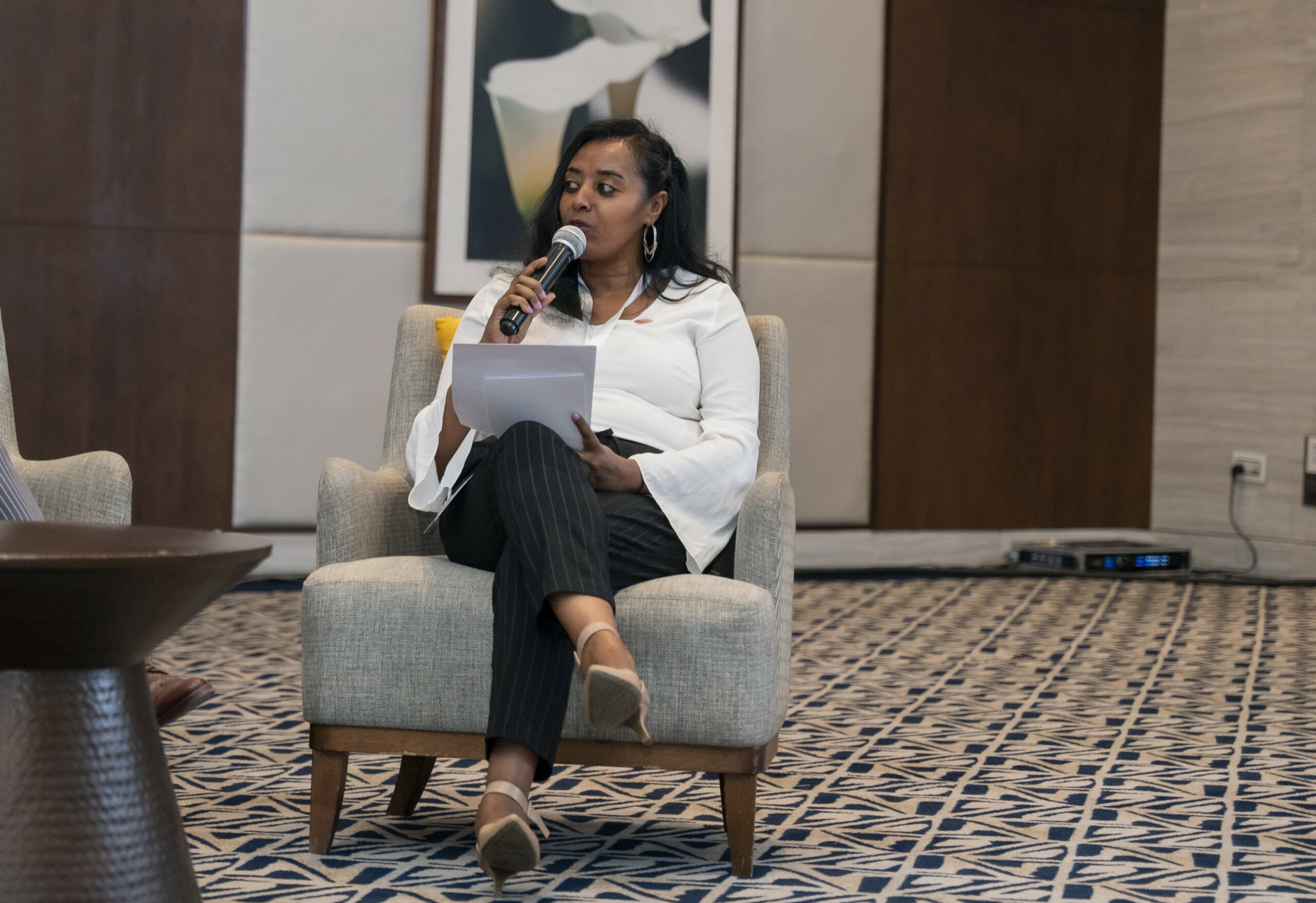
When Dr. Kalkidan Esayas speaks about the environment, she doesn’t begin with abstract numbers or charts. She begins with a memory.
As a young student in Ethiopia, she joined a university trip to the Rift Valley. What she saw left a mark on her career and her sense of purpose: dried-up lakes that once sustained thriving communities, and farmers forced to abandon their homes as climate change reshaped the land beneath them.
“That moment gave a face to climate change,” she recalls. “It made me realize that science could offer not just explanations, but solutions. That’s when I knew I wanted to become an ecologist committed to change.”
advertisement
It was a defining point, but not the only one. Growing up in a modest, tightly-knit community, she witnessed another truth: the burden carried by women. “As a girl, I saw how women carried the weight of water collection, farming, and caregiving, yet their voices were rarely heard,” she says. That early experience instilled in her both a sense of responsibility and a passion to be not only an environmentalist, but also a leader advocating for gender equity within environmental justice.
The ESG Moment in Ethiopia
In recent years, Ethiopia has slowly but steadily embraced Environmental, Social, and Governance (ESG) principles. Globally, ESG has moved from being a corporate buzzword to a framework that shapes how businesses interact with communities and the planet. Ethiopia, too, is beginning to pivot from compliance-based corporate social responsibility toward strategic ESG integration.
advertisement
“ESG principles in Ethiopia are gaining traction, especially in sectors like agribusiness and renewable energy,” says Dr. Esayas. “We’re seeing a shift, though it’s still early. The financial sector, particularly with the rise of green finance discussions, is starting to explore ESG metrics more rigorously.”
The banking sector has been at the forefront, she observes, experimenting with green credit lines and SME financing initiatives that prioritize sustainability. Yet not all sectors are keeping pace. “The manufacturing sector still has a long way to go in addressing environmental waste and social standards,” she notes. “Transparency and monitoring frameworks will be key for future progress.”
Her insights reflect a larger challenge: how to ensure that ESG is not simply a corporate tick-box exercise, but a true driver of systemic change in a country grappling with climate volatility, food insecurity, and rapid economic transformation.
advertisement
Building Women Leaders
For Dr. Esayas, ESG is not just about the environment, it is also about who gets to lead in shaping solutions. In her work training women leaders at different organizations, she has seen firsthand the potential of women when given the right support.
“For women in banking and innovation, I found that combining peer mentorship, storytelling, and executive coaching is powerful,” she says. “These women don’t just need skills; they need safe spaces to be heard and empowered.”
Too often, the barriers women face are less about ability and more about access. Access to finance, to decision-making spaces, and to networks of influence. Cultural expectations also weigh heavily, creating what she calls “mindset barriers.” To counter this, her programs blend technical training with personal growth. “Confidence-building, negotiation skills, and purpose-driven leadership are just as important as technical knowledge,” she explains.
By creating communities of practice around shared challenges, she has helped women leaders not only strengthen their capabilities but also build solidarity. These networks become seeds of broader change, enabling women to step into spaces where their voices were once absent.
ESG and Public Health
Dr. Esayas is also clear about the link between sustainability and health. Ethiopia, like many countries in Africa, faces persistent challenges of clean water access, energy poverty, and waste management. These, she argues, are not simply environmental problems but public health ones.
“Environmental sustainability and public health are deeply intertwined,” she says. “ESG gives us a framework to hold both public and private actors accountable for long-term health outcomes, not just short-term gains.”
Climate change is not a distant crisis, it manifests in malnutrition, waterborne diseases, and energy inequities. Addressing these requires an integrated, ESG-based mindset.
Lessons from Abroad, Actions at Home
While her roots remain firmly Ethiopian, Dr. Esayas’ leadership has been shaped by global experiences. She participated in the International Visitor Leadership Program (IVLP) in the United States and the Beahrs Environmental Leadership Program at UC Berkeley. Both, she says, changed her perspective on what it means to lead.
“I came to understand leadership not as a top-down role, but as adaptive, inclusive, and systems-oriented,” she explains. “I learned to listen better, to lead across differences, and to create coalitions rather than hierarchies.”
“ESG and gender equity require systemic change that bridges governments, businesses, and communities,” she says. She was particularly inspired by women-led environmental startups that delivered both social and financial returns—models she believes Ethiopia needs to focus.
A Leadership Grounded in Emotional Intelligence
One recurring theme in her reflections is emotional intelligence. Having moderated diverse panels and led dialogues across sectors, she emphasizes that inclusive leadership is as much about emotional presence as it is about policy or expertise.
“Moderating diverse panels taught me the art of deep listening and emotional regulation,” she says. “Inclusive leadership isn’t just about giving space to others, but about creating a climate where all voices feel safe to contribute.”
For her, empathy, curiosity, and humility are not soft skills; they are leadership essentials. In a polarized world, where climate debates can quickly become contentious, these qualities allow leaders to build coalitions that last.
Ethiopia’s ESG Future: Challenges and Opportunities
Looking ahead, Dr. Esayas identifies three ESG challenges that will define Ethiopia’s future:
- An equitable energy transition – ensuring renewable energy expands without leaving vulnerable communities behind.
- Climate-smart agriculture and food security – adapting farming practices to ensure resilience in a country where agriculture employs the majority.
- Corporate transparency and accountability – creating frameworks where businesses are held responsible for their impact.
Women, she insists, will be central to solving all three. “Women leaders bring unique perspectives and lived experiences to these challenges. Their involvement is not optional, it’s essential. By empowering women, we unlock community-driven, scalable ESG solutions.”
A Message to the Next Generation
Despite the challenges, her message to young Ethiopian women who aspire to careers in ecology, ESG, or entrepreneurship is one of encouragement and urgency.
“Start where you are. Own your story. Learn broadly, then lead boldly,” she advises. “You don’t need to be perfect to be powerful. Find mentors, take risks, and use your voice. The climate crisis needs your leadership now more than ever.”
Her words echo the journey she has lived herself: from a young girl watching women bear the burden of silence, to a student confronting the visible scars of climate change, to a global leader connecting ESG with equity.
The dried lakes of the Rift Valley remain etched in her memory, but so too does her vision of a future where solutions are science-driven, women-led, and anchored in justice. In the face of environmental and social upheaval, Dr. Kalkidan Esayas stands as both a witness and a builder – of coalitions, of communities, and of hope.