
advertisement
CIO100: Leading Through Digital Disruption


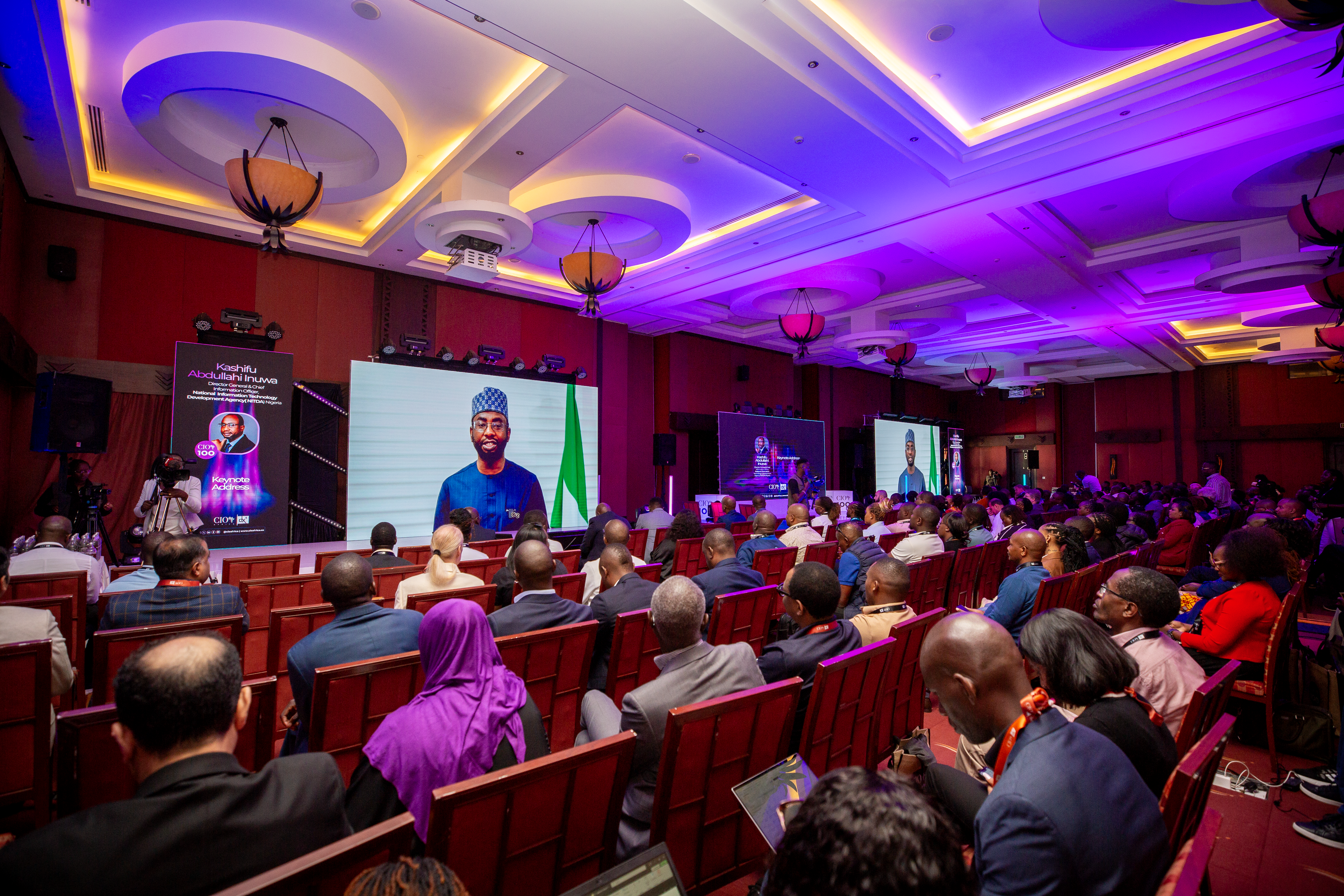
As digital disruption accelerates across industries, African CEOs are confronting a new reality: leadership today demands far more than operational efficiency. It requires vision, cultural transformation, and the courage to embrace the unknown. This was the focus of the CEO Roundtable discussion at the CIO100 Symposium and Awards 2025 on Leading Through Digital Disruption, moderated by Faith Nkatha, Interim Country Director at the Tony Blair Institute for Global Change.
The panel brought together Alex Ntale, CEO of the Rwanda ICT Chamber; Eric Sangoro, Managing Director at Car & General Ltd; Michael Compton, AI Enterprise Leader at Servita; and David Kabundu, CEO of Eastra, each offering a grounded perspective on how leaders must adapt to stay relevant in an era defined by rapid technological shifts.
Disruption Is Uncomfortable and That’s the Point
For Eric Sangoro, disruption isn’t an abstract idea, it is deeply personal. Having joined Car & General as an IT Manager years ago and now sitting at the executive table, his view of technology has fundamentally evolved.
advertisement
“When I was IT manager, it was all about optimising,” he noted. “But disruption forces you into a space where you stop optimising and start doing things you’ve never done before nd that’s a scary space.”
To navigate this shift, Car & General embraces a leadership style that gives talent the freedom to experiment. Innovation, Sangoro stressed, comes from learning and making mistakes: two things that organisations must learn to tolerate if they hope to thrive in disruptive environments.
A disrupted space, he said, is not one where people stick to what they know, but one where they are encouraged to grow beyond it.
advertisement
When discussing how African governments can strengthen technology partnerships, Rwanda’s example quickly took centre stage.
For Alex Ntale, the country’s success in public–private ICT collaboration is rooted in one word: leadership.
He shared a story from the early 2000s during a government trip to Huawei. After a tour of the facility, President Paul Kagame expressed his desire to start a space program, an unexpected statement at the time. Ntale recalled that just weeks earlier, he had met a Japanese rocket scientist. The connection ultimately paved the way for partnerships with institutions such as the University of Tokyo.
“I don’t know anything about rocketry,” Ntale admitted, “but at the end of the day, it comes down to leadership and the ability to rally people.”
advertisement
His point was clear: disruptive transformation requires leaders who can imagine possibilities even when the expertise does not yet exist and who can mobilise people to pursue them.
While technology often feels like the centre of digital transformation, Michael Compton argued that culture is the real driver.
“Transformation moves at the speed of culture,” Compton said, emphasising that AI adoption must be rooted in shared ownership, not departmental silos.
For him, organisations must approach AI with a “headless design” mindset – meaning that responsibility cannot rest solely on the IT department. Everyone across the organisation must understand, support, and participate in the transformation.
AI, he argued, should be a company-wide decision, grounded in collaboration rather than technical dictate. Without cultural readiness, no amount of investment will deliver meaningful results.
David Kabundu, often referred to simply as Mugambi, brought the conversation back to people, and the necessary evolution of leadership styles in an AI-enabled world.
He contrasted the workplace of the past with that of today: “We were not taught to think,” he said. “Our employer was like our parent.” But the modern workforce, as he explained, has been trained to think critically, innovate, and challenge existing rules. Leaders cannot rely on outdated control-based management styles.
Instead, he argued, leaders must embrace empathy and flexibility. Productivity now depends not on rigid structures but on environments that allow people to thrive. He joked about giving employees a “mental day off,” but the underlying message was serious: organisations that prioritise employee well-being will outperform those that do not.
The CEO’s Imperative: Lead Beyond the Technology
Across the discussion, one message rang consistently: disruption is no longer about technology alone. It is about leadership, culture, people, and imagination.
- Disruption requires leaders to move beyond optimisation and embrace discomfort.
- National transformation begins with leaders who can articulate bold, even unconventional visions.
- AI integration succeeds only when entire organisations move together.
- Human-centred leadership is not optional, it is the foundation of sustainable performance.
As African organisations navigate the next era of digital transformation, the CEOs on this panel made one thing clear: leadership must evolve as fast as the technology does. Those who embrace learning, empower people, and cultivate bold cultural shifts will define the continent’s future.