
advertisement
CIO100: Boardroom Expectations Of IT


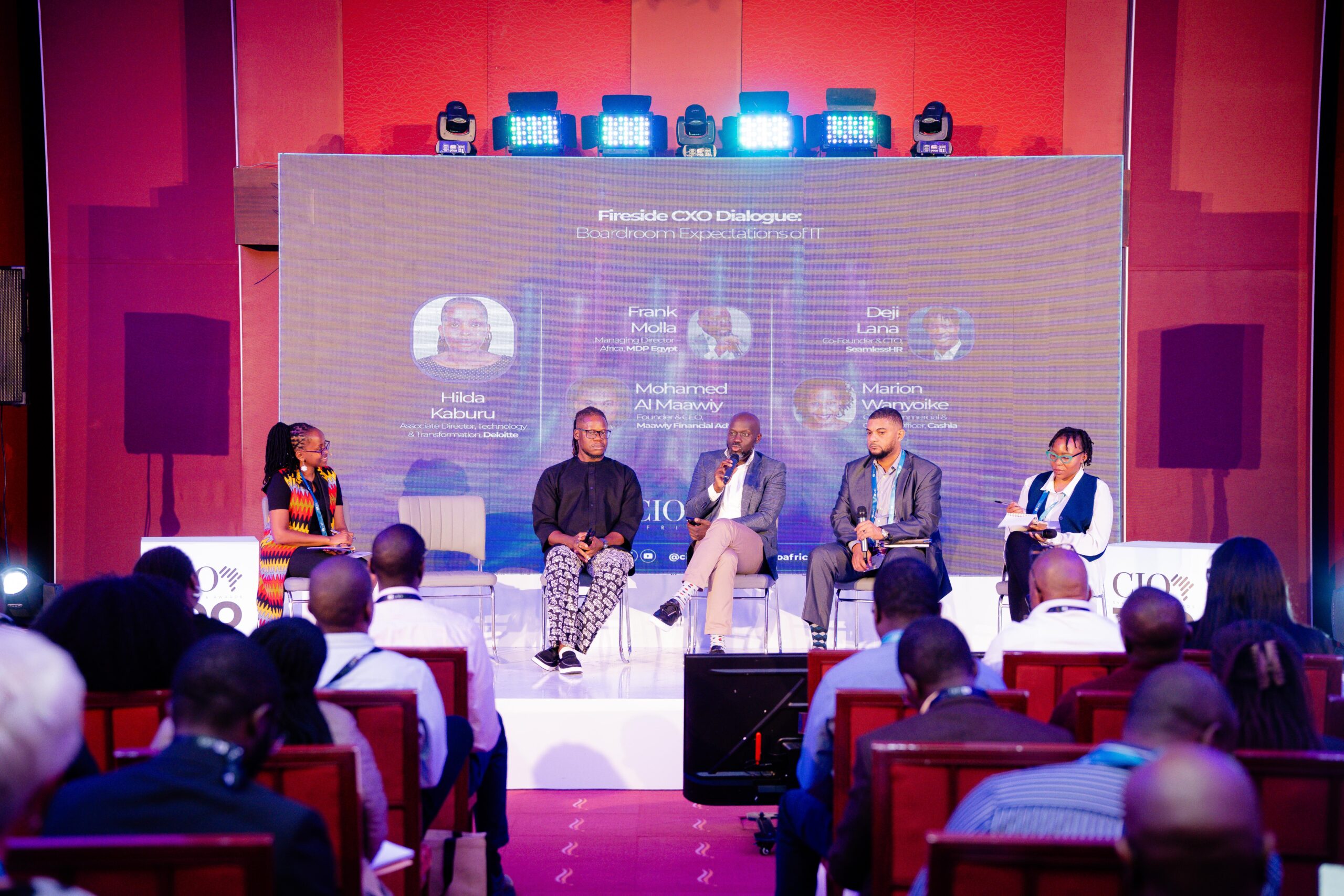
As the boardroom evolves in the digital transformation era, there’s need for presence of tech-aware members in the board.
The second day of the CIO100 2025 Symposium and Awards included various discussions around tech leadership, its future, and what the continent is doing at the moment to achieve the desired future.
A panel discussion moderated by Hildah Kaburu, seeked to understand the expectation of the boardroom today towards IT and technology integration into the company’s system and processes. The panel included Frank Molla, Managing Director – Africa, MDP Egypt; Deji Lana, Co-Founder & CTO, SeamlessHR; Mohamed Mohammed Al Maawiy, Founder & CEO, Maawiy Financial Advisory Services; and, Marion Wanyoike, Chief Commercial & Growth Officer, Cashia.
advertisement
From the board’s perspective, IT Directors are expected to be digitally literate, engage in continuous learning, and use technology to enhance decision-making, manage risk, and ensure compliance. However, how many of these skills can an IT Director actually possess? As Africa still tries to successfully adopt technology, there’s need for both the board and the IT leadership to understand the circumstance and that this digital migration is a journey.
Evolving Expectations of IT in the Boardroom
Frank Molla opened the discussion by highlighting how dramatically expectations of IT leaders have shifted.
Cybercrime alone now represents a $10 trillion global economy, making trust, resilience, and strategic foresight core responsibilities of any modern board. While CIOs were previously viewed as technical operators, today’s environment demands strategic leaders who can navigate competing priorities, assess risks, and protect organizational value.
He also noted that boardrooms themselves have changed. Once dominated by older, traditional leaders, boards today are increasingly diverse, including even Gen Z professionals. This generational blend gives organisations an edge, helping the board better understand emerging technologies and participate more effectively in digital transformation conversations.
advertisement
For Deji Lana, the biggest challenge when presenting IT projects to the board is expectation mismatch. Boards are becoming more curious about technology and often benchmark against what other organisations are deploying. But this enthusiasm rarely accounts for the underlying technical or infrastructural limitations especially in Africa, where connectivity, reliability, and scalability issues remain significant.
Deji stressed the need for clear communication without jargon: Boards don’t need buzzwords, they need context. They need to understand why a digital initiative will take time, infrastructure, and investment. Without that clarity, IT projects become misunderstood, undervalued, or prematurely judged as failures.
Mohamed Al Maawiy brought the financial perspective, emphasising that IT departments must evolve beyond simply proposing exciting projects.
Today, every investment in technology must show clear business value. Growth is important, but solutions must also make financial sense, generate returns, and contribute directly to the bottom line.
advertisement
His view reflected a growing trend across African enterprises: IT cannot remain a cost centre. To earn board confidence, technology proposals must be tied explicitly to revenue outcomes, efficiency gains, or new market opportunities.
Reflecting on the pandemic years, Frank Molla noted that COVID-19 revealed just how underprepared many organisations were.
“Businesses had assumed that digital-first operations such as e-commerce were primarily for techies. But when crisis struck, every business and every consumer had to plug into digital systems to survive. It caught us off guard,” he observed.
Technology was moving faster than organisational psychology, and many companies struggled to adapt quickly. Molla argued that this is why board composition matters. Boards must include members who view IT as intrinsic to business value, not as a support function. Without that mindset, companies remain reactive rather than strategic in their digital investments.
Adding to the broader theme, Marion Wanyoike provided a grounded, human-centred perspective: African organisations often invest in impressive technologies that do not actually solve local problems.
She shared an example of buying a sophisticated gadget in the U.S. only to realise it was unusable back home. The technology was excellent but not for the context. Her story underscored a recurring challenge of too many digital initiatives are misaligned with user needs.
Wanyoike noted the importance of shared outcomes across teams. IT, commercial, and operations departments must align on what success looks like. Otherwise, technical teams become overburdened, working to deliver solutions that were poorly scoped or misaligned from the start.
She also stressed the critical role of human-centred design. Something as small as a missing button in an app, she said, can break an entire user experience. Good technology must be designed for real people, in real environments, not just for technical elegance.
What the Boardroom of the Future Requires
The panel’s message was clear: Africa’s digital transformation isn’t just about acquiring technology. It’s about aligning strategy, leadership, people, and culture:
- Boards must become more tech-literate and diverse.
- CIOs must articulate business value, not technical detail.
- IT must tie innovation to revenue and outcomes.
- Organisations must design with context and users in mind.
- Leaders must accept that digitalisation is a continuous journey, not a milestone.
Africa is where connectivity gaps, rapid urbanisation, and economic pressures shape digital adoption, hence the boardroom has an increasingly critical role in bridging vision and execution.