
advertisement
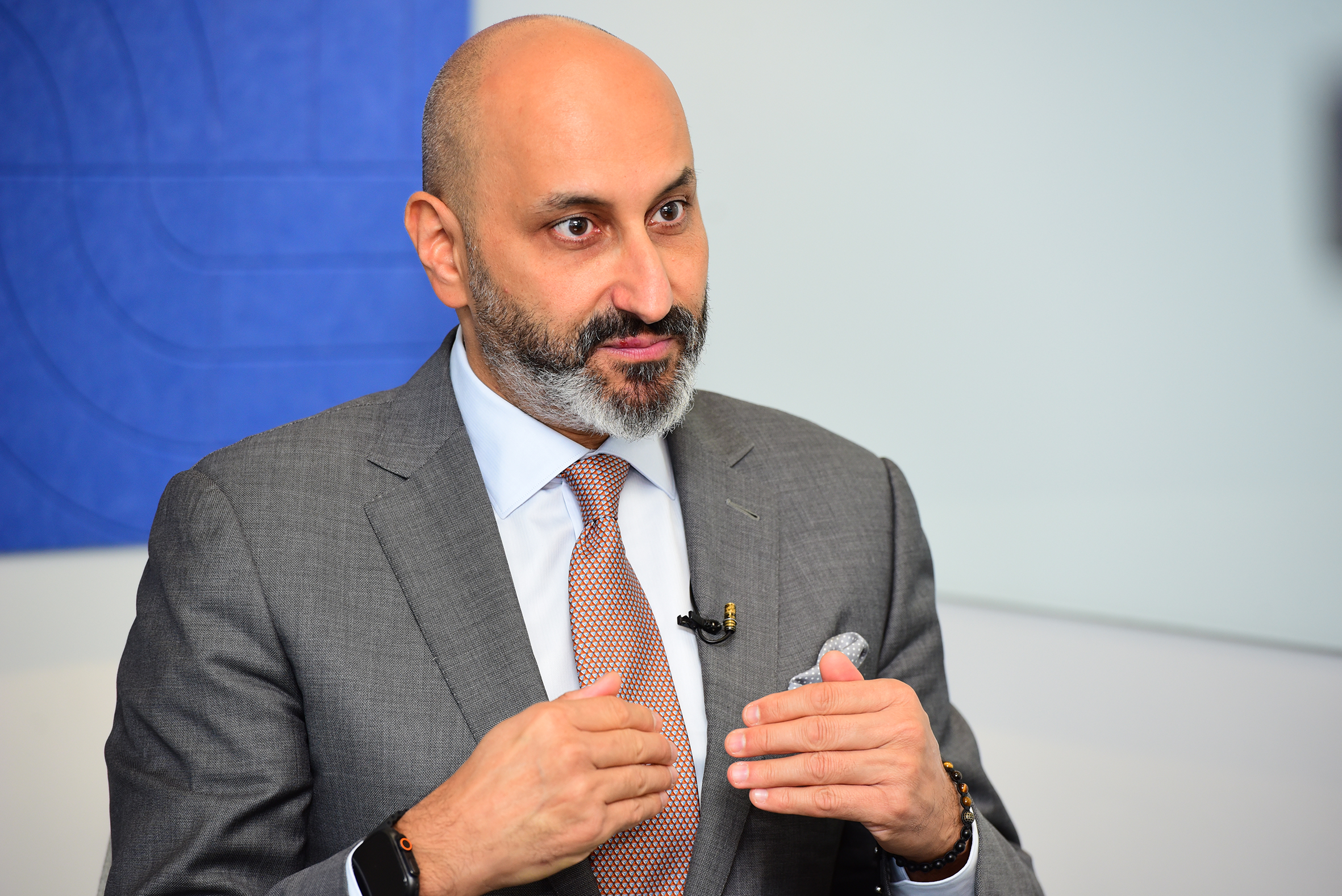
Alan Turnley-Jones Speaks On NTT DATA’s Vision



When we first spoke to Alan Turnley-Jones, it was back in 2024 after he had just been appointed as the CEO of NTT Data Middle East and Africa. He talked about growth, industry focus, and the importance of Africa in the company’s global strategy.
CIO Africa caught up with him again, one year down the line, to hear on how his first year has been and what he has managed to achieve so far as well as what he envisions for the future. The tone now, according to his interview with our reporter, has shifted from vision to execution.
Today, NTT DATA is embedding Generative AI across its operations and client engagements, positioning itself not just as a technology provider but as a partner helping African businesses leapfrog into a digital future.
advertisement
Milestones in a Transformative Year
Reflecting on his first full year at the helm, Turnley-Jones points to growth and investment as defining markers. East Africa, in particular, has seen strong momentum, underscored by new facilities that serve as a testament to NTT DATA’s long-term commitment to the region.
“We’ve continued to invest in being a global systems integrator and becoming very industry focused,” he says, “Financial services, manufacturing, FMCG. These are industries where we’ve grown our expertise. Certainly, as it relates to East Africa, we’ve seen great growth.”
Embedding Generative AI
AI is no longer a buzzword for NTT DATA; it is being embedded at every layer of the business. The company recently announced partnerships with Mistral AI, OpenAI, Nvidia, and Microsoft, ensuring access to the world’s most advanced AI innovations. But the push is not just external.
advertisement
“All 155,000 employees at NTT DATA have access to AI training, and our goal is 100% completion,” Turnley-Jones explains. “We’re also leveraging AI internally across functions—whether it’s marketing, finance, or operations. Tools like Microsoft Copilot are enabling our people to work more effectively.”
For clients, the approach is increasingly use case–driven. Instead of generic AI deployments, engagements are tailored to solve specific problems. In financial services, for example, NTT DATA uses AI to address fraud management in cards and payments.
The Rise of Agentic AI
If Generative AI was the buzz of 2023, Agentic AI is shaping 2024 and beyond. Hany Nofal, MEA Lead for Technology Solutions at NTT DATA, explains that the company has already deployed AI agents internally to work alongside engineers. Nofal accompanied Turnley-Jones in his visit to East Africa.
advertisement
“In our service centers, an engineer may now work with three AI agents. One specialized in networking, another in security, and another in collaboration. This allows us to troubleshoot faster and deliver a better quality of service,” Nofal adds.
The applications go beyond IT support. AI agents are also being used in pricing, invoicing, supply chain, and even frontline sales. Healthcare and banking stand out as industries where Agentic AI could create immediate impact, whether it’s helping doctors prepare patient briefings or enabling contact centers to resolve customer queries faster and more accurately.
Building Infrastructure for AI in Africa
For Africa, AI cannot exist in a vacuum. It requires robust infrastructure, from networks to data centers, and this remains a hurdle.
“There’s a lot of technical debt in Africa,” Turnley-Jones admits, “But productivity gains are driving change. Our role is to ensure we provide both connectivity and the AI-driven technology solutions clients need.”
NTT DATA is uniquely positioned here. Beyond its IT solutions, the company also owns fiber networks, allowing it to deliver both bandwidth and advanced technology services. “That heritage in connectivity, layered with new AI solutions, gives our clients one place to go,” says Turnley-Jones.
Public-private partnerships will also be key. Nofal stresses that national agendas now view AI as a strategic economic lever. “The business cases are straightforward. AI improves productivity, saves hours, and those savings can be reinvested in modernization. Governments, enterprises, and technology companies must work together.”
Africa’s Leapfrog Moment
For both leaders, AI offers Africa a chance to leapfrog stages of development that other regions have gone through more slowly. Unlike with cloud or cybersecurity where parts of the continent fell behind, there is determination not to miss the AI wave.
“We don’t have to follow the same course as the rest of the world,” says Turnley-Jones. “AI can help Africa become more competitive and create jobs. It’s a unique opportunity for growth.”
Looking Ahead
Projecting five years into the future is always a challenge, but Turnley-Jones is confident Africa will continue to innovate. “We’ve seen it before in financial services with mobile banking. I believe we’ll see the same thing play out with AI,” he says.
For NTT DATA, the strategy is clear: continue investing in infrastructure, networks, people, and partnerships, while working closely with clients to drive tangible business outcomes. “The questions we get from clients are no longer about what AI is,” Turnley-Jones notes. “They’re asking, how will it help us grow, expand, and compete? That’s the role we want to play, helping African businesses succeed in the AI era.”
As the pace of technological change accelerates, one thing is certain: Africa is not just consuming innovation, it is creating it. NTT DATA intends to be at the heart of that story.