
advertisement
Airtel Expands 5G Beyond Kampala


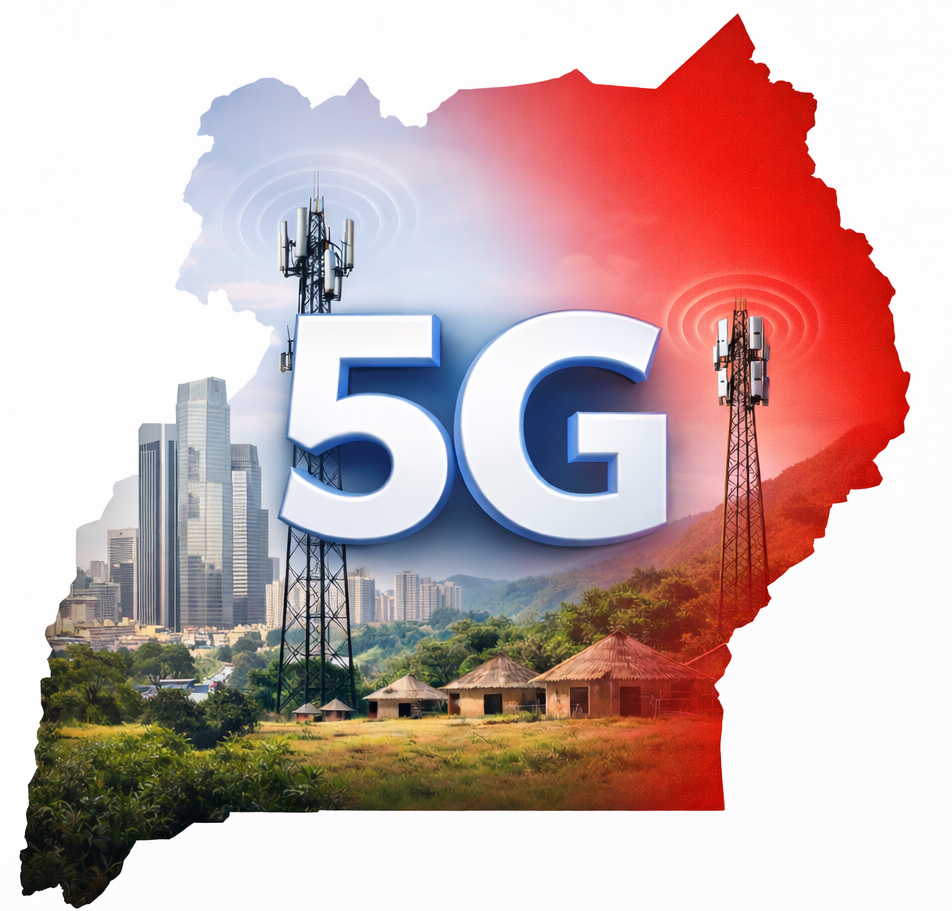
Uganda has officially joined the growing list of African countries rolling out next-generation mobile networks as Airtel Uganda significantly expands its 5th-generation (5G) connectivity footprint across the country.
In December 2025, Airtel Uganda announced that its 5G network now covers 365 active sites nationwide, expanding well beyond the initial concentrated rollout around Kampala to include major urban and regional centres such as Jinja, Mbale, Masaka, Mbarara, Gulu, Lira, Hoima, Fort Portal, and Kabale. This second-phase expansion comes just ahead of the festive season when data demand traditionally surges across the country.
According to Soumendra Sahu, CEO and Managing Director of Airtel Uganda, the strategy behind this expansion is less about advertising a headline technology and more about practical everyday benefits. He also added that Airtel’s strategic approach to rolling out new sites is acting “ahead of need” and responding to customer feedback to ensure network enhancements deliver tangible improvements for everyday users especially their video experiences.
advertisement
“We view 5G as an enabler rather than a headline technology. This is progressive rather than a finish line reinforcing a longer-term commitment to strengthening network quality, supporting the digital economy, and ensuring that high-capacity connectivity is available where people live, work, and do business” Sahu noted.
“5G greatest applications include home broadband, digital learning, telemedicine, manufacturing, commercial agriculture remote working, smart business solutions, faster content delivery, and improved customer experience as the real justification for continued investment in next-generation networks among many other applications that require super-fast connections” He added.
The Journey to 5G in Uganda
advertisement
Airtel’s 5G story in Uganda began in July 2023, shortly after it secured the necessary spectrum from the Uganda Communications Commission and began deploying 5G sites in Kampala’s central business district. Initially, the rollout comprised approximately 50 live 5G nodes, making Airtel one of the earliest operators to commercially launch the service in the country.
This came almost simultaneously with MTN Uganda’s own 5G debut, which was launched two days earlier, marking a competitive but collaborative phase in Uganda’s telecom landscape. Over the past two years, both operators have continued to enhance capacity, with MTN reporting hundreds of 5G sites and Airtel steadily increasing its coverage to reach 365 sites in late 2025.
Why It Matters: The Human Impact
advertisement
5G isn’t merely about faster internet speeds. By design, it supports massive device connectivity, ultra-low latency communication, and enhanced capacity compared to 4G — theoretically enabling up to one million connected devices per square kilometre versus 100,000 on 4G. This matters for everyday users as well as for sectors investing in digital platforms It makes large-scale remote learning possible without constant drop-offs, allows doctors to run virtual consultations and monitor patients in real time, and supports smart farming tools that rely on sensors and data to improve yields.
For businesses, it opens the door to cloud-based systems and digital services that demand speed and reliability, while for households, it offers a more dependable alternative to fixed broadband where fibre is still out of reach. In short, 5G is less about hype and more about building a network that keeps pace with how people actually live and work today.
Before 5G, most Ugandans relied heavily on 4G or slower connections, in January 2025, internet penetration in the country was just around 28 per cent of the population. The extended 5G network aims to help close that gap and bring high-capacity connectivity out of the capital and into regional towns and peri-urban communities.
This groundwork, paired with strategic partnerships to bring internet access to schools and underserved communities, reflects Airtel’s broader vision of digital inclusion. For example, in March 2025, Airtel Uganda and UNICEF announced an initiative connecting 130 schools to fast internet as part of a programme reaching tens of thousands of learners and teachers across the country.
Uganda’s 5G expansion places it among nearly 30 African countries with commercial 5G services, a rapid progression considering 5G was mainly a testing-phase technology less than a decade ago. Across Africa, 5G deployment still faces challenges, such as device affordability, infrastructure costs, and spectrum allocation, but countries that have advanced coverage are increasingly capitalising on digital innovations to support economic transformation.
Despite efforts to roll out 5G, most Ugandans still rely on earlier generations of mobile networks and use the internet at relatively low rates. According to the Global System for Mobile Communications Association (GSMA), although 4G network coverage now reaches about 96 per cent of the population, only around 22 per cent of Ugandans are active mobile internet users, leaving a large usage gap even where networks exist.
This indicates that many people either cannot afford smartphones or data plans, or lack devices and digital skills needed to go online, meaning that widespread 5G adoption is still a long‑term prospect rather than an immediate reality. High device costs and limited coverage outside major urban centres have kept 3G and 4G as the dominant technologies for most users, with 5G largely early‑stage in deployment and uptake. This reflects both the ongoing build-out of infrastructure and the need for compatible devices and affordable data plans.