
advertisement
Africa’s Next Digital Infrastructure Gap Is The Smartphone

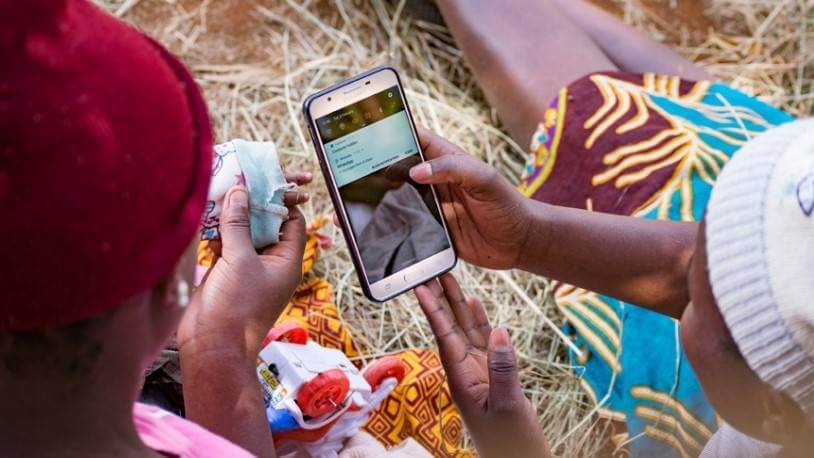
Across Africa, the mobile phone has become the operating system of daily economic life. Before sunrise, farmers check prices, parents send school fees, and traders move money across borders with a tap. Mobile data use is rising faster than anywhere in the world, and the continent’s demographic momentum means demand will keep growing.
Africa will not fall behind for lack of users. The risk is that development policy still treats digital access as a consumer choice, when in many places it now functions as economic infrastructure. In mobile-first economies, digital connectivity underpins payments, commerce, access to services, and increasingly, a person’s ability to build a financial footprint. Where roads, banks, and state delivery systems are thin, the network has become a platform for participation.
In Somalia, telecoms infrastructure already plays that role. Private investment has built nationwide 4G mobile coverage, linked the country to global fibre, and created the rails for mobile money that households and businesses rely on every day. This is the sort of backbone that, in many countries, would have required decades of public investment.
advertisement
Yet a basic constraint remains. Millions can see the digital economy but cannot fully use it. The barrier is not the mast in the distance. It is the handset in the pocket.
Without a smartphone, citizens struggle to access digital aid payments, online learning, mobile-first jobs, and the services that depend on apps rather than SMS. They cannot easily create transaction histories that help them qualify for credit, insurance, or formal financial products. The result is a widening gap between those who can convert connectivity into opportunity and those who are connected in theory but excluded in practice.
This is where development thinking has not kept pace. A smartphone is not a public good in the technical sense. It is a private device. But its economic value has significant spillovers. When a household gains reliable access to digital payments, the costs of transacting fall. When a trader can compare prices and receive funds instantly, working capital improves. When people can verify identity and build a record of transactions, lenders can price risk more accurately. The benefits extend beyond the individual user, which is why device access belongs in the category of infrastructure that drives productivity and inclusion.
advertisement
In many markets, the problem is not demand. It is affordability. Smartphones require a large upfront payment in economies where incomes are irregular, savings are limited, and formal credit is scarce. In Somalia, the upfront cost of a smartphone is at least a sixth of the average yearly income. That creates a market failure. The social return is high, but private financing does not reach the households that would benefit most.
Device financing can solve this, if it is designed properly. Spreading the cost of a handset into small, regular payments, often settled through mobile money, turns a one-off barrier into a manageable commitment. It also creates a structured pathway into the formal economy. A payment plan builds discipline, a transaction record, and the foundations of creditworthiness.
The practical challenge is scale. Rolling out device financing to the people who truly need it requires significant capital, and it carries real risk: income shocks, displacement, fraud, and weak consumer protection can all turn a well-intentioned programme into a bad one. This is precisely why development finance institutions should treat device access as a de-risking problem, not a philanthropic giveaway.
advertisement
The infrastructure to deliver this is already in place. Mobile network operators have distribution, customer relationships, payment rails, and the systems needed to manage repayment at scale. In Somalia, companies like Hormuud can deliver devices, collect payments through mobile money, and use transaction patterns to assess affordability and reduce default risk. What is missing is not operational capability. It is risk capital willing to absorb shocks so that financing can reach lower-income households.
DFIs are built for this role. They can provide first-loss guarantees, blended finance structures, or portfolio insurance that makes it rational for private capital to fund handset access at scale. With the right structure, DFIs do not need to subsidise every device. They need to underwrite the risk that prevents the market from serving the poorest and most marginalised.
On-the-ground foundations and international NGOs also have a distinct role. They know communities. They can help target support to households where the development return will be highest. They can strengthen consumer safeguards, support digital literacy, and help ensure devices translate into real outcomes, from access to benefits and schooling to more resilient livelihoods.
This partnership model is straightforward. Operators deliver, NGOs enable, and DFIs de-risk. It aligns incentives, avoids building parallel systems, and recognises the reality that digital infrastructure is already embedded in daily life. The objective is not to pick winners in the telecoms market, or to lock users into any one platform. Programmes should be designed with interoperability, transparent terms, and strong consumer protection so that device access strengthens competition rather than weakens it.
Africa’s digital decade has already created the market. The next step is to ensure inclusion keeps pace with adoption. If development finance updates its definition of infrastructure to include device access, it can unlock a larger share of the economic gains that African citizens are already creating. The question is no longer whether the demand exists. It is whether we choose to finance the last mile.
This article was written by Mohamed A. Farah, CEO Hormuud Telecom