
advertisement
Nairobi Hosts Africa’s First Global Data Festival


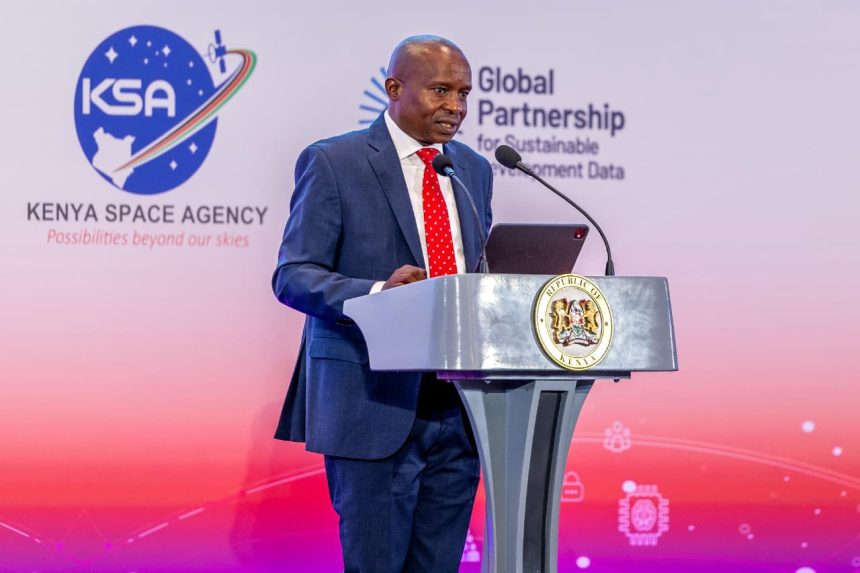
Nairobi is this week the global hub for data, technology, and space science. From June 2–5, 2026, The Edge Convention Centre is hosting the Global Data Festival (GDF) and the Kenya Space Expo & Conference (KSEC) two established events sharing one stage for the first time, under the theme “Powering Resilience, Innovation, and Partnership through Data and Technology.” Co-organised by the Kenya National Bureau of Statistics (KNBS), the Kenya Space Agency (KSA), and the Global Partnership for Sustainable Development Data (GPSDD), the four-day event brings together over 1,000 delegates from more than 90 countries.
Convened with four years left on the SDG clock, the festival brought together governments, statisticians, space scientists, technologists, and the private sector to align priorities, close data gaps, mobilise investment, and ensure that data and space-derived intelligence translate into real outcomes for real people — before 2030 arrives
For the GDF, this edition marks a historic milestone: the first time the festival has been held on African soil. It began in Bristol, UK, in 2018 with around 400 delegates focused on driving SDG action and global data partnerships. The second edition, the Festival de Datos, moved to Punta del Este, Uruguay in 2023, under the theme “Celebrating Data Ideas and Actions that Help People and Planet,” attracting 555 participants from 62 countries. Kenya now carries that baton forward.
advertisement
The first day opened with morning sessions that began with a welcome address scene-setting by the heads of KSA, KNBS, and GPSDD, followed immediately by two back-to-back plenaries: the first exploring human-centred data and what it takes to move beyond numbers to real-life impact; the second taking stock of how inclusive data can drive a more equitable future.
The afternoon deepened the conversation with a plenary making the political and financial case for investing in data ecosystems, running alongside four concurrent community sessions on topics ranging from open spatial data in humanitarian response, to AI governance across African and MENA universities, to citizen drone mapping in African cities. The day culminated with an exhibition visit, the official opening ceremony, and a high-level panel on Africa’s unique opportunity to lead the global data conversation.
The Opening Ceremony
advertisement
The official opening drew a distinguished gathering of senior government figures, global development leaders, and technology stakeholders. Deputy President Prof. Kithure Kindiki presided as chief guest, alongside Cabinet Secretary for Defence Hon. Soipan Tuya, Ambassador Philip Thigo, Special Envoy to the President on Technology, Principal Secretary for Foreign Affairs Mr. Korir Sing’oei and the Dr George Obudho, Director General, KNBS. Jenna Slotin, CEO of GPSDD, represented the international co-organising body at the podium.
Deputy President Kindiki set the tone with a direct call for African data sovereignty:
“To avoid data dependency, Kenya and Africa ought to develop innovative ways of financing national data systems as part of core national infrastructure and align development partner support to country-owned systems.”
advertisement
He went further, arguing that national data systems should be treated as strategic infrastructure on par with roads, energy, and telecommunications essential for planning in health, agriculture, climate adaptation, and education.
CS Soipan Tuya echoed the urgency, describing the event as proof of Kenya’s determination to convert data and space capabilities into practical national development tools, and calling for young people to be included not only as beneficiaries of technology “but also as creators and drivers of transformative solutions.”
Ambassador Philip Thigo, who has been at the centre of Kenya’s technology diplomacy, connected the festival’s purpose directly to Kenya’s economic story, pointing to a striking proof of concept: last year, Kenya attracted $984 million in venture capital, the highest of any country in Africa. The reason, he argued, traces back to data:
“We have a very good business registration system, a robust fiscal and regulatory system and periodic economic surveys that tell an investor the economic environment in Kenya. A lot of these things are not easy without data. But where we need to do more work is ensuring that when money flows to Kenya, it actually benefits Kenyan startup founders.”
He also pointed to the upcoming €50 million Harmonic Fund as a concrete step toward pairing local and foreign investors, and stressed that data must be treated as a collective public good not just collected, but shared across sectors so that, for example, weather data gathered by telecoms companies can reach the farmers who need it most.
Dr. George Obudho, Director General of KNBS, spoke candidly about the reality of data gaps and how Kenya is closing them without waiting for more resources. He pointed to the private sector and civil society as untapped pipelines that KNBS is now actively drawing from, and named Kenya alongside Colombia and Ghana as one of only three countries globally recognised for excellence in citizen-generated data:
“We always have gaps in statistics because even if you undertake all sorts of statistics, over time they will be fading away. Resources are not constantly available. So we ask: how do we get other sources of data? The private sector is producing a lot of data which we have not been consuming properly, but we have now gotten into that space. The gaps are not just narrowed down by having enough resources, but by looking at the various other sources we are able to draw from.”
Jenna Slotin, CEO of GPSDD, made the economic case plain: “For every dollar invested in data systems, on average you get a $32 return. Venture capitalists and development banks will not invest if they don’t have good data, because they need to price their risk. It will pay off to invest in data systems because that will bring further investment from the private sector.”
With three more days of plenaries, workshops, national showcases, and cross-sector labs ahead, Nairobi is not simply hosting, it’s playing an active role in shaping the future of data.